
Xi Jinping Intensifies Military Purge in China’s Ongoing Anti-Corruption Campaign
Demanding Absolute Loyalty from the Armed Forces
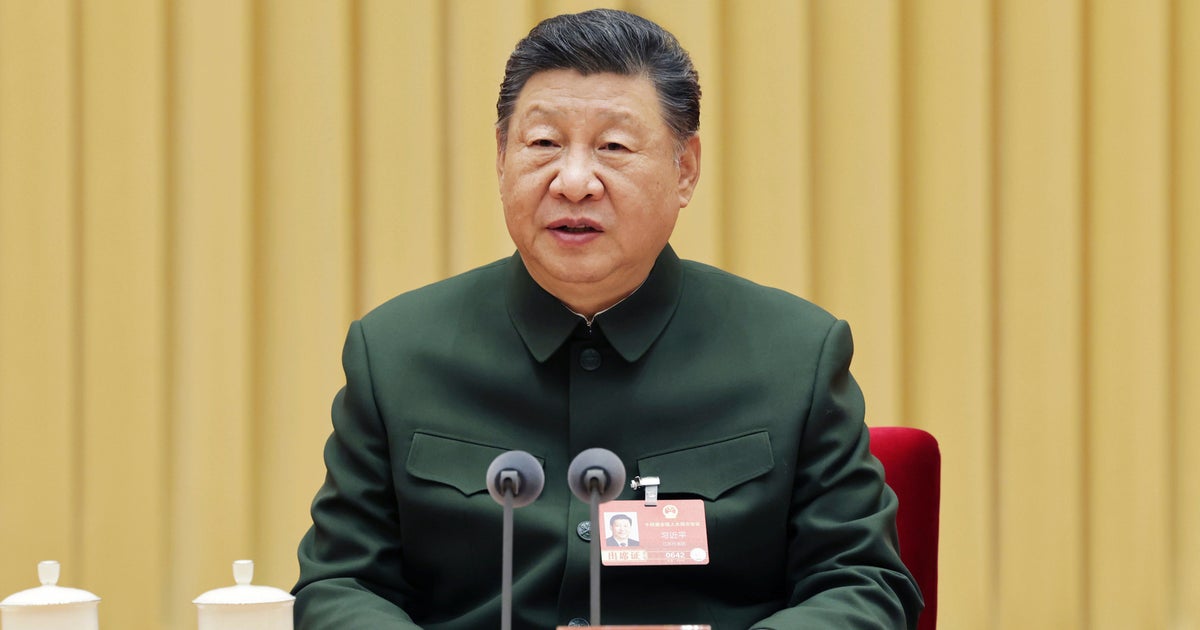
Chinese President Xi Jinping delivered a stern message to the nation’s military leadership this past Saturday, emphasizing that political loyalty within the People’s Liberation Army is non-negotiable. Speaking at a high-profile plenary meeting during China’s annual legislative sessions, known as the “two sessions,” Xi made it abundantly clear that there is no room for anyone in the military who questions their allegiance to the ruling Communist Party. His remarks, officially published by the state-run Xinhua News Agency, came as the country witnesses an expanding purge of military officials under the banner of fighting corruption. The meeting brought together delegates from both the People’s Liberation Army and the People’s Armed Police Force, providing Xi with a platform to reinforce his expectations for unwavering commitment from China’s armed forces. This gathering occurred against the backdrop of China’s most significant annual political events, where the National People’s Congress and the Chinese People’s Political Consultative Conference convene to set the nation’s policy direction for the coming year.
A Relentless Anti-Corruption Drive Entering Its Second Decade
The anti-corruption campaign that Xi Jinping launched upon taking power shows absolutely no signs of slowing down, even after more than a decade of operation. What began as a sweeping effort to clean up widespread graft and corruption throughout Chinese society has evolved into one of the defining features of Xi’s leadership style. In recent years, the military has become an increasingly prominent target of this campaign, with Xi apparently determined to root out what he perceives as corruption and disloyalty within the armed forces. The most dramatic recent example of this intensified focus came just last month with the removal of the military’s top general, a move that sent shockwaves through China’s defense establishment. Xi has justified these actions as necessary steps in his broader agenda to reform and modernize China’s military capabilities, transforming the People’s Liberation Army into a world-class fighting force capable of protecting Chinese interests in an increasingly competitive global environment. However, the scope and intensity of these purges suggest motivations that extend well beyond simple military modernization.
Political Consolidation Disguised as Reform
While the official narrative frames these military purges as essential anti-corruption measures, political analysts and China watchers offer a more nuanced interpretation of what’s actually happening. Many experts believe that the anti-corruption campaign serves a dual purpose for Xi Jinping, who is now in his remarkable 14th year of holding power in China. Beyond its stated goal of eliminating genuine corruption, the campaign functions as an effective tool for Xi to systematically remove potential rivals and challengers to his authority. By targeting military officers and other officials who might pose a threat to his position or who fail to demonstrate sufficient personal loyalty, Xi ensures that he remains surrounded only by subordinates who owe their positions directly to him and who can be counted on for absolute obedience. This approach to consolidating power isn’t entirely new in Chinese political history, but Xi has deployed it with unprecedented thoroughness and persistence. The result is a political and military landscape where survival depends not just on competence or avoiding actual wrongdoing, but on demonstrating visible, enthusiastic loyalty to Xi personally and to his vision for China’s future.
The Scope of Recent Military Dismissals
The extent of the current purge became dramatically apparent last week when the National People’s Congress took the extraordinary step of dismissing nine military officers in one fell swoop. These weren’t minor officials occupying insignificant positions; the group included two officers serving under the Central Military Commission, which represents the absolute pinnacle of military authority in China. The dismissed officers came from across the various branches of China’s armed forces, including representatives from the army, navy, air force, and the strategically crucial rocket force, which controls China’s nuclear arsenal and advanced missile systems. The purge didn’t stop there—this week saw the removal of three generals from China’s top political advisory body, the Chinese People’s Political Consultative Conference. Speaking on Saturday, Xi left no doubt about his determination to continue this crackdown, declaring through Xinhua that “there must be no hiding place for corrupt individuals” and that “the fight against corruption must be resolutely pushed forward.” The message was unmistakable: no rank is too high, no position too secure, and no branch of the military is exempt from scrutiny and potential punishment.
Defense Spending Continues to Rise Amid the Purge
Even as Xi conducts this extensive housecleaning within the military ranks, China’s investment in its defense capabilities continues to grow substantially. Chinese leaders announced this week that the defense budget will increase by 7% for the current year, bringing total military spending to approximately 1.9 trillion yuan, which translates to roughly $270 billion in U.S. currency. While this represents a slightly lower rate of increase compared to the approximately 7.2% annual growth seen over the previous three years, it still demonstrates China’s sustained commitment to building military power that can rival the United States and assert Chinese interests throughout the Asia-Pacific region and beyond. This continued investment in defense spending sends a complex message: while Xi is willing to remove officers he deems corrupt or insufficiently loyal, he remains deeply committed to strengthening China’s military capabilities overall. The juxtaposition of these purges with rising defense budgets suggests that Xi sees the removal of questionable officers not as a sign of military weakness, but rather as a necessary step toward creating a more capable, modern, and above all, loyal armed forces.
Implications for China’s Future and Regional Stability
The ongoing military purge under Xi Jinping carries significant implications that extend far beyond China’s borders. For the Chinese military itself, the constant threat of investigation and dismissal creates an environment where officers may prioritize demonstrating political loyalty over developing genuine military expertise or offering candid assessments that might contradict official narratives. This could potentially undermine military effectiveness even as China invests billions in new weapons systems and capabilities. For China’s neighbors and for the United States, these developments present a complex picture: a Chinese military that is simultaneously growing more powerful in terms of equipment and budget, yet potentially compromised by internal political dynamics that prioritize loyalty over competence. The dismissals also raise questions about stability within China’s command structure at a time when tensions remain high over Taiwan, territorial disputes in the South China Sea, and China’s broader strategic competition with the United States. As Xi consolidates his personal control over the military and eliminates potential sources of dissent, the world watches to see whether this will produce a more cohesive and effective fighting force or one hampered by fear and political considerations. What remains clear is that Xi Jinping’s vision of a military absolutely loyal to the Communist Party—and by extension, to himself—will continue to shape Chinese defense policy for years to come.