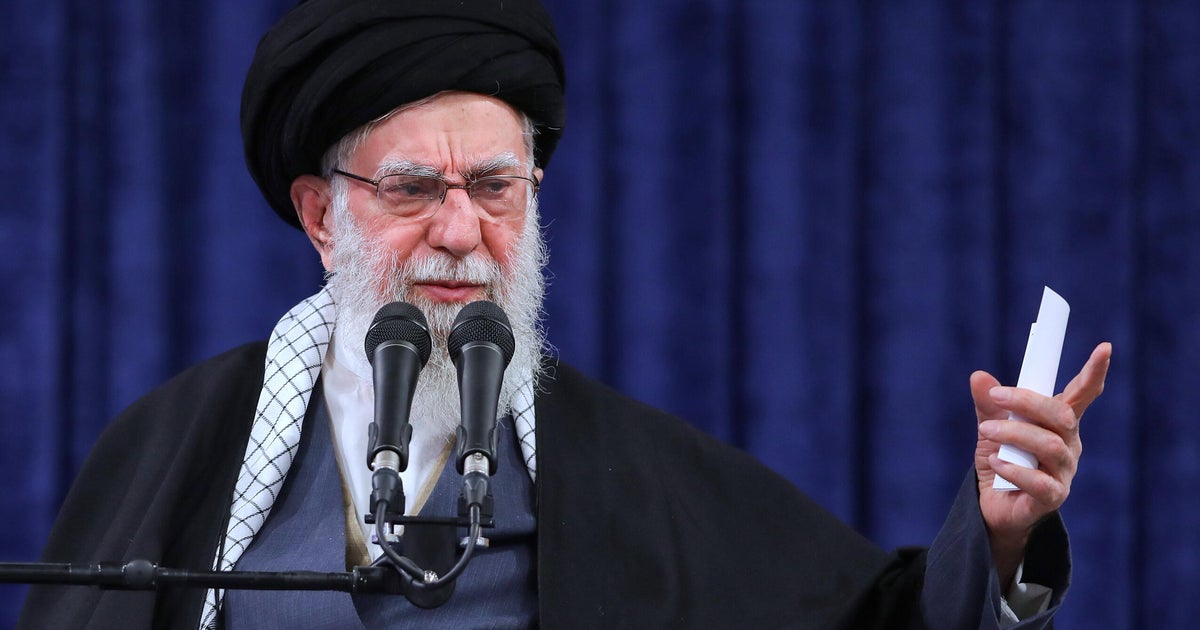

The Intelligence Operation Behind Khamenei’s Death: A Deep Dive into the CIA-Israeli Strike
Months of Careful Surveillance Led to Historic Strike
The death of Iran’s Supreme Leader Ayatollah Ali Khamenei wasn’t a matter of chance or luck—it was the culmination of months of painstaking intelligence work by the CIA, working hand-in-hand with Israeli intelligence services. According to sources familiar with the sensitive operation, American spy agencies had been meticulously tracking Khamenei’s movements for several months before the fatal missile strike on Saturday. This wasn’t just casual monitoring; it was a focused, deliberate effort to understand the patterns and routines of one of the world’s most protected and secretive leaders. As Khamenei moved from location to location within Iran, the intelligence picture became increasingly clear, with analysts piecing together a comprehensive understanding of his security protocols, travel habits, and daily schedule. The breakthrough came when the CIA learned about a Saturday morning meeting scheduled at a compound in Tehran—a gathering that would bring together Khamenei and other senior Iranian officials in one place at one time. This critical piece of intelligence was immediately shared with Israeli counterparts, transforming what might have been a routine surveillance day into a once-in-a-generation opportunity. The decision to accelerate the strike timeline demonstrates the high-value nature of the intelligence and the collaborative relationship between American and Israeli intelligence communities, who moved quickly to capitalize on this rare window of vulnerability.
The Delicate Dance of Official Acknowledgment
In the aftermath of such a significant operation, the official U.S. response has been carefully calibrated, reflecting the complex diplomatic and political considerations at play. When CBS News’ “Face the Nation” moderator Margaret Brennan put the question directly to GOP Representative Mike Turner of Ohio—asking whether the United States had carried out the strike on Khamenei—his answer was revealing in its specificity. Turner reported that he had spoken with Secretary of State Marco Rubio, who “was very clear in the answer that we did not target Khamenei, and we were not targeting the leadership in Iran.” This carefully worded denial is noteworthy: it doesn’t deny American involvement in the operation entirely, but rather focuses on who made the targeting decision and pulled the trigger. The distinction between providing intelligence support and actually executing the strike is an important one in the world of international relations and covert operations. Meanwhile, President Trump took a different approach, publicly stating that Khamenei had been killed in a “joint U.S.-Israeli operation,” a characterization that suggests a more integrated partnership than the official State Department line might indicate. This divergence in messaging reflects the ongoing tension in how democratic governments handle covert operations—balancing the desire for transparency with the need to protect intelligence sources, methods, and international relationships.
The Technical and Human Intelligence Behind the Operation
Senator Tom Cotton, chairman of the Senate Intelligence Committee, offered a glimpse into the sophisticated intelligence capabilities that made this operation possible, while being careful not to compromise ongoing collection methods. Cotton spoke of “exquisite intelligence collection methods” at the disposal of American and Israeli intelligence services, a phrase that likely encompasses everything from satellite surveillance to signals intelligence to human sources on the ground inside Iran. The senator emphasized that tracking “the location and the intentions of the supreme leader and the other ayatollahs in Iran, or for that matter, the leaders of other adversaries around the world, is obviously one of the highest priorities of our intelligence community.” This isn’t just about knowing where someone is at any given moment—it’s about understanding patterns, predicting movements, and identifying vulnerabilities in security arrangements. Cotton’s assertion that “this operation is driven by intelligence collected by Israel and the United States that has once again proven that our nations have capabilities that no other nation on Earth has” speaks to the technological and analytical advantages that these allied intelligence services maintain. Satellite imagery released after the strike shows black smoke rising from the compound and extensive damage to the facility, visual confirmation of what the intelligence had predicted and the strike had achieved. The New York Times was first to report details of the CIA’s tracking operation, revealing the kind of sustained, patient intelligence work that often goes unrecognized until it produces dramatic results like these.
The End of an Era: Khamenei’s Nearly Four Decades of Rule
Ayatollah Ali Khamenei’s death at age 86 marks the end of an extraordinarily long and consequential chapter in Iranian and Middle Eastern history. Khamenei had served as Iran’s supreme leader since 1989, assuming the position after the death of Ruhollah Khomeini, the charismatic architect of Iran’s 1979 Islamic Revolution who transformed the country from a Western-allied monarchy into a theocratic republic. Over the course of nearly four decades, Khamenei systematically consolidated his authority, extending his control over every branch of Iran’s government and its armed forces. Unlike democratic leaders who must negotiate power with other institutions, Khamenei wielded ultimate political and military authority while simultaneously occupying the role of the nation’s highest religious figure. This combination of temporal and spiritual power made him not just Iran’s leader but its most important decision-maker on virtually every significant issue facing the country—from nuclear negotiations to regional proxy conflicts, from domestic repression of dissent to foreign policy toward the West. His longevity in office meant that an entire generation of Iranians had known no other supreme leader, and his influence shaped Iran’s path through some of the most turbulent decades in modern Middle Eastern history, including the Iran-Iraq War, multiple confrontations with the United States, the development of Iran’s nuclear program, and the creation of a network of proxy forces throughout the region.
The Succession Question and Iran’s Uncertain Future
The immediate question facing Iran following Khamenei’s death is one of succession—who will step into the enormous void left by a leader who controlled the country for nearly 40 years? Iran’s top diplomat offered a timeline on Sunday, suggesting that the country’s ruling clerics could elect a new supreme leader within a couple of days, a remarkably quick turnaround that might indicate either careful prior planning or a desire to project stability and continuity in a moment of crisis. The selection process is managed by the Assembly of Experts, a body of 88 Islamic scholars elected by Iranian citizens to choose and theoretically supervise the supreme leader. In his interview with CBS News on Saturday, President Trump indicated that “there are some good candidates” to lead Iran in the wake of Khamenei’s death, though he declined to elaborate on who those candidates might be or what criteria he was using to judge them as “good.” When pressed on who was currently calling the shots in the country during this leadership vacuum, Trump offered a tantalizing response: “I know exactly who, but I can’t tell you.” This comment suggests that American intelligence services have not only been tracking Iran’s top leadership but also understand the internal power dynamics and succession planning well enough to know who is likely to emerge in control, even before Iran’s own public announcement process plays out.
The Broader Implications for U.S.-Iran Relations and Regional Stability
This operation represents a dramatic escalation in the long-running confrontation between the United States, Israel, and Iran—a conflict that has played out through proxy wars, cyber attacks, economic sanctions, nuclear negotiations, and now a direct strike on Iran’s most senior leader. The successful targeting of Khamenei demonstrates both the intelligence capabilities and the political will to act on high-value targets when the opportunity presents itself. For years, the international community has grappled with Iran’s nuclear program, its support for proxy forces like Hezbollah and various Iraqi militias, its intervention in Syria’s civil war, and its confrontational posture toward Israel and American interests in the region. Khamenei personally shaped all of these policies, and his removal from power creates both opportunities and uncertainties. The new Iranian leadership might take a more moderate approach, seeking to reduce tensions and improve relations with the West, or it might double down on confrontational policies, seeking to demonstrate strength and continuity in the face of what many Iranians will view as an act of war. The coming days and weeks will be crucial in determining which direction Iran takes, and whether this operation ultimately contributes to regional stability or triggers a broader conflict with unpredictable consequences for the Middle East and beyond.