



The Bitter Reality: West African Cocoa Farmers Abandon Their Heritage as Crisis Deepens
A Legacy Turning to Dust
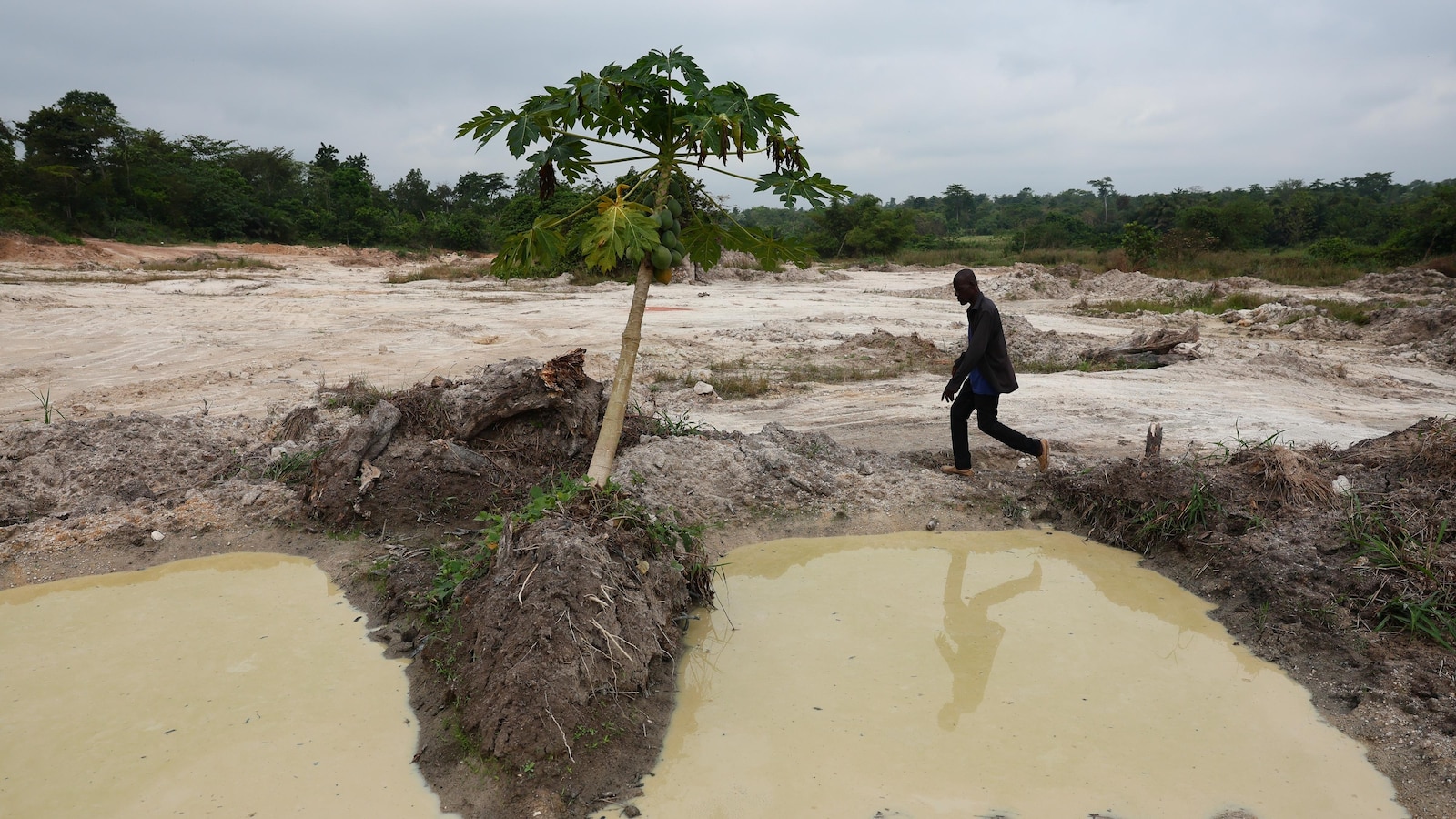
In the rural village of Kona, Ghana, Manu Yaw Fofie represents the face of a deepening agricultural crisis that threatens the livelihood of hundreds of thousands of families across West Africa. Born into cocoa farming and inheriting land that should have secured his family’s future, the 52-year-old farmer now finds himself making heartbreaking choices that would have been unthinkable just a few years ago. The land that has sustained his family for generations is being handed over to illegal sand miners—a decision driven by desperation rather than desire. While global chocolate manufacturers struggle to secure supplies and consumers worldwide continue their insatiable demand for chocolate products, an ironic tragedy unfolds in the very regions that produce nearly 70% of the world’s cocoa beans. Warehouses in Ghana and Ivory Coast overflow with rotting cocoa while farmers like Fofie watch their dreams crumble. His annual harvest has plummeted catastrophically from 300 bags during better times to just 50 bags in 2025, a decline attributed to various factors including the increasingly unpredictable effects of climate change. The sand mining that now occupies portions of his farm brings immediate cash but renders the soil permanently infertile—a Faustian bargain that exchanges tomorrow’s potential for today’s survival.
The Price Crash That Shattered an Industry
The cocoa market’s dramatic collapse tells a story of boom, bust, and the human cost of commodity volatility. In 2024, international cocoa futures soared to unprecedented heights, reaching more than $12,000 per metric ton—the highest prices the industry had seen in decades. This surge created expectations of prosperity that would soon prove cruelly misleading. By early 2025, those same futures had crashed to approximately $4,000 per metric ton as supply began to outstrip demand, creating a perfect storm for the farmers who form the backbone of this global industry. The whiplash effect of this price collapse has been devastating for cocoa-producing nations and their farmers. Ghana and Ivory Coast, which together account for nearly 70% of global cocoa bean production, implemented government-controlled pricing systems designed to protect farmers from exactly this kind of market volatility. However, these protective mechanisms have become part of the problem rather than the solution. When international prices crashed, global traders found themselves facing significant losses if they purchased cocoa at the fixed prices set by West African governments. The result has been a mounting stockpile of unsold cocoa beans deteriorating in warehouses while farmers who already delivered their harvests to government buyers remain unpaid for months. Edward Karaweh, former general secretary of the General Agricultural Workers Union in Ghana, noted that while commodity crises are somewhat inevitable, Ghanaian authorities were unprepared for the scale of this particular disaster, and inadequate preparation has severely limited their ability to mitigate the damage.
Government Responses and Farmer Frustrations
Faced with an escalating crisis, both Ghana and Ivory Coast have taken drastic measures to make their cocoa more attractive to international buyers, though these solutions have created new hardships for farmers. In January 2025, Ghana slashed its fixed cocoa price by 28%, bringing it down to 41,392 cedis (approximately $3,881) per metric ton in an attempt to align more closely with international market realities and entice buyers back to the table. This week, Ivory Coast followed suit with an even more dramatic reduction, cutting the price paid to farmers by more than half to 1,200 CFA francs ($2.13 per kilogram or $0.97 per pound) for the 2026 season. For farmers already struggling with declining yields and rising production costs, these price cuts represent an existential threat. The economic significance of cocoa to these nations cannot be overstated—in Ivory Coast, cocoa bean exports constitute 40% of total export revenue, while in Ghana they represent nearly 15%. Hundreds of thousands of families depend directly on cocoa farming for their livelihoods, and the ripple effects extend throughout entire communities and regional economies. Mercy Amponsah, a 50-year-old cocoa farmer in Ghana, articulated the human cost of these price reductions with stark simplicity: “Accepting the current price means my son will have to drop out of school.” She joined other farmers in traveling to the capital city of Accra in January to protest the price cuts, though their voices have thus far produced little relief.
Desperate Measures: From Cocoa to Gold and Sand
The crisis has driven farmers to abandon cocoa cultivation in favor of more immediately profitable—though often illegal and environmentally destructive—alternatives. In Ivory Coast, farmer François N’Gbin walks through his cocoa plantation pointing to the evidence of decline: blackened, dried-up pods damaged by disease and insufficient rainfall. Like Fofie in Ghana, N’Gbin has leased portions of his land to illegal gold miners, initially for a fee, though he subsequently obtained a mining license to avoid legal troubles with authorities. The mining operation on his farm now covers at least 1,000 square meters, leaving portions of his ancestral land scarred with murky, yellowish water-filled pits. His pragmatic assessment of the situation reveals the cold economic calculus driving these decisions: “Today, gold is more profitable than cocoa. We get 1,500 CFA francs ($2.67) per gram of gold, and we’re about to negotiate an increase.” Moussa Koné, president of the Ivorian cocoa farmers’ union, confirms that N’Gbin’s situation is far from unique, with many farmers across the region leasing their land to illegal gold miners or, in Ghana’s case, to sand miners who extract material for the booming construction industry. “Cocoa is not selling, but farmers still need money to feed their families,” Koné explained, summarizing the impossible position in which farmers find themselves. The environmental consequences of these alternative land uses are severe and long-lasting—sand mining renders soil infertile, effectively destroying the agricultural potential of land that has sustained cocoa cultivation for generations.
The Structural Problems Behind the Crisis
While the immediate price collapse triggered the current crisis, underlying structural issues have left West African cocoa farmers vulnerable and unable to benefit even when prices surge. The government-controlled pricing systems in Ghana and Ivory Coast, while intended to provide stability and protect farmers from market volatility, have instead created a disconnect between international market conditions and what farmers receive for their crops. When cocoa futures soared to record highs in 2024, farmers saw little benefit because their prices had been fixed at the beginning of the planting season based on earlier, lower market expectations. This meant they missed out on the windfall that international traders and chocolate manufacturers experienced during the price surge. When prices subsequently collapsed, however, farmers found themselves fully exposed to the downturn as governments slashed the fixed prices to align with new market realities and attract buyers. Climate change has compounded these economic challenges, contributing to declining yields and increased vulnerability to pests and diseases. Farmers report inconsistent rainfall patterns, extended dry periods, and weather conditions that favor the spread of plant diseases—all factors that reduce both the quantity and quality of their harvests. The combination of environmental stress, economic volatility, and structural market disadvantages has created a perfect storm that threatens the long-term viability of cocoa farming in West Africa. While producers in South America and Asia have increased their output and gained market share, West Africa still accounts for the majority of global cocoa production, making the sustainability crisis in Ghana and Ivory Coast a matter of international concern.
A Bleak Future Unless Change Comes
The outlook expressed by farmers like Fofie paints a troubling picture of an industry in potentially terminal decline. “If I keep this cocoa farm for the next 10 years, I would die a poor man,” Fofie stated bluntly, capturing the despair that has settled over cocoa-farming communities across West Africa. This sentiment represents more than individual frustration—it signals a generational shift away from an agricultural tradition that has defined these regions for over a century. When experienced farmers conclude that cocoa cultivation offers no viable future, younger generations receive a clear message that their prospects lie elsewhere, whether in urban migration, alternative crops, or the risky extraction industries that are scarring the landscape. The crisis also highlights the complex challenges facing global agricultural commodity markets, where the people who perform the actual labor of cultivation often capture the smallest share of value while bearing the greatest risks. As chocolate lovers in wealthy nations pay premium prices for artisanal products marketed with images of sustainable farming and fair trade, the reality on the ground in cocoa-growing regions tells a different story—one of farmers driven to environmental destruction by economic desperation, warehouses full of rotting inventory, and families forced to choose between education and survival. Without fundamental reforms to pricing mechanisms, greater investment in climate adaptation and agricultural support, and more equitable value distribution throughout the cocoa supply chain, the industry that supplies the world’s chocolate faces an uncertain future, and the farmers who make it all possible face the prospect of abandoning their heritage in favor of survival.