
Federal Agents Detain Columbia University Student in Controversial Early Morning Arrest
The Incident and Initial Response
In the early hours of Thursday morning, a Columbia University student was taken into custody by federal agents in what has become a deeply controversial incident that has sparked outrage among university officials, New York political leaders, and civil rights advocates. According to Claire Shipman, Columbia’s acting president, the arrest occurred around 6:30 a.m. at one of the university’s residential buildings. What has made this detention particularly alarming is the manner in which federal agents allegedly gained access to the building. Shipman stated in an email to the Columbia community that federal agents “made misrepresentations to gain entry to the building to search for a ‘missing person.'” The student detained was later identified as Elmina Aghayeva, an immigrant from Azerbaijan whose student visa was reportedly revoked in 2016 for failing to attend classes, according to the Department of Homeland Security.
The incident has raised serious questions about the tactics used by Immigration and Customs Enforcement (ICE) agents and the extent of their authority on university campuses. Manhattan Borough President Brad Hoylman-Sigal made even more serious allegations, claiming on social media that the agents “impersonated NYPD with fake badges and a phony missing persons bulletin for a 5 year old girl,” calling the level of civil rights violations “staggering.” The Department of Homeland Security’s statement confirmed that ICE agents arrested Aghayeva but made no mention of the alleged misrepresentations or impersonation claims. According to DHS, “the building manager and her roommate let officers into the apartment,” suggesting they gained entry through cooperation rather than force, though the circumstances under which that cooperation was obtained remain in dispute.
Political Leaders Demand Answers and Action
The incident has prompted swift and forceful responses from political leaders across New York State, with officials from various levels of government expressing outrage and demanding accountability. Governor Kathy Hochul voiced serious concerns about the arrest, stating, “I want to know if they had a warrant. What the conditions of that arrest were. And we’re still looking for more information, but, to misrepresent who they are, I’ve said they’re out of control.” She later posted on social media: “Let’s be clear about what happened: ICE agents didn’t have the proper warrant, so they lied to gain access to a student’s private residence. I’ve proposed a bill that would ban ICE from entering sensitive locations like schools and dorms. Let’s get it passed now.”
Senator Chuck Schumer added his voice to the chorus of criticism, posting on social media that “It is outrageous that ICE agents falsely represented themselves to arrest a Columbia graduate student by entering university-owned housing without a warrant. This is unacceptable. We need immediate answers from ICE on the student’s whereabouts.” Representatives Jerry Nadler and Micah Lasher issued a joint statement declaring they were “disgusted and outraged that ICE agents entered a Columbia University residential building under false pretenses and without a judicial warrant to detain a student,” adding that “ICE has no place in our City, schools, and homes.” New York City Public Advocate Jumaane Williams characterized the alleged misrepresentation as a “despicable and lawless act,” stating that “This rogue agency has no regards for our policies, our laws, or our rights.”
University Response and Safety Measures
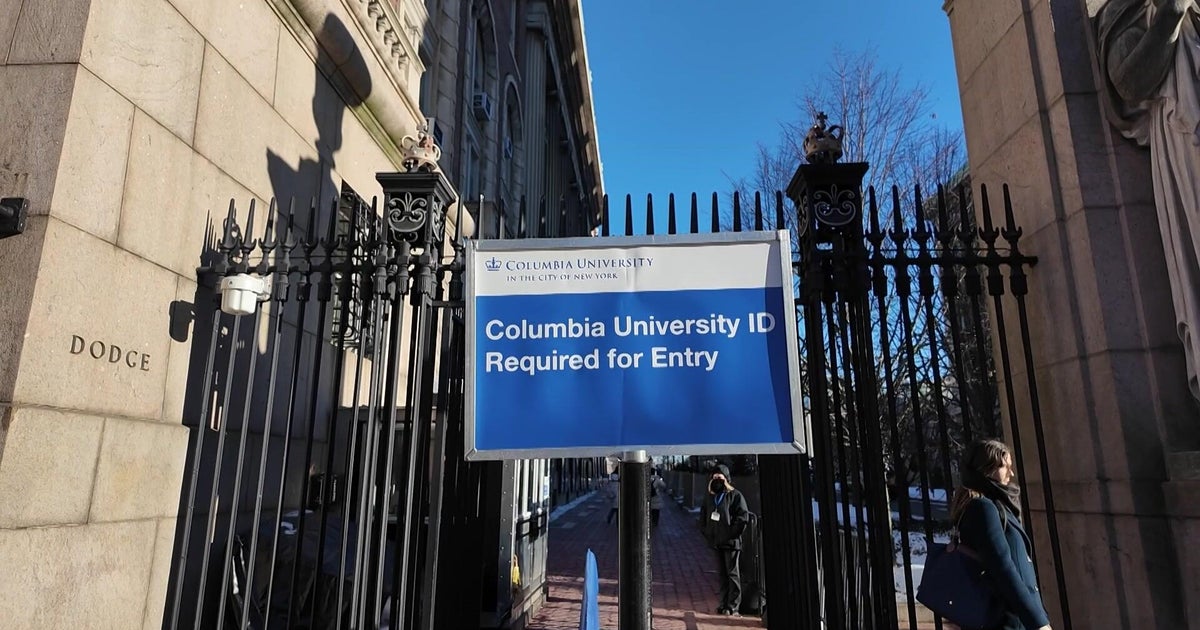
Columbia University took immediate steps to address the situation and protect its students. Acting President Shipman emphasized in her communication to the Columbia community that “all law enforcement agents must have a judicial warrant or judicial subpoena to access non-public areas of the University, including housing, classrooms, and areas requiring CUID swipe access. An administrative warrant is not sufficient.” She instructed students and staff that if law enforcement agents seek entry to non-public areas of the university, they should ask the agents to wait before entering any non-public areas until Public Safety is contacted, which would then coordinate with the Office of the General Counsel.
The university followed up with concrete actions to enhance security and support for its students. Columbia announced it would be adding more safety patrols to residential buildings and organizing webinars for students on immigration policy and law, scheduled for Thursday and Friday at 3 p.m. The incident sparked protests on campus Thursday afternoon as students and faculty members gathered to express their concerns about the detention and the methods allegedly used by federal agents. City Council Speaker Julie Menin and majority leader Shaun Abreu, both Columbia alumni, said they had been briefed on the situation and offered their assistance to the university, stating emphatically that “ICE has no place in our schools and universities.” The university indicated it was working to gather more information, reach Aghayeva’s family, and provide legal support.
The Broader Context and Immigration Enforcement
This incident at Columbia University doesn’t exist in isolation but is part of a broader pattern of immigration enforcement actions that have raised concerns about civil liberties and the appropriate boundaries of federal authority. The university has already been a flashpoint for controversial issues, particularly since campus protests erupted following the Hamas attack on Israel on October 7, 2023, and Israel’s subsequent military response in Gaza. Those protests spread nationwide and brought significant attention to Columbia’s campus. More recently, in March 2025, another Columbia graduate student, Mahmoud Khalil, a pro-Palestinian activist involved in campus protests, was picked up by federal agents at his Manhattan apartment, triggering a lengthy legal battle as the Trump administration sought to deport him.
The controversy surrounding Aghayeva’s arrest highlights fundamental questions about how immigration enforcement should be conducted, particularly in educational settings that have traditionally been considered sensitive locations. Representative Adriano Espaillat characterized the incident as “yet another reminder that Columbia University and other institutions must enhance the protections and policies they utilize to create a safe environment for those they serve and employ.” The NYPD was quick to distance itself from the operation, stating it had “no coordination in civil immigration enforcement, no involvement whatsoever” in Thursday’s incident, which adds weight to the allegations that federal agents may have misrepresented themselves as local police officers to gain entry to the building.
Legal and Constitutional Questions
The legal implications of this incident are significant and touch on fundamental constitutional protections. The central legal question revolves around whether federal agents violated Fourth Amendment protections against unreasonable searches and seizures by allegedly misrepresenting their identity and purpose to gain entry to a private residence. If agents did indeed claim to be searching for a missing five-year-old child when they were actually executing an immigration enforcement action, this could constitute a serious violation of established legal procedures and precedents. The distinction between an administrative warrant and a judicial warrant is also crucial—administrative warrants are issued by the agency itself rather than by a judge and generally carry less weight in terms of authorizing entry into private spaces.
The incident raises broader questions about the balance between immigration enforcement and civil liberties, particularly in educational settings. Universities have long maintained that they should be considered sensitive locations where immigration enforcement should be limited or conducted with special care, similar to hospitals, places of worship, and courthouses. The apparent use of deception to gain entry to a university residence hall represents what many see as a dangerous precedent that could undermine trust between students and authorities and create an atmosphere of fear on campus. As Representative Nadler and Assemblymember Lasher noted in their joint statement, “These actions do not keep us safe, they only sow distrust and fear into our community. ICE is terrorizing our neighbors and ripping students from their homes.”
Moving Forward: Policy Implications and Student Safety
This incident has accelerated calls for legislative action to protect students and limit immigration enforcement activities on university campuses. Governor Hochul’s proposed bill to ban ICE from entering sensitive locations like schools and dormitories has gained renewed urgency in light of Thursday’s events. Such legislation would codify protections that many believed already existed informally and would provide clear legal boundaries for federal enforcement activities in educational settings. The question of how to balance legitimate immigration enforcement with the need to maintain universities as safe spaces for learning and intellectual exploration remains at the heart of this debate.
For students, particularly those who may be vulnerable to immigration enforcement, the incident serves as a stark reminder of the importance of understanding their rights and the resources available to them. Columbia’s decision to hold webinars on immigration policy and law reflects the recognition that students need to be informed and prepared. The university’s enhanced security measures and clearer protocols for responding to law enforcement requests represent important steps toward protecting student safety and privacy. As this story continues to develop, it will likely have implications not just for Columbia but for universities across the country as they grapple with how to protect their students while navigating an increasingly aggressive approach to immigration enforcement. The outcome of any legal challenges to this arrest and the potential passage of protective legislation in New York could set important precedents for how immigration enforcement is conducted in educational settings nationwide.