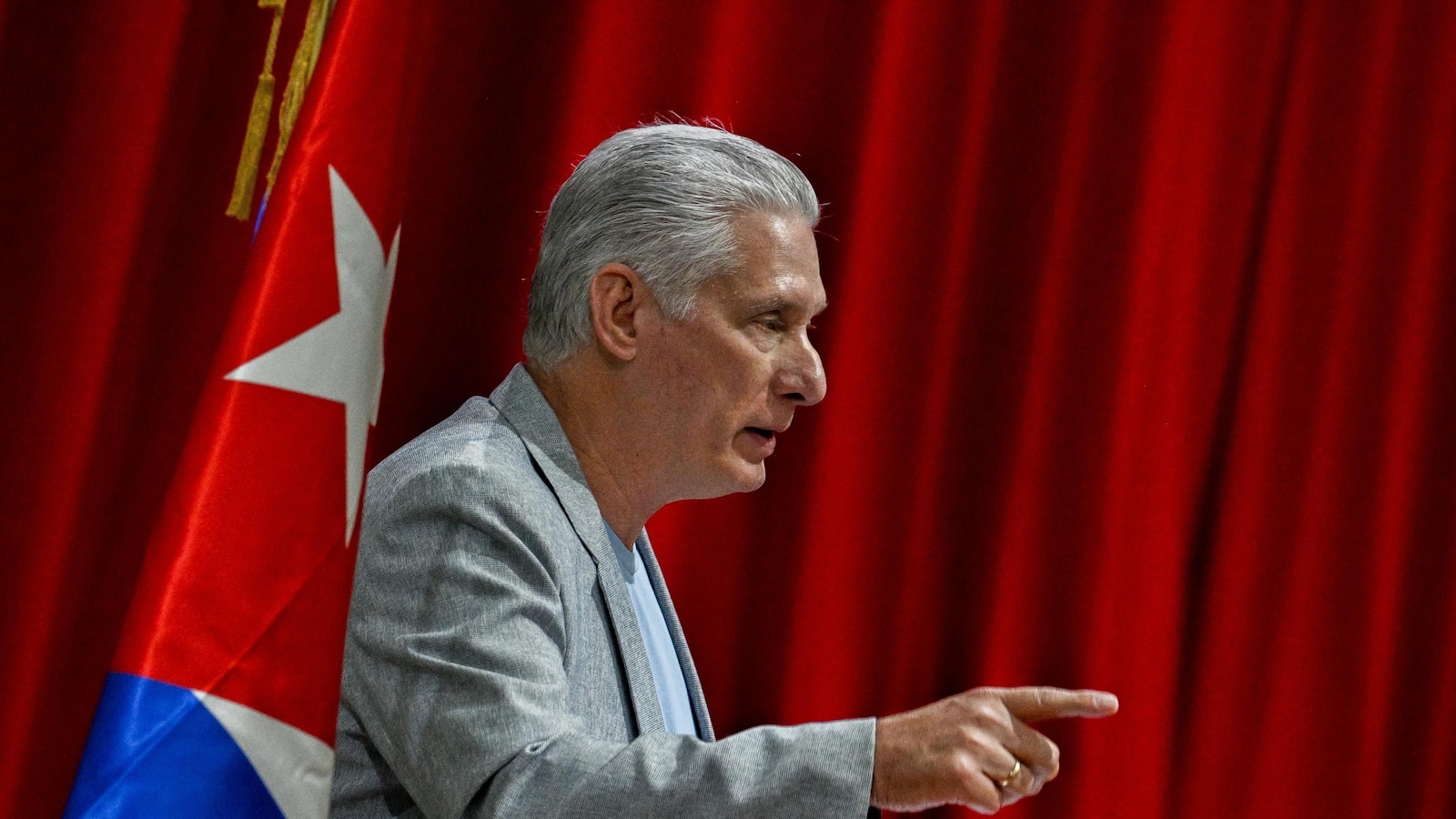

Cuban President Speaks Out: Defending Sovereignty Amid Rising U.S. Tensions
A Defiant Stance Against Potential Military Action
In a rare and candid interview with NBC News’ Meet the Press, Cuban President Miguel Díaz-Canel delivered a strong message to Washington: Cuba will not back down in the face of threats. Speaking through a translator from San Juan, Puerto Rico, the Cuban leader made it clear that his nation sees no legitimate justification for any U.S. military intervention on the island. Díaz-Canel warned that any attempt at invasion, regime change, or even what he called a “surgical operation” to remove him from power would be met with fierce resistance from the Cuban people. His words carried the weight of Cuba’s revolutionary history as he invoked the nation’s anthem, stating that if Cubans must fight and die for their homeland, they will do so willingly. The president emphasized that while such an attack would prove costly for all involved and destabilize regional security, the people of Cuba would defend their sovereignty at any cost. This defiant position comes at a time when relations between the two neighbors remain deeply strained, despite acknowledgment from both sides that some level of communication is taking place behind closed doors.
The Current State of U.S.-Cuba Relations
The tension between Cuba and the United States has reached new heights in recent months, creating an atmosphere of uncertainty and concern on the island nation. While both governments have confirmed that talks are happening, neither side has provided details about the nature or progress of these discussions. President Díaz-Canel has been vocal in his criticism of what he describes as Washington’s “hostile policy” toward Cuba, arguing that the U.S. government has “no moral authority to demand anything from Cuba.” His administration has expressed willingness to engage in open dialogue on any topic without preconditions, but with one important caveat: Cuba will not accept demands to change its political system, just as it doesn’t demand that the United States alter its own government structure. This position reflects Cuba’s long-standing insistence on maintaining its socialist system and political independence, principles that have defined the nation’s identity since the 1959 revolution. The standoff represents more than just a political disagreement; it embodies a fundamental clash between two very different visions of governance and national sovereignty that has persisted for more than six decades.
The Energy Crisis Crippling Daily Life
At the heart of Cuba’s current struggles lies a severe energy crisis that the government attributes directly to what it calls a U.S. energy blockade. The island nation produces only about 40% of the fuel it needs to function, making it heavily dependent on imports to keep the lights on, vehicles running, and essential services operating. This shortage has created a cascading effect throughout Cuban society, impacting everything from hospitals and clinics to public buses and the production of basic goods and services that people rely on daily. The situation became dramatically worse following the U.S. military intervention in Venezuela in early January, when American forces seized President Nicolás Maduro and transported him to New York to face drug trafficking charges. Venezuela had been one of Cuba’s most reliable sources of oil, and the disruption of that relationship left the island scrambling to find alternative suppliers. The Trump administration’s subsequent work with ruling party leaders in Venezuela to implement a phased plan to address that country’s political and economic crisis further complicated Cuba’s ability to secure the energy resources it desperately needs to maintain basic functions and prevent a complete economic collapse.
Russia Steps In as an Energy Lifeline
After three long months without any oil shipments, Cuba finally received some relief in March when a Russian tanker arrived carrying 730,000 barrels of crude oil. This delivery represented a critical lifeline for an island nation on the brink of a complete energy breakdown. Russia has committed to sending a second tanker, providing Cuba with at least temporary relief from the immediate crisis. Interestingly, despite President Trump’s threats in January to impose tariffs on any country that sells or provides oil to Cuba, the administration allowed the Russian tanker to proceed without interference. This decision puzzled some observers who had expected more aggressive enforcement of the threatened sanctions. At the time the tanker was permitted to dock, President Trump made dismissive comments about Cuba’s future, declaring that “Cuba’s finished” and characterizing the government as “bad” and “corrupt.” He suggested that whether or not they received “a boat of oil,” it ultimately wouldn’t matter for the island’s fate. These remarks, while seemingly casual, carried significant weight and were interpreted by Cuban leadership as part of a broader pattern of threatening rhetoric that cannot be ignored or taken lightly by a government responsible for protecting its people.
Taking Trump’s Words as a Warning
President Díaz-Canel made it clear during his interview that he and his government take President Trump’s statements very seriously, treating them not as political bluster but as genuine warnings that require a responsible response. The Cuban leader pointed to repeated suggestions from U.S. officials and the American president himself that “Cuba is next,” that there’s “a way out,” and that the United States intends to “take over Cuba.” From his position of leadership, Díaz-Canel said these aren’t just words to be dismissed—they’re threats that demand Cuba prepare itself for various scenarios, including the possibility of military intervention. This interpretation reflects the deep historical mistrust between the two nations, rooted in decades of attempted regime change efforts, economic sanctions, and the failed Bay of Pigs invasion of 1961. For Cuba’s leadership, vigilance isn’t paranoia; it’s a necessary response to a very real pattern of U.S. intervention in Latin American affairs. The president emphasized that his responsibility to the Cuban people requires him to take these threats seriously and to ensure that the nation is prepared to “protect our people, protect our project and protect our country” against whatever challenges may come.
The Broader Context of Latin American Relations
Cuba’s current predicament reflects broader tensions in U.S.-Latin American relations, particularly regarding countries that have pursued socialist or left-leaning policies. The dramatic intervention in Venezuela, which resulted in the arrest of President Maduro and cooperation with elements of Venezuela’s ruling party to implement political changes, has sent shockwaves throughout the region. For Cuba, which has maintained close ties with Venezuela for years, these events serve as a stark reminder that U.S. policy toward governments it opposes can shift from economic pressure to direct military action. The situation also highlights the complicated geopolitical dynamics at play, with Russia stepping into the role of energy supplier, potentially strengthening ties between Moscow and Havana at a time when Washington seeks to limit Russian influence in the Western Hemisphere. As Cuba faces its worst energy crisis in years, the question of sovereignty versus survival becomes increasingly pressing. Will the island maintain its independent path despite tremendous economic hardship, or will circumstances force some accommodation with U.S. demands? President Díaz-Canel’s defiant words suggest that Cuba’s leadership remains committed to defending the nation’s political system, even if that stance comes with significant costs. The coming months will test whether this resolve can withstand the practical challenges of keeping a nation functioning without adequate fuel, and whether diplomacy can find a path forward that respects Cuban sovereignty while addressing the humanitarian needs of its people.