

The Political Stalemate: Inside the Tense Negotiations Over DHS Funding and Immigration Reform
Trump’s Ambiguous Support Casts Shadow Over Bipartisan Negotiations
The ongoing negotiations on Capitol Hill to resolve the Department of Homeland Security funding crisis are taking place under a cloud of uncertainty, largely due to President Trump’s unclear position on any potential agreement. When questioned by CBS News reporters about the deal taking shape between Republicans and Democrats, the President offered characteristically noncommittal remarks that have left lawmakers guessing about his true intentions. “I don’t want to comment until I see the deal, but as you know they’re negotiating a deal,” Trump stated, before adding a more concerning caveat: “I guess they’re getting fairly close. But I think any deal they make, I’m pretty much not happy with it.” These comments reflect the president’s longstanding hesitance to work collaboratively with Democrats on immigration-related issues, even as the crisis deepens and affects millions of Americans traveling through airports.
The President’s lukewarm response came after he hosted a small gathering of Senate Republicans at the White House on Monday evening, a meeting that was supposed to provide clarity and direction for the party’s negotiating strategy. Earlier that same day, Trump had actively discouraged Republicans from reaching any agreement with their Democratic counterparts, instead urging them to focus exclusively on passing the SAVE America Act, a Republican priority focused on election integrity measures. However, despite the president’s public skepticism, senators who attended the private White House meeting emerged with a decidedly different message. They spoke optimistically about a path forward that they claimed had received the president’s blessing, suggesting that the mixed messaging from Trump might be more about political posturing than actual opposition to compromise.
Republicans Chart New Course Through Budget Reconciliation Process
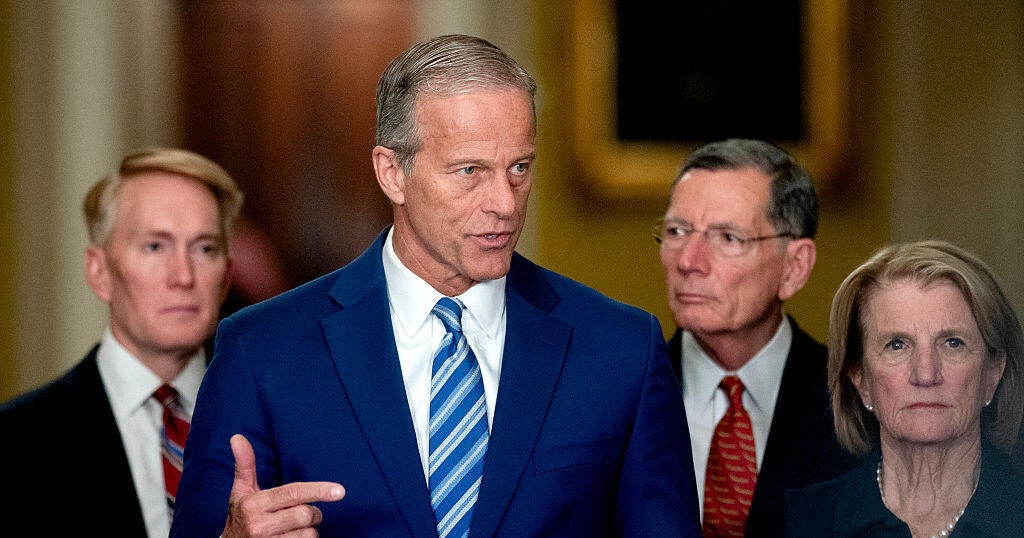
In a significant development that could reshape the entire negotiation landscape, Senator Lindsey Graham, who chairs the powerful Senate Budget Committee, made an announcement that Republicans would “expeditiously move toward creating a second budget reconciliation bill.” This strategic pivot represents the GOP’s attempt to break through the impasse that has paralyzed normal legislative proceedings and left critical homeland security functions unfunded. The Republican plan, which senators began outlining earlier in the week, involves addressing the contentious issue of Immigration and Customs Enforcement (ICE) funding through the budget reconciliation process, while also incorporating key elements of the SAVE America Act, the election-focused legislation that has become a priority for conservative lawmakers.
The budget reconciliation approach offers Republicans a significant tactical advantage in the closely divided Senate. Unlike regular legislation, which requires 60 votes to overcome a filibuster, reconciliation bills can pass with a simple majority of 51 votes, meaning Republicans could theoretically advance their agenda without any Democratic support whatsoever. However, this procedural shortcut comes with its own set of complications and limitations. Congressional rules strictly require that any provisions included in a reconciliation bill must have a direct and significant impact on the federal budget, a constraint that has some Republican lawmakers questioning whether their ambitious plans can actually fit within these parameters. Senator Mike Lee of Utah, known for his strict interpretation of Senate rules, expressed serious doubts about the strategy, calling the inclusion of election-related provisions “essentially impossible” under reconciliation rules.
Despite these concerns, Chairman Graham issued a forceful statement expressing confidence in the committee’s ability to deliver on the Republican vision. He emphasized that the committee would proceed “after consultation with the president and majority leader,” signaling that this approach has buy-in from party leadership. Graham framed the reconciliation bill’s primary purpose as ensuring “adequate funding to secure our homeland,” while also noting, “I also think we have many opportunities to improve voter integrity through reconciliation,” demonstrating Republicans’ determination to advance both immigration enforcement and election integrity priorities simultaneously. His statement concluded with strong words of support for party leadership: “President Trump and Leader Thune are right to push for a second reconciliation bill to address the threats we face and keep our elections secure and fair. I, along with the great members of the Senate Budget Committee, intend to deliver.”
Mounting Crisis at Airports Adds Urgency to Congressional Deadlock
The political maneuvering in Washington is taking place against a backdrop of escalating chaos at airports nationwide, creating real-world consequences that are putting enormous pressure on lawmakers to find a resolution quickly. Transportation Security Administration agents, who are responsible for screening millions of passengers and ensuring aviation security, have been working without paychecks as the DHS shutdown drags on. The impact has been devastating to TSA’s workforce: hundreds of agents have quit their positions in recent weeks, choosing to find employment that actually pays them rather than continue working for promised future compensation. Among those who remain, sick callouts have increased dramatically, as demoralized workers use whatever means available to avoid reporting for unpaid duty.
The timing of this workforce crisis couldn’t be worse. TSA agents are scheduled to miss yet another paycheck this Friday, marking another pay period without income for these essential security workers. Simultaneously, spring break travel season is adding massive volumes of passengers to an already strained system. The combination of reduced staffing and increased passenger loads has created nightmarish conditions at security checkpoints across the country, with travelers reporting wait times stretching for hours. These visible signs of government dysfunction are creating political pressure that lawmakers cannot ignore, as constituents bombard congressional offices with complaints about missed flights, disrupted vacation plans, and the general breakdown of a system that Americans have come to take for granted.
Adding to the urgency is the congressional calendar itself. Lawmakers are scheduled to begin a two-week recess next week, a pre-planned break that would normally allow members to return to their home states and districts. However, Senate Majority Leader John Thune has publicly suggested that the recess could be canceled if the DHS funding standoff remains unresolved, effectively holding the entire Senate hostage until a deal is reached. This threat is designed to concentrate minds and accelerate negotiations, as senators from both parties are eager to return home and tend to constituent needs and political business in their states. The combination of airport chaos, impending missed paychecks, and a potentially canceled recess has created what political observers describe as a pressure cooker environment on Capitol Hill.
Democratic Demands for ICE Reforms Complicate Path to Agreement
What briefly looked like a breakthrough on Monday quickly dissolved into renewed uncertainty by Tuesday, as fundamental disagreements between the parties reasserted themselves. The momentary optimism that followed the White House meeting with Republican senators gave way to the reality that Democrats remain firmly committed to their demand for reforms to Immigration and Customs Enforcement before they will agree to fund the agency. Republicans had formally submitted their proposal earlier on Tuesday, which would restore funding to many DHS component agencies including TSA, FEMA, and the Coast Guard, while specifically withholding money from ICE’s Enforcement and Removal Operations division, the arm responsible for interior immigration enforcement and deportations.
Democrats emerged from their own caucus meeting Tuesday afternoon presenting a united front on their insistence that any funding package must include meaningful reforms to ICE’s operations and oversight. This position has been consistent since the tragic shootings of Alex Pretti and Renee Good by federal agents in Minneapolis this past January, an incident that galvanized Democratic resolve to impose accountability measures on immigration enforcement agencies. Democrats have repeatedly stated they cannot, in good conscience, provide funding for immigration enforcement operations that they view as operating without sufficient oversight or accountability. At the same time, Democrats have shown flexibility by offering in recent weeks to fund DHS agencies that don’t fall under the ICE umbrella, suggesting a willingness to find middle ground that protects critical homeland security functions while addressing their concerns about immigration enforcement.
However, Republicans argue that the Democratic position is more restrictive than it initially appears. Senator Chris Murphy of Connecticut, a key negotiator for Democrats, explained to reporters that “the problem is that they have everybody at DHS right now doing immigration enforcement.” He noted that even funding agencies like Customs and Border Protection or ICE’s investigative division would effectively mean “you’re providing for immigration enforcement.” Murphy reiterated the Democratic position clearly: “We, as a caucus, we’ve said we’re not funding a lawless immigration enforcement operation, and that remains the caucus position.” Senate Majority Leader Chuck Schumer confirmed after the Democratic caucus meeting that his party would send Republicans a counteroffer that includes their demanded reforms, but Republican Leader Thune pushed back firmly, saying “if they want reforms, then they ought to figure out how to fund, fully fund ICE.” Thune placed responsibility squarely on Democrats, declaring “We’re ready to move and it’s really going to be incumbent upon them. If DHS is going to open up and we’re going to have TSA agents starting to get paid again before the weekend, the ball’s in Democrats’ court.” This exchange of statements suggests that despite days of negotiations and mounting external pressure, the fundamental divide between the parties remains as wide as ever, leaving the resolution of this crisis very much in doubt.