

The Historic DHS Shutdown: Political Gridlock Leaves Homeland Security in Limbo
A Shutdown Without Precedent
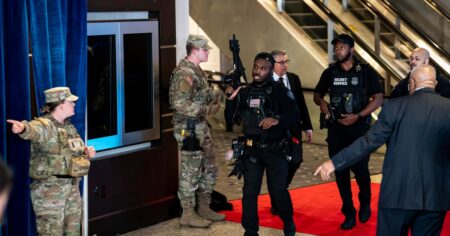
The Department of Homeland Security shutdown has entered uncharted territory, becoming the longest agency shutdown in American history at 45 days and counting. What began as a dispute over immigration policy following two controversial deadly shootings by federal agents in Minneapolis has evolved into a complex political standoff that shows no signs of immediate resolution. While Congress successfully funded most government agencies in recent months, DHS has remained the glaring exception, caught in the crossfire of partisan disagreements and internal Republican divisions. The shutdown’s impact extends far beyond Washington politics, affecting tens of thousands of DHS employees who continue working without paychecks, including TSA officers manning airport security checkpoints and ICE agents conducting immigration enforcement operations across the country.
The roots of this crisis trace back to Democratic demands for comprehensive reforms to immigration agencies, particularly Immigration and Customs Enforcement, in the wake of the Minneapolis shootings. What initially seemed like a straightforward funding issue has morphed into a multifaceted debate about immigration policy, agency accountability, and the proper balance of power between the executive and legislative branches. As the shutdown drags on, the human cost becomes increasingly apparent, with thousands of dedicated public servants facing financial uncertainty while continuing to protect American borders and infrastructure. The situation has exposed deep fractures not only between the two major parties but also within the Republican caucus itself, where differing approaches to resolving the crisis have created additional obstacles to finding common ground.
Senate Compromise Meets House Resistance
In what appeared to be a breakthrough moment, the Senate achieved something rare in today’s polarized political climate: a bipartisan agreement. After weeks of negotiations between Senate Democrats and the White House over ICE reforms yielded no substantial progress, senators pivoted to a pragmatic alternative. Recognizing the mounting pressure on other DHS agencies, particularly the Transportation Security Administration, the Senate crafted a creative solution that would fund most of the department while leaving out the controversial ICE funding that had become the primary sticking point. This strategic maneuver reflected the real-world consequences of the shutdown, as TSA agents working without pay struggled to maintain airport security operations across the nation.
The Senate’s unanimous approval of this funding measure early Friday morning seemed to signal a path forward, especially after President Trump announced he would issue an executive order to ensure TSA officers received payment. The measure deliberately excluded funding for ICE and portions of Customs and Border Protection, essentially sidestepping the most contentious issues to address the immediate crisis affecting other homeland security operations. However, this carefully constructed compromise hit a brick wall when it reached the House of Representatives. Speaker Mike Johnson dismissed the Senate’s approach as a “joke,” reflecting a fundamental disagreement about how to handle the impasse. Rather than accepting the Senate’s partial solution, House Republicans pushed forward with their own alternative: a 60-day continuing resolution that would fund the entire DHS, including the controversial immigration enforcement agencies.
The House vote late Friday revealed the depth of partisan divisions, with the Republican continuing resolution passing with support from only three Democrats. This stark contrast between the Senate’s unanimous bipartisan vote and the House’s largely party-line decision underscores the challenge of bridging the gap between the two chambers. Neither the Senate nor the House is scheduled to return to Washington until mid-April, meaning the shutdown will continue for at least another two weeks unless lawmakers take the extraordinary step of cutting their recess short. The competing visions for resolving the crisis—the Senate’s pragmatic partial funding versus the House’s all-or-nothing approach—have created a legislative stalemate with no clear resolution in sight.
The Political Chess Match Continues
Behind the scenes, Senate Majority Leader John Thune is working with Minority Leader Chuck Schumer to explore whether any middle ground exists for DHS funding. However, the initial signals are not encouraging. Schumer’s office has drawn a firm line in the sand, making clear that Democrats will not accept anything less than the Senate’s unanimous bipartisan agreement. This position presents a significant challenge for Republicans, who need Democratic support in the Senate to reach the 60-vote threshold required to advance most legislation. With 53 Republicans in the chamber, bipartisan cooperation isn’t just desirable—it’s mathematically necessary.
This reality has prompted some Republicans to call for more aggressive tactics. Senator Mike Lee of Utah has been particularly vocal, urging Senate leadership to reconvene Congress immediately rather than waiting until mid-April. Lee argues that allowing lawmakers to remain on recess removes any pressure on Senate Democrats to compromise on DHS funding. He’s advocated for bringing senators back to Washington and forcing floor debates on the issue, suggesting this would apply meaningful pressure to reach a resolution. Lee has even pointed to a constitutional provision allowing the president to convene Congress “on extraordinary Occasions,” raising the possibility of presidential intervention to end the legislative recess early.
The debate over whether to interrupt the congressional recess highlights competing philosophies about legislative strategy and negotiation. Some Republicans, like Lee, believe that keeping lawmakers in Washington and maintaining sustained pressure will eventually force Democrats to accept terms more favorable to Republican priorities. Others worry that premature action could backfire, hardening positions and making compromise even more difficult. Meanwhile, Democrats appear confident in their position, believing that public opinion will support their stance on immigration reform and that Republicans will ultimately bear responsibility for the extended shutdown.
The Human Cost of Political Deadlock
While politicians debate strategy in Washington, the shutdown’s real-world impact continues to mount. Tens of thousands of DHS employees are working without pay, maintaining critical security operations even as their own financial situations become increasingly precarious. White House border czar Tom Homan appeared on “Face the Nation” to highlight this troubling reality, noting that lawmakers are on vacation while these dedicated public servants go without paychecks. The situation particularly affected TSA agents, who faced the impossible position of protecting airline passengers and airport security while worrying about their own bills and family expenses.
President Trump’s executive order to pay TSA workers provided some relief, with paychecks set to begin arriving on Monday following the announcement. However, this solution, while welcome, only addresses part of the problem. ICE agents, who have been assisting TSA at airports to help manage security during the crisis, remain unpaid. Homan stated that ICE personnel would continue supporting TSA operations until normal staffing levels resume and airports are fully secure. This spirit of interagency cooperation provides a stark contrast to the dysfunction in Congress, as federal agents from different DHS components work together seamlessly while their legislative overseers cannot agree on funding.
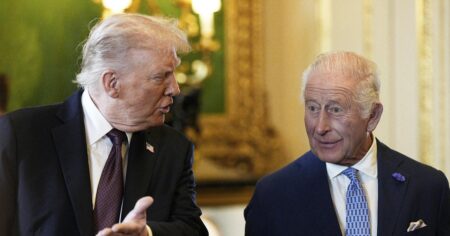
The president’s comments from Air Force One praising ICE workers as “amazing” and pledging to pay TSA agents “for as long as we have to” demonstrate the executive branch’s awareness of the human cost of this shutdown. However, these stopgap measures cannot fully substitute for the comprehensive funding resolution that only Congress can provide. The longer the shutdown continues, the more these temporary fixes strain under the weight of sustained operations without proper funding. Morale among DHS employees inevitably suffers when dedicated professionals must choose between public service and financial stability, potentially leading to retention problems that could outlast the shutdown itself.
Constitutional Questions and Executive Authority
The current crisis raises interesting questions about the limits and possibilities of executive authority during legislative gridlock. President Trump’s decision to use executive action to pay TSA workers demonstrates one approach to addressing immediate problems when Congress cannot act. This move likely relied on existing authorities within the executive branch to redirect funding or draw upon emergency provisions, though the specific legal mechanism remains unclear. The action provided crucial relief to airport security personnel and prevented what could have become a serious transportation security crisis as unpaid TSA agents might have called in sick or resigned.
However, this executive solution also highlights the limitations of presidential power. While the president could find a way to compensate TSA workers, he cannot unilaterally fund the entire Department of Homeland Security without congressional appropriation. The Constitution vests Congress with the power of the purse, meaning that sustained funding for government operations must ultimately come through the legislative process. Senator Lee’s suggestion that the president could convene Congress on “extraordinary Occasions” points to another potential use of executive authority, though this power is rarely exercised and would likely generate its own political controversy.
The broader question is whether these executive workarounds, while providing temporary relief, actually reduce pressure on Congress to reach a comprehensive solution. Some argue that by addressing the most visible problems—such as TSA staffing at airports—the administration removes the immediate crisis atmosphere that might otherwise force lawmakers to compromise. Others contend that these executive actions are necessary to prevent catastrophic failures in critical security operations and that Congress should not be allowed to hold essential services hostage to political disagreements. This tension between executive action and legislative responsibility will likely continue as long as the shutdown persists.
Looking Ahead: Paths to Resolution
As the shutdown enters its seventh week with no end in sight, the potential paths to resolution remain unclear. The fundamental disagreement between the Senate’s partial funding approach and the House’s insistence on comprehensive funding represents more than just a procedural dispute—it reflects deep divisions over immigration policy and agency accountability. Democrats argue that reforms to ICE are essential following the Minneapolis shootings and that funding the agency without addressing these concerns would be irresponsible. Republicans counter that leaving ICE unfunded compromises national security and immigration enforcement, and that policy reforms should be debated separately from basic funding questions.
One possible scenario involves negotiations during the extended recess period, with leadership from both chambers and both parties working behind the scenes to craft a compromise that can pass both the House and Senate. This might involve pairing some level of ICE funding with modest reforms or oversight provisions that address Democratic concerns without completely overhauling the agency. Another possibility is that growing public pressure or a specific crisis related to the shutdown forces lawmakers to return early and hammer out an agreement under time pressure. The least desirable outcome would be continued gridlock stretching into late April or beyond, with the shutdown becoming increasingly normalized and its impacts compounding over time.
Ultimately, resolving this crisis will require both parties to prioritize homeland security over political positioning. The tens of thousands of DHS employees working without pay deserve better than being caught in the middle of Washington’s dysfunction. The American people, who depend on these agencies for border security, transportation safety, and immigration enforcement, need their government to function effectively. As this historic shutdown continues, the pressure will mount on both Republicans and Democrats to find common ground and restore funding to this critical department. The question is whether that pressure will translate into action before even more damage is done to employee morale, agency operations, and public confidence in government.