


Justice Department Moves to Drop Charges in Breonna Taylor Case: What It Means and Why It Matters
A Painful Decision That Reopens Old Wounds
In a move that has sent shockwaves through communities still grappling with questions of police accountability and racial justice, the U.S. Department of Justice announced Friday that it wants to dismiss criminal charges against two former Louisville police officers connected to the tragic death of Breonna Taylor. Joshua Jaynes and Kyle Meany, who faced civil rights violations for their roles in obtaining the warrant that led to the botched raid on Taylor’s apartment in March 2020, may now walk away without facing federal prosecution. The Justice Department filed a motion asking the court to dismiss the case “with prejudice,” a legal term meaning the charges cannot be brought back in the future. As of now, the judge hasn’t made a final ruling, but the intention is clear: the government no longer wishes to pursue these men in court. For Taylor’s family and the millions who watched her case become a rallying cry during the summer of 2020’s racial justice protests, this decision feels like salt in a wound that never fully healed.
The Background: What These Officers Were Accused Of
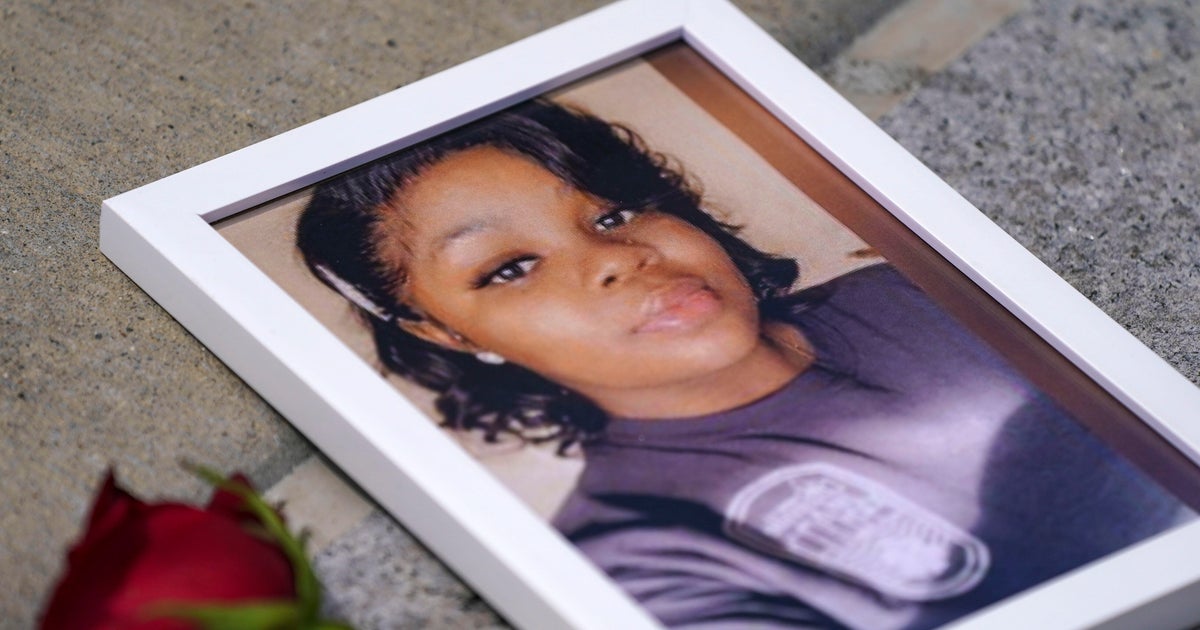
To understand why this dismissal matters so much, it’s important to remember what Jaynes and Meany were originally accused of doing. Breonna Taylor, a 26-year-old emergency room technician, was asleep in her Louisville apartment when police executed a no-knock warrant in the early morning hours of March 13, 2020. Her boyfriend, believing intruders were breaking in, fired a warning shot. Police returned fire, unleashing a barrage of bullets that killed Taylor in her own hallway. The raid was connected to a narcotics investigation, but Taylor herself had no criminal record, and no drugs were found in her home. The Justice Department’s case against Jaynes and Meany centered on how that warrant was obtained in the first place. Prosecutors alleged that Jaynes, who drafted the warrant application, included outright lies and critical omissions when he presented his case to a Jefferson County judge. According to the government, Meany then signed off on this faulty affidavit despite knowing it contained false information. In doing so, both men were charged with violating Taylor’s Fourth Amendment rights—her constitutional protection against unreasonable searches and seizures. Beyond the civil rights charges, Meany faced an additional felony count for allegedly lying to FBI investigators, while Jaynes was charged with conspiracy and falsification of records for supposedly trying to cover up the false warrant after Taylor’s death became national news.
Why the Government Says It’s Walking Away
The Justice Department’s explanation for dropping these charges points to a series of legal setbacks that weakened their case considerably. On two separate occasions—once in 2023 and again in 2025—federal judges rejected the government’s attempts to prosecute the more serious felony versions of the charges against Jaynes and Meany. Instead, the courts reduced the allegations to misdemeanor “color-of-law” violations, which carry far lighter penalties. Color-of-law offenses involve government officials abusing their authority, but at the misdemeanor level, they’re treated much less seriously than felonies. In their court filing, attorneys from the Civil Rights Division cited these judicial defeats as a key factor in their decision, writing that after “further review” and “in the exercise of its discretion,” they determined the case should be dismissed “in the interest of justice.” However, critics have pointed out a glaring omission in the Justice Department’s reasoning: the filing barely acknowledges that other felony charges were still pending and hadn’t been thrown out by the courts. Meany’s charge of making false statements to federal investigators carried up to five years in prison, while Jaynes still faced conspiracy and records falsification charges that could have resulted in significant prison time. These charges weren’t affected by the judges’ earlier rulings, raising questions about why the government chose to abandon the entire case rather than proceed with the counts that remained viable.
The Human Cost: Families and Communities Left Behind
The legal maneuvering and technical language of court filings can sometimes obscure the human reality at the center of cases like this one. For Breonna Taylor’s family, Friday’s announcement wasn’t just a policy decision or a strategic retreat—it was a devastating blow that confirmed their worst fears about whether their daughter’s life truly mattered to the justice system. Attorneys Ben Crump and Lonita Baker, who represent Taylor’s family, issued a statement that captured this anguish perfectly: “Breonna Taylor always deserved more than the scraps of justice she got. Now, even those may be further stripped away.” They went on to say that the Justice Department’s decision sends “a chilling message about the value of Black lives in our country.” Taylor’s mother, Tamika Palmer, expressed her feelings even more directly in a Facebook post, describing her “extreme disappointment” with the Trump administration’s Justice Department. She revealed that officials called her on the day they filed the dismissal motion, telling her the charges were being dropped while somehow suggesting they had helped her. “This is the first time I’ve heard from them since they took over,” Palmer wrote, “and it’s clear they have not served me or Breonna well.” The pain in these words reflects a mother who has been forced to watch as her daughter’s death became a political symbol, a hashtag, and a case number, while the people responsible face fewer and fewer consequences with each passing year.
A Pattern Emerges: More Than an Isolated Incident
What makes the Taylor case dismissal particularly troubling to civil rights advocates is that it doesn’t stand alone. Since the Trump administration returned to power, the Civil Rights Division of the Justice Department has moved to dismiss or significantly reduce charges in numerous high-profile cases involving police misconduct and civil rights violations. Leading many of these efforts has been Robert Keenan, a longtime federal prosecutor who was brought into Assistant Attorney General Harmeet Dhillon’s senior leadership team. Keenan’s fingerprints appear on several controversial decisions that have drawn the ire of career prosecutors and civil rights organizations. In Los Angeles, he asked a judge to dismiss felony convictions against a local deputy sheriff in an excessive force case—a request so controversial that several prosecutors working on the case resigned in protest rather than be associated with the move. Closer to the Taylor case, Keenan also played a role in the sentencing of Brett Hankison, another former Louisville officer who was actually convicted at trial for violating Taylor’s civil rights during the raid. Despite the jury’s guilty verdict, Keenan asked the judge to sentence Hankison to just one day in prison. Fortunately, the judge rejected this recommendation and sentenced Hankison to 33 months behind bars, but the request itself revealed the Justice Department’s new approach to these cases. NAACP president Derrick Johnson didn’t mince words in responding to the Taylor case dismissal: “We are sickened. Once again, Trump’s Justice Department is trampling over our civil rights and leaving impacted communities out in the cold.”
What This Means for Justice and Accountability Going Forward
The dismissal of charges against Jaynes and Meany represents more than just the conclusion of one case—it signals a fundamental shift in how the federal government approaches police accountability and civil rights enforcement. For decades, the Justice Department’s Civil Rights Division served as a backstop when local authorities failed to hold officers accountable for constitutional violations. When state prosecutors wouldn’t or couldn’t bring charges, federal prosecutors could step in with civil rights cases that acknowledged the broader implications of police misconduct. That safety net now appears to be fraying, if not disappearing altogether. The implications extend far beyond Louisville and the Taylor family. Police departments across the country are watching to see whether federal oversight and prosecution remain credible threats when officers violate people’s rights. Communities that have long felt underserved and over-policed are receiving a clear message about their value in the eyes of those charged with protecting civil rights. And families like Breonna Taylor’s, who have already endured unimaginable loss, are being told that even the “scraps of justice” they fought so hard to secure can be taken away by political appointees who never have to look them in the eye. As this case moves toward its conclusion—pending the judge’s final ruling on the dismissal motion—it serves as a painful reminder that the arc of the moral universe doesn’t bend toward justice on its own. It requires people to pull it in that direction, and right now, those responsible for that work at the highest levels of the Justice Department appear to be letting go of the rope.