
Emperor Penguins Face Endangered Status as Climate Crisis Threatens Antarctic Icon
A Dire Warning from the Frozen Continent
The majestic emperor penguin, long considered an enduring symbol of Antarctica’s pristine wilderness, has been officially classified as an endangered species, marking a sobering milestone in the ongoing climate crisis. This Thursday announcement by the International Union for Conservation of Nature (IUCN), the world’s foremost authority on threatened wildlife, represents a significant escalation from the species’ previous designation as “near threatened.” The reclassification serves as a stark reminder that even Antarctica’s most iconic inhabitants are not immune to the far-reaching consequences of global warming. For those who have marveled at nature documentaries featuring these remarkable birds huddling together against howling Antarctic winds, this news strikes a particularly poignant chord. The emperor penguin’s plight is not just about one species struggling to survive—it’s a warning bell ringing across the entire frozen continent, signaling profound changes that will reshape one of Earth’s last great wildernesses.
The Disappearing Foundation of Penguin Life
At the heart of the emperor penguin’s struggle lies their absolute dependence on sea ice, the frozen ocean platforms that serve as their homes, hunting grounds, and nurseries. These remarkable birds have evolved over millennia to master life in one of Earth’s most extreme environments, but their specialized adaptations are now working against them. Emperor penguins rely on stable sea ice for virtually every critical aspect of their lives—they hunt from it, breed on it, and raise their young on its solid surface. When sea ice breaks up too early or fails to form properly, emperor penguins lose the very foundation of their existence. The situation has become increasingly dire since 2016, when sea ice levels around Antarctica began hitting record lows year after year. Scientists monitoring the situation through satellite imagery have documented catastrophic losses: between 2009 and 2018 alone, approximately 20,000 adult emperor penguins—representing roughly 10 percent of the entire population—simply vanished. The IUCN’s expert assessments paint an even grimmer picture of the future, projecting that climate change-driven alterations to sea ice patterns could slash the emperor penguin population in half by the 2080s. As Christophe Barbraud, a scientist at the French research institute CNRS, plainly stated, “This species is closely associated with sea ice and ice packs. However, since 2016-2017, there has been a significant decrease in the extent of sea ice around Antarctica, and therefore without sea ice, it will have great difficulty surviving.”
The Unique Life Cycle Under Threat
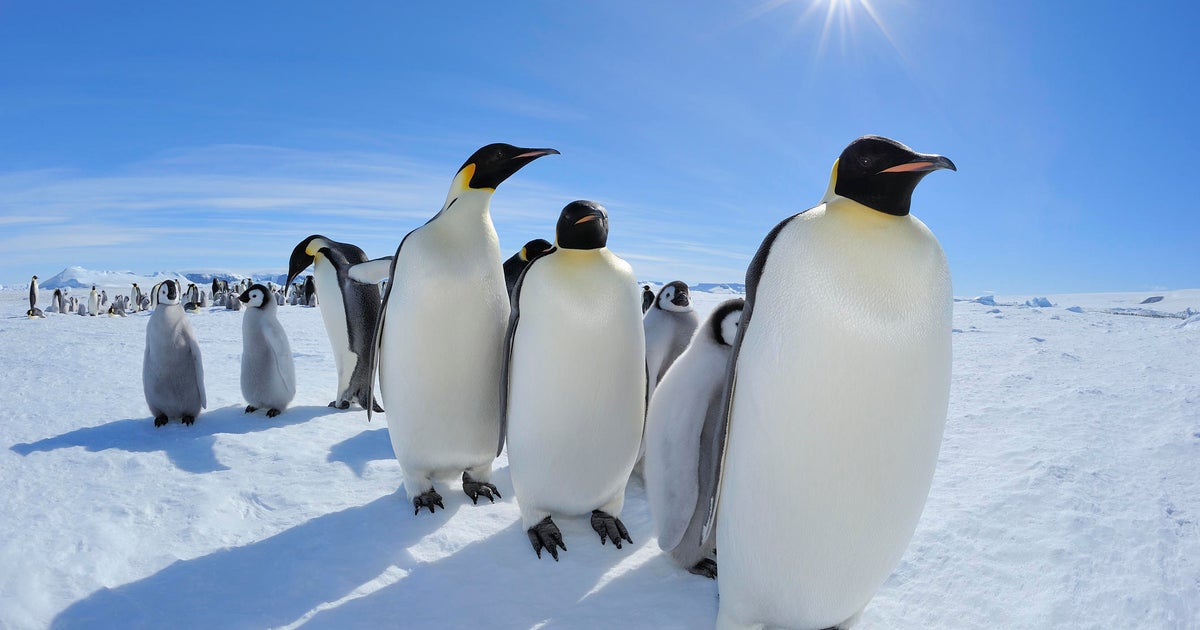
Understanding why emperor penguins are so vulnerable requires appreciating the extraordinary way these birds have adapted to Antarctic life. As the largest and heaviest of all penguin species, emperor penguins stand out not just for their size but for their stunning appearance, featuring distinctive golden-orange streaks on their necks and chests that seem to capture the last rays of Antarctic sunlight. But it’s their breeding behavior that makes them truly unique—and tragically vulnerable. Emperor penguins breed during the brutal Antarctic winter, when temperatures plummet to unimaginable extremes and darkness reigns for months. The males undertake one of nature’s most remarkable acts of devotion, keeping their single egg warm by balancing it on their feet, covered by a warm fold of skin, while standing motionless in howling blizzards for weeks. This incredible feat requires stable sea ice platforms that remain intact throughout the winter and into spring. The sea ice serves as a nursery not just for the eggs but for the chicks after they hatch, providing them with a safe haven during their vulnerable early weeks. It also becomes crucial during the molting season, when emperor penguins shed and regrow their waterproof feathers—a time when they cannot enter the water and must remain on the ice. When sea ice breaks up prematurely or forms unreliably, emperor penguin parents may find themselves stranded far from food sources, or worse, their chicks may plunge into frigid waters before they’ve developed the waterproofing necessary for survival. The early break-up of sea ice has created a cascade of failures in the emperor penguin’s carefully timed breeding cycle, causing their numbers to plummet in recent years.
Beyond Penguins: Antarctica’s Broader Crisis
The emperor penguin’s endangered status is not an isolated incident but part of a broader pattern of climate-driven decline affecting multiple Antarctic species. The IUCN’s latest Red List update revealed that the Antarctic fur seal has also been moved to the endangered category, their population crashing by more than 50 percent since 1999. The story of Antarctic fur seals carries its own tragic irony—these animals were once hunted nearly to extinction by humans seeking their valuable pelts, but after recovering from that onslaught, they now face an even more insidious threat. Rising ocean temperatures and shrinking sea ice are pushing krill—tiny shrimp-like creatures that form the base of the Antarctic food web—into deeper, colder waters. As krill become scarcer in traditional feeding areas, Antarctic fur seals struggle to find enough food to survive and reproduce. Meanwhile, the southern elephant seal has been downgraded from “least concern” to “vulnerable” due to population declines caused by deadly contagious pathogens, another symptom of a rapidly changing Antarctic ecosystem. These concurrent declines across multiple species point to fundamental disruptions in Antarctic ecosystems, transforming the frozen continent in ways that will reverberate throughout global ocean systems. Philip Trathan, part of the IUCN expert group who worked on the emperor penguin assessment, emphasized that these birds serve as “a sentinel species that tell us about our changing world and how well we are controlling greenhouse gas emissions that lead to climate change.” Like the proverbial canary in the coal mine, emperor penguins are sending us an unmistakable message about the health of our planet.
Understanding the Red List and What “Endangered” Really Means
For those unfamiliar with conservation terminology, the IUCN Red List of Threatened Species serves as the gold standard for assessing extinction risk globally. Maintained by a network of thousands of scientists, governments, and conservation organizations worldwide, the Red List represents the most comprehensive information source on the survival status of plants, animals, and fungi. The classification system includes six main categories, ranging from “least concern” (species doing well) to “extinct” (no individuals remaining anywhere). Emperor penguins’ new classification as “endangered” places them two full steps away from “extinction in the wild,” which denotes species surviving only in zoos, aquariums, or other captive settings, no longer existing in nature. This is a serious designation that indicates a very high risk of extinction in the near future without significant intervention. The journey from “near threatened” to “endangered” represents more than just a bureaucratic reclassification—it reflects accumulating scientific evidence of accelerating population declines and mounting threats. The IUCN doesn’t make these determinations lightly; they require extensive data, rigorous analysis, and consensus among expert scientists. The fact that emperor penguins have been moved up the threat scale underscores that the dangers they face are real, measurable, and worsening. For the countless people who have been captivated by emperor penguins through films like “March of the Penguins” or nature documentaries, this classification serves as a wake-up call that these beloved birds could disappear from the wild within our lifetimes if current trends continue.
What This Means for Our Shared Future
The emperor penguin’s slide toward extinction carries profound implications that extend far beyond Antarctica’s icy shores. These birds have survived in the harshest environment on Earth for millennia, enduring conditions that would kill most other creatures within hours. If emperor penguins—supremely adapted to their frozen world—cannot survive the pace of climate change, what does that say about the future facing less specialized species, including humans? The expert assessment concluded unequivocally that “human-induced climate change poses the most significant threat to emperor penguins,” a sobering acknowledgment that our collective actions are pushing these magnificent birds toward oblivion. The projected halving of the emperor penguin population by the 2080s is not inevitable destiny but a warning of what will happen if greenhouse gas emissions continue unchecked. Emperor penguins need us to treat their plight not as a distant problem affecting a remote species, but as an urgent call to action. Every fraction of a degree of warming matters for sea ice stability, and by extension, for emperor penguin survival. Their fate is inextricably linked to humanity’s willingness to make the difficult choices necessary to limit climate change. As we watch these regal birds teetering on the brink, we’re really looking at a mirror reflecting our own relationship with the planet. The question now is whether we’ll heed the warning these sentinel species are giving us, or whether future generations will know emperor penguins only through old videos and photographs, wondering why we didn’t act while there was still time to save them.