


Ukraine and Russia Head to Geneva for Crucial Peace Talks
Negotiations Resume Amid Ongoing Conflict
As Ukraine approaches the somber fourth anniversary of Russia’s full-scale invasion next week, a Ukrainian delegation departed for Geneva on Monday to participate in another round of peace negotiations with Russian officials. These talks, brokered by the United States, are scheduled to take place over Tuesday and Wednesday in Switzerland. However, despite the high-level nature of these discussions and the United States’ ambitious goal of reaching a settlement by June, expectations for meaningful breakthroughs remain disappointingly low. Both Ukraine and Russia appear firmly entrenched in their respective negotiating positions, particularly regarding the most contentious issue at the heart of this devastating conflict: the future status of Ukrainian territories that Russia currently occupies or seeks to control. The journey itself underscores the difficult reality facing Ukraine, as the delegation had to travel overland even for this important diplomatic mission, since the country’s airspace has been completely closed due to the ongoing war.
The Grinding Reality of War Continues
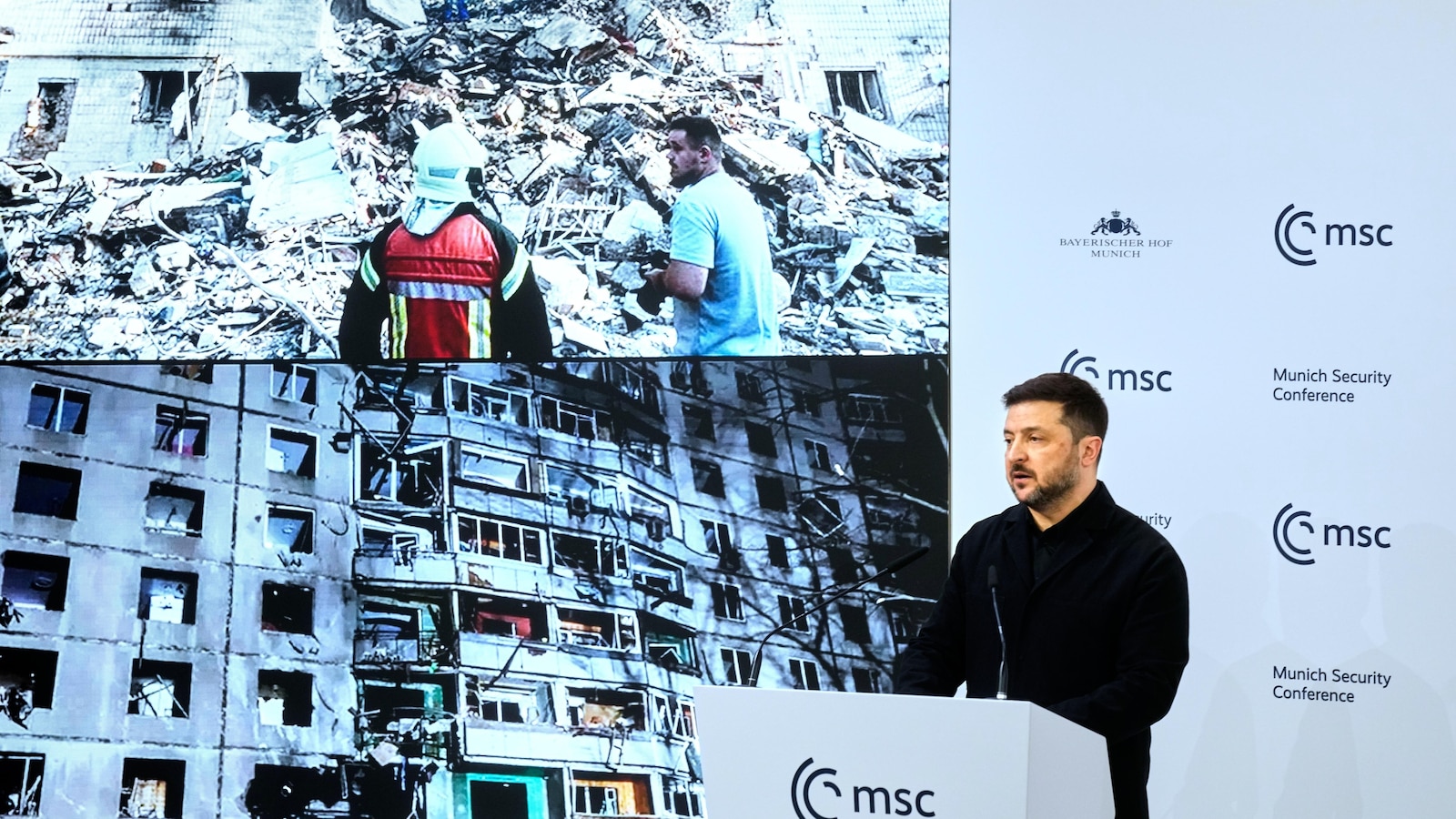
While diplomats prepare for talks in Geneva, the brutal reality of war continues unabated on the ground. Ukrainian defenders remain engaged in an exhausting war of attrition against Russia’s considerably larger military force along a front line that stretches approximately 1,250 kilometers, or roughly 750 miles. The conflict has settled into a devastating pattern that affects both military personnel and civilians alike. Ukrainian citizens continue to endure relentless Russian aerial bombardments that systematically destroy critical infrastructure, repeatedly knocking out electrical power and reducing homes to rubble. These attacks have created immense hardship for ordinary Ukrainians trying to survive through another year of war. Meanwhile, Ukraine has demonstrated remarkable technological adaptability and resilience by developing sophisticated drone capabilities that can penetrate deep into Russian territory, successfully striking strategic targets including oil refineries and weapons depots, bringing the consequences of the war to Russian soil.
Escalating Drone Warfare on Both Sides
The intensity of the drone warfare between the two nations has reached unprecedented levels, with both sides launching massive aerial attacks. Alexander Bogomaz, the governor of Russia’s western Bryansk region, reported on Monday that air defense systems had successfully shot down an astounding 229 Ukrainian drones within just the previous 24 hours. This represented a record-breaking number of simultaneous drone attacks on a single Russian region in one day, highlighting the scale and sophistication of Ukraine’s drone warfare capabilities. Not to be outdone, Russia continues its own relentless aerial assault on Ukrainian territory. Ukraine’s Air Force reported that Russia launched 62 long-range strike drones along with six missiles of various types targeting Ukraine overnight. This continuous exchange of drone and missile attacks demonstrates how the conflict has evolved into a technological warfare competition, with both nations investing heavily in unmanned aerial systems that can strike targets far from the front lines, making the entire territories of both countries potential battlegrounds.
Key Negotiators and Diplomatic Positioning
The composition of the negotiating teams reveals much about how seriously both sides are taking these talks, even if expectations remain modest. Ukrainian President Volodymyr Zelenskyy’s chief of staff, General Kyrylo Budanov, shared a photograph on Telegram showing himself standing beside a train with other members of the Ukrainian negotiating team. The delegation will be led in Geneva by Rustem Umerov, who serves as Ukraine’s National Security and Defense Council chief, indicating the high-level importance Ukraine is placing on these discussions. On the Russian side, President Vladimir Putin has appointed Vladimir Medinsky to lead Moscow’s delegation. Medinsky’s selection carries significant symbolic weight, as he previously headed Russia’s negotiating team during the first direct peace talks with Ukraine held in Istanbul back in March 2022. Medinsky is known for his strong advocacy of Putin’s war objectives and has authored several history books that focus on alleged Western conspiracies against Russia while simultaneously disparaging Ukraine. Joining Medinsky will be Igor Kostyukov, the head of Russian military intelligence, Deputy Foreign Minister Mikhail Galuzin, and various other officials, according to Kremlin spokesman Dmitry Peskov.
Economic Interests and Western Involvement
Beyond the main negotiations, there are additional diplomatic activities taking place that reveal the complex economic interests underlying these talks. Putin’s envoy Kirill Dmitriev is also scheduled to travel to Geneva for separate discussions with U.S. representatives focused specifically on economic cooperation, as confirmed by Kremlin spokesman Peskov. Both Moscow and Kyiv are acutely aware that offering attractive future business opportunities to Washington could potentially influence American support and engagement in the region. This economic dimension adds another layer of complexity to the negotiations, as both warring parties seek to position themselves favorably with the United States not just militarily and diplomatically, but economically as well. The specific American officials who would participate in the Geneva talks had not been clearly identified, though recent negotiations held in Abu Dhabi, the capital of the United Arab Emirates, saw the Trump administration represented by envoys Steve Witkoff and Jared Kushner. The involvement of these particular individuals suggests that the Trump administration is pursuing its own distinct approach to these negotiations, different from traditional diplomatic channels.
Limited Optimism and Long-Term Prospects
Kremlin spokesman Dmitry Peskov provided some insight into Russia’s approach when he stated on Monday that the Geneva talks would address a “broader range of issues related to the territories and other issues connected to the demands that we have,” though he deliberately avoided elaborating on what those specific issues might be. This vague statement reflects the careful diplomatic positioning both sides are maintaining. The harsh reality is that a full year of peace efforts by U.S. President Donald Trump’s administration has failed to halt the fighting or bring the conflict substantially closer to resolution. Western officials and independent analysts increasingly believe that Russian President Vladimir Putin has calculated that time favors Russia’s position. They assess that Putin expects Western support for Ukraine to gradually diminish as war fatigue sets in among European and American populations, and that Ukraine’s resistance will eventually crumble under sustained military and economic pressure. This strategic patience on Russia’s part presents a significant challenge to negotiators seeking a swift resolution. Both delegations have been instructed to report back to their respective leaders before any potential compromises discussed in Geneva could be formally accepted, ensuring that Putin and Zelenskyy maintain ultimate control over any significant concessions. As the fourth anniversary of this devastating invasion approaches, the prospects for peace remain frustratingly distant, with both nations locked in a conflict that has already claimed hundreds of thousands of lives and displaced millions more.