



Miracle at Sea: Family of Three Rescued After Week-Long Ordeal in Pacific Ocean
A Harrowing Disappearance Turns Into a Remarkable Rescue
In what can only be described as a miracle of modern search and rescue operations, a family of three has been found alive and well after spending seven terrifying days lost at sea in the vast expanse of the western Pacific Ocean. The United States Coast Guard announced on Tuesday that the family—consisting of two men and one woman—had been successfully located and rescued without suffering any significant injuries, despite their week-long ordeal battling the elements in one of the world’s most challenging maritime environments. The rescue took place off the coast of Chuuk State in the Federated States of Micronesia, a remote island nation situated northeast of Papua New Guinea, where the family had become stranded after what was supposed to be a simple, short journey between neighboring islands turned into a nightmare scenario when their boat’s engine failed unexpectedly.
The family’s ordeal began on March 30 when they set sail from Fananu Island aboard a modest 23-foot skiff, intending to make what should have been a routine and relatively brief voyage to nearby Murillo Island within the archipelago. It was the kind of journey that local residents make regularly, navigating familiar waters between islands that dot this corner of the Pacific. However, their plans were derailed when the boat’s engine suddenly failed, leaving them powerless and at the mercy of the ocean’s currents and winds. As hours turned into days, and days stretched into nearly a week, the family found themselves drifting farther from their intended destination, surrounded by nothing but endless ocean in every direction. The psychological toll of such an experience—not knowing if rescue would ever come, rationing whatever supplies they might have had aboard, and enduring the relentless sun by day and the uncertainty of darkness by night—can scarcely be imagined by those who have never faced such a predicament.
A Massive Search Operation Across Treacherous Waters
The search and rescue operation that ultimately saved this family’s lives was nothing short of extraordinary in its scope and complexity. The effort didn’t begin until Sunday, when authorities in Micronesia and the U.S. Embassy finally reported to the Coast Guard that the family’s boat was significantly overdue, triggering an immediate and comprehensive response. The crew members aboard the Coast Guard cutter Midgett, a formidable vessel designed for long-range operations in challenging conditions, were diverted from their existing patrol mission in the region to join the search. What followed was an intensive operation spanning an almost incomprehensible 14,000 square nautical miles of rough seas—an area larger than many countries. The conditions searchers faced were brutal, with waves reaching heights of up to 10 feet, making the task of spotting a small 23-foot skiff in such vast waters extraordinarily difficult. It was quite literally like searching for a needle in a haystack, except the haystack was constantly moving, and the needle was being tossed about by powerful ocean swells.
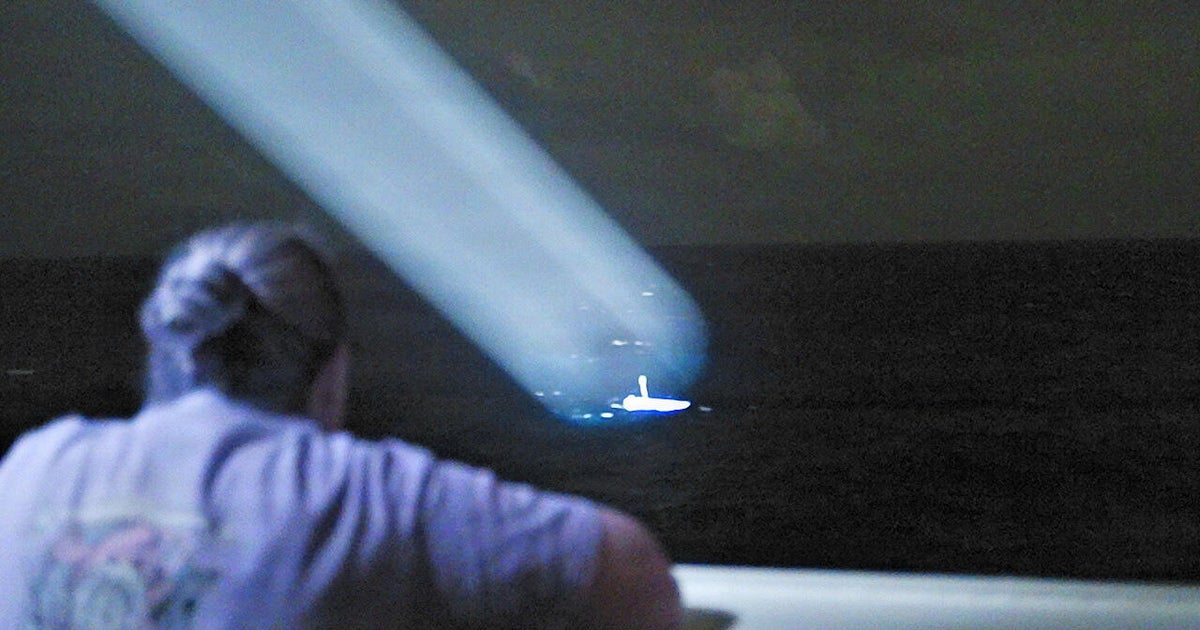
The search effort brought together multiple assets and personnel from various Coast Guard units, demonstrating the service’s remarkable coordination capabilities and commitment to saving lives regardless of the challenges involved. Watchstanders from the U.S. Coast Guard Joint Rescue Sub-Center in Guam worked alongside personnel from the U.S. Coast Guard District Oceania, coordinating every aspect of the operation. At the mission’s peak, a Hercules airplane and its crew were launched to Hawaii to provide additional support for the search. The images released by the Coast Guard tell a powerful story of dedication and perseverance—showing the family’s small skiff finally being located in complete darkness during the early hours of April 6, captured from the perspective of U.S. Coast Guard Lt. Cmdr. Stephanie Jocis as she observed the critical moment. Additional photographs documented the rescued family being transported by Dolphin helicopter and the emotional scenes of their reunion with loved ones, providing a poignant reminder of what was truly at stake in this mission.
The Critical Moment of Discovery and Recovery
When the Midgett crew finally located the missing family after midnight on Monday, it marked the culmination of days of intensive searching through some of the most challenging maritime conditions imaginable. The discovery came in 10-foot seas, with darkness adding an extra layer of complexity to an already dangerous rescue operation. The skill and training of the Coast Guard crew were on full display as they maneuvered their vessel close enough to the small skiff to effect a safe rescue without endangering either their own crew or the survivors they had worked so hard to find. For the family members, who had spent seven days wondering if they would ever see their homes and loved ones again, the sight of the Coast Guard vessel approaching must have been overwhelmingly emotional. After their rescue, all three survivors were transported safely by the Coast Guard to Chuuk State, where arrangements were made for their journey back home to Fananu Island, allowing them to finally complete the trip they had begun more than a week earlier under such different circumstances.
Diplomatic Significance and International Cooperation
The successful rescue operation carried significance that extended beyond the immediate humanitarian achievement, serving as a powerful example of international cooperation and the special relationship between the United States and the Federated States of Micronesia. U.S. Ambassador to the Federated States of Micronesia Jennifer Johnson issued a statement that eloquently captured both the human and diplomatic dimensions of the rescue. She praised the “swift and courageous actions” of Coast Guard personnel, noting that their efforts “not only reflect the highest standards of professionalism and humanity but also reinforce the deep and enduring partnership between the United States and the Federated States of Micronesia.” Ambassador Johnson specifically highlighted how this mission exemplified “the spirit of cooperation and mutual support at the heart of the Compact of Free Association,” the agreement that governs relations between the two nations. Her observation that “our close relations translate into real, life-saving outcomes for our people” underscored how diplomatic partnerships, when functioning properly, have practical consequences that directly benefit ordinary citizens going about their daily lives.
The Human Element: What Survival at Sea Really Means
While the official accounts and statements provide the factual framework of this rescue, the human story behind those facts is what truly resonates. Spending seven days adrift at sea in a disabled 23-foot boat is an experience that would test anyone’s physical endurance and mental fortitude to the absolute limit. The family would have faced numerous threats to their survival: exposure to intense tropical sun during the day, which can lead to severe dehydration and sunstroke; the constant physical discomfort of being in a small boat being tossed by waves; the psychological strain of not knowing if anyone was searching for them or if they would ever be found; and the very real possibility that their situation could deteriorate further at any moment due to weather changes or other unforeseen circumstances. The fact that all three family members emerged from this ordeal without significant physical injuries is remarkable in itself, though the psychological impact of such an experience may take much longer to process and overcome. Their survival likely depended on a combination of preparation, resourcefulness, mutual support, and sheer determination not to give up hope even when their situation seemed increasingly desperate.
Lessons and Reflections on Maritime Safety and Rescue Operations
This rescue operation offers several important takeaways for maritime safety and emergency response. First, it demonstrates the critical importance of reporting protocols—the rescue could only begin once authorities were notified that the family was overdue, highlighting how essential it is for boaters to file float plans and for communities to have systems in place to track vessels and recognize when something has gone wrong. Second, it showcases the remarkable capabilities and dedication of Coast Guard personnel, who routinely put themselves in challenging and potentially dangerous situations to save lives. The coordination between multiple Coast Guard units, the willingness to divert assets from other missions, and the persistence in searching such a vast area under difficult conditions all reflect an organizational culture that genuinely prioritizes the value of human life. Third, this incident reminds us of both the ocean’s power and humanity’s vulnerability when facing natural forces, even in an age of advanced technology. A simple mechanical failure—an engine stopping—was all it took to transform a routine journey into a life-threatening situation, demonstrating why caution, preparation, and respect for the sea must always guide maritime activities, regardless of how familiar or routine they might seem.