



Bank of England Governor Breaks Silence on Epstein-Mandelson Scandal
A Rare Display of Emotion from Britain’s Top Banker
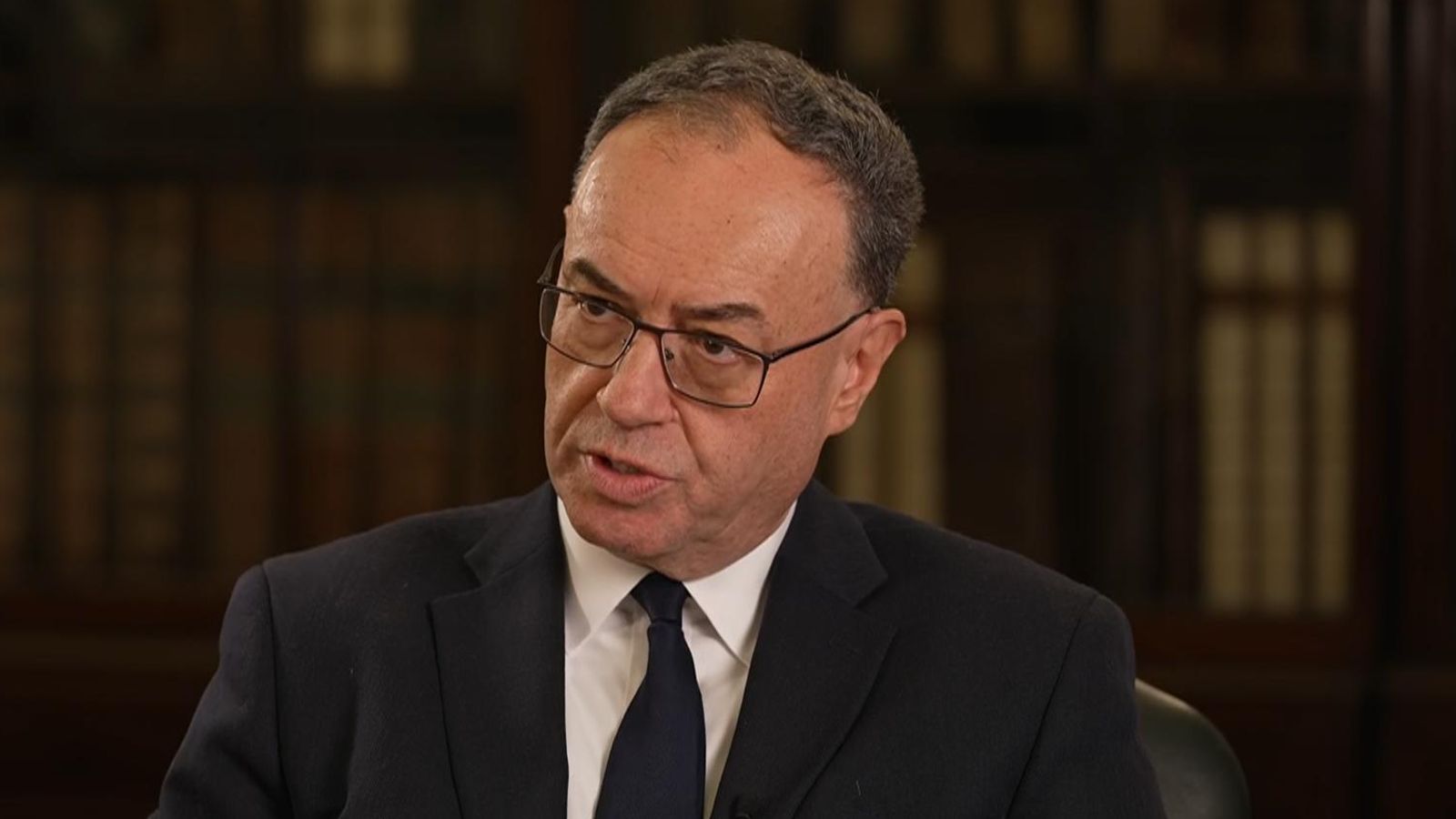
Andrew Bailey isn’t the type of person you’d expect to see losing his cool. As the Governor of the Bank of England, maintaining a calm, measured demeanor is essentially written into his job description. Since taking over from Mark Carney in 2020, Bailey has consistently embodied the reserved professionalism expected of someone in his position. To understand just how important this restraint is, one need only look at how drastically Mark Carney’s public persona changed after leaving the Bank of England to pursue Canadian politics. Central bankers simply don’t do emotional outbursts – which is precisely why Bailey’s recent comments to Sky News carried such weight. When asked about revelations that Lord Peter Mandelson had been sharing confidential, market-sensitive government information with convicted sex offender Jeffrey Epstein back in 2008, Bailey’s controlled anger was palpable. “I mean, I am shocked by what we’re hearing. I am shocked by what we now learn about what went on during the financial crisis period,” he stated, his words carrying an emotional edge rarely heard from someone in his position.
The Context That Makes This Betrayal So Personal
To fully grasp why Bailey reacted so strongly, we need to understand what was happening in 2008. This wasn’t just another year in British politics – it was a moment when the entire global financial system teetered on the brink of collapse. Bailey wasn’t yet the Governor, but he was already part of the Bank of England’s senior leadership team, working around the clock alongside Treasury officials and Downing Street to prevent a complete economic meltdown. The stakes were genuinely terrifying: there was a real possibility that ATMs would run dry, that ordinary people wouldn’t be able to access their money, and that governments would lack the borrowing capacity needed to bail out failing banks. The UK government was so desperate that officials were seriously considering selling off £20 billion worth of state-owned assets just to ease the financial burden. Meanwhile, across the Channel, the European Union was frantically assembling a €500 million rescue package. These weren’t theoretical exercises or academic discussions – these were emergency measures to prevent societal collapse.
The Alleged Breach of Trust During Britain’s Darkest Economic Hour
Against this backdrop of crisis, the recent revelations about Lord Mandelson’s communications with Jeffrey Epstein take on an even more sinister character. According to documents from the Epstein files, Mandelson – who was serving as Business Secretary at the time – allegedly emailed Epstein with confidential details about both the UK’s potential asset sales and the EU’s rescue package before any of this information was made public. This wasn’t gossip or speculation; this was privileged government information that could move markets and potentially be exploited for financial gain. For someone like Bailey, who spent those desperate months working to stabilize the system, the idea that a senior government minister was casually sharing such sensitive information with someone outside government – and to Jeffrey Epstein of all people – represents a profound betrayal of public trust. It’s one thing to disagree with policy decisions or to criticize how the crisis was handled; it’s quite another to learn that while you were fighting to save the economy, someone on your own team was potentially undermining those efforts.
A Personal Tribute and a Damning Indictment
Bailey’s comments also carried a deeply personal dimension. He spoke with genuine emotion about Alistair Darling, the Chancellor of the Exchequer during the financial crisis, who passed away in 2022. Darling was the man at the center of Britain’s response to the crisis, making incredibly difficult decisions under unimaginable pressure. Bailey clearly respected him immensely and was visibly moved when reflecting on the fact that Darling is now “unable to speak for himself” about the revelation that a close colleague in his own government may have been working against him. There’s something particularly cruel about this timing – these allegations have emerged when one of the key figures involved can no longer defend himself or provide his perspective on what happened. For Bailey, who worked closely with Darling during those critical months, this added insult to injury. The man who carried the weight of the nation’s economic survival on his shoulders deserved better from his colleagues, and he certainly deserves better than having his legacy tainted by association with this scandal now that he’s gone.
Bailey’s Unique Credibility in Challenging Epstein’s Network
What makes Andrew Bailey’s outrage particularly significant is that he’s one of the few people in Britain’s institutional establishment who can speak on this topic with genuine moral authority. Unlike many others who turned a blind eye to Epstein’s connections or who benefited from association with him, Bailey actually took action to hold someone accountable for their relationship with the disgraced financier. In 2019, while serving as head of the Financial Conduct Authority (FCA), he approved an investigation into Jes Staley, the American chief executive of Barclays Bank, over his ties to Epstein. Following Epstein’s arrest, the FCA had reason to believe that Staley hadn’t been entirely truthful about the depth of his relationship with the convicted sex offender. This wasn’t a token investigation or a slap on the wrist – Bailey pursued it seriously and saw it through to meaningful consequences. Staley was forced to resign from Barclays in 2020, was subsequently banned from holding any senior executive position in the financial services industry, and lost an appeal in which Bailey himself provided testimony. This track record gives Bailey’s current comments additional weight – he’s not just expressing shock from the sidelines; he’s someone who has actually confronted Epstein’s influence in British institutions.
A Call for Societal Reflection and Accountability
Perhaps most striking was Bailey’s broader reflection on what the Epstein scandal reveals about British society. “I don’t want to sound pious, but this is for all of us – how is it that we live in a society in which this happened and the cover-up happened as well?” This wasn’t a rhetorical flourish or political point-scoring; it was a genuine question that cuts to the heart of the matter. How did Jeffrey Epstein, a convicted sex offender, maintain such extensive connections to British royalty, senior politicians, and City financiers? How did people continue to associate with him, share information with him, and welcome him into elite circles even after his criminal behavior was known? And perhaps most disturbingly, how did so many people work to cover up or minimize these connections for so long? In the sprawling, sordid story of how Epstein polluted British institutions – from Buckingham Palace to Westminster to the Square Mile of the City of London – Andrew Bailey stands in a very small club of people whose conduct throughout has been entirely vindicated. He didn’t look the other way, he didn’t make excuses, and when he had the power to take action, he did. His visible anger and frustration aren’t about personal vindication, though; they’re about the damage done to public trust in institutions that are supposed to serve the common good, and about the people like Alistair Darling who were undermined by those they should have been able to trust completely.