


Northern Towns Push Back Against “Unfair” Government Funding Formula
A Formula That Missed the Mark
The British government’s attempt to create a fairer system for distributing funds to local councils has sparked unexpected controversy, with MPs from northern England crying foul over a formula they say has left their communities “absolutely shafted.” What was supposed to be a game-changing overhaul of local government finance—the first in a decade—has instead ignited tensions between northern towns and the capital. The so-called “fair funding formula” was designed with a simple principle: areas with the greatest needs should receive the most money from central government. Northern towns, long suffering from economic decline and underfunding, were initially expected to be the big winners. However, the final calculations tell a different story, one that has left many northern MPs feeling betrayed and scrambling to protect their constituents’ interests.
The controversy centers on how the government measures deprivation. Ministers chose to heavily factor in housing costs when determining which areas need the most support, a decision that northern MPs argue has fundamentally skewed the results in favor of London and the southeast. London and southeastern councils had lobbied hard for housing costs to be included, pointing to sky-high rents and property prices that strain household budgets. On paper, this makes sense—housing affordability is undeniably a critical measure of economic hardship. But northern MPs argue this approach completely misses the broader picture of what deprivation actually means in their communities. They point to persistently low incomes, limited job opportunities, failing infrastructure, and a lack of cultural and educational resources that compound poverty in ways that housing costs alone cannot capture. As one frustrated MP put it, the formula is “completely skew-whiffed,” creating a distorted view of where help is most urgently needed.
The Numbers Tell a Troubling Story
When the provisional settlement was announced in December, the reality became clear: all authorities in the Liverpool City Region would receive less than the national average, along with nearby areas like Blackpool, Wigan, and Warrington. This came as a shock to many who had seen earlier modeling from the summer that suggested these very areas would be among the biggest beneficiaries of the new system. The dramatic shift occurred in November when the government updated its measure of deprivation to incorporate the English Indices of Deprivation 2025, which places greater emphasis on housing costs. According to analysis by SIGOMA, an organization representing areas outside London, this change caused a significant shift of resources toward the capital. Outer London areas saw the highest increases, with boroughs like Newham and Brent gaining millions more than initially expected, while northern areas like Blackpool and Knowsley lost out on millions they had been counting on.
The overall funding picture shows money allocated across England rising from £83.2 billion in 2026/27 to £90.3 billion in 2028/29, with most areas seeing some increase. Northern towns have generally fared better than rural areas and parts of inner London in this calculation. However, for MPs representing these northern constituencies, the issue isn’t just about absolute numbers—it’s about what those numbers mean in the context of a decade of austerity and cuts. They emphasize that their communities need visible, significant investment to reverse years of decline and address deep-rooted problems that simple spreadsheets fail to capture. The frustration is palpable among these representatives, who see the formula as fundamentally misunderstanding the nature of poverty and need in their areas.
More Than Just a North-South Divide
While the dispute might appear to be another chapter in Britain’s longstanding north-south divide, MPs from affected areas insist this is about something more fundamental: social justice. One MP acknowledged sympathy for London’s housing crisis but pointed out that the capital “also has better state schools, transport links, job opportunities and cultural opportunities we just don’t have.” This perspective highlights how deprivation in northern towns is multidimensional, involving not just immediate financial hardship but also systemic disadvantages that housing costs alone cannot reflect. These communities face poverty that has, in the words of one MP, increased by “horrendous” levels—visible poverty that feels ignored by a formula that claims to be fair but seems anything but to those on the ground.
The political stakes extend beyond fairness and into electoral survival. MPs who spoke to media outlets made clear they’re watching the rise of Reform UK with considerable anxiety. These northern constituencies need investment that people can see and feel in their daily lives if Labour is to hold off the challenge from Nigel Farage’s party. While the current settlement may represent an improvement over what the Conservative government offered, one MP bluntly stated it “barely touches the sides” when measured against what’s needed to reverse a decade of cuts and prevent voters from “rolling the dice” on Reform UK. This political reality adds urgency to the complaints—this isn’t just about spreadsheets and formulas; it’s about whether communities feel heard and whether the government can deliver tangible improvements before the next election.
Behind-the-Scenes Negotiations and Potential Solutions
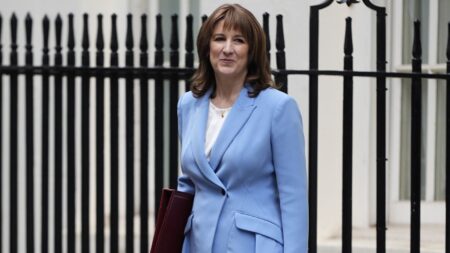
Recognizing the political minefield they’re navigating, ministers have begun holding talks with northwest MPs about potential adjustments to the settlement. Steve Reed, the cabinet minister for housing and communities, has reportedly held “constructive talks” with those lobbying for change, including Steve Rotheram, the Metro Mayor for the Liverpool region. These negotiations matter not just for the affected areas but for the government’s broader political stability. The provisional settlement still needs to be finalized before being put to a vote in the House of Commons, and ministers are keen to avoid even a small rebellion given the already tense mood within the Parliamentary Labour Party.
One proposal gaining traction involves increasing the Recovery Grant, a £600 million fund launched last year to provide immediate financial support to councils hit hardest by the previous decade of funding cuts. This grant, importantly, is based on the previous measure of deprivation rather than the new housing-cost-heavy formula. There have been calls to increase this grant by £400 million per year to offset the perceived losses from the fair funding formula. Additionally, the grant includes a guarantee that upper-tier authorities receiving it will see year-on-year increases across the multi-settlement period, starting with 5%—a guarantee that could potentially be increased. Multiple sources involved in the talks have indicated they’ve been told to expect good news, though nothing has been officially confirmed.
The Path Forward and What It Means for Communities
The government finds itself in a delicate position, trying to balance competing claims about fairness while managing political pressures from multiple directions. A government spokesperson maintained that they are “repairing local government after years of decline” and would shortly set out their consultation response confirming the final Local Government Finance Settlement for 2026-27. This carefully worded statement acknowledges the problem while buying time to find solutions that can satisfy enough stakeholders to pass the settlement through Parliament. The underlying challenge is profound: how do you measure deprivation in a way that captures both London’s housing crisis and the north’s multifaceted poverty? Is it even possible to create a single formula that fairly accounts for such different manifestations of economic hardship?
For the communities caught in this debate, the stakes are deeply personal. These aren’t abstract policy questions but decisions that will shape the quality of schools their children attend, the job opportunities available, the condition of roads and public spaces, and the availability of social services. Northern towns have experienced decades of industrial decline, followed by years of austerity cuts, and now face the challenge of competing in a modern economy with diminished resources and infrastructure. They need investment not just to catch up but to create the foundations for sustainable prosperity. Whether the final settlement will provide that remains to be seen, but the intensity of the pushback from northern MPs suggests this debate is far from over. The government’s ability to navigate these competing demands while maintaining party unity and delivering on its promises of fairness will be a crucial test of its political skill and its commitment to leveling up communities that have felt left behind for far too long.