
Iran’s Jewish Community Caught Between Nations: Voices from Tehran’s Synagogues
A Community in Crisis Amid Regional Conflict
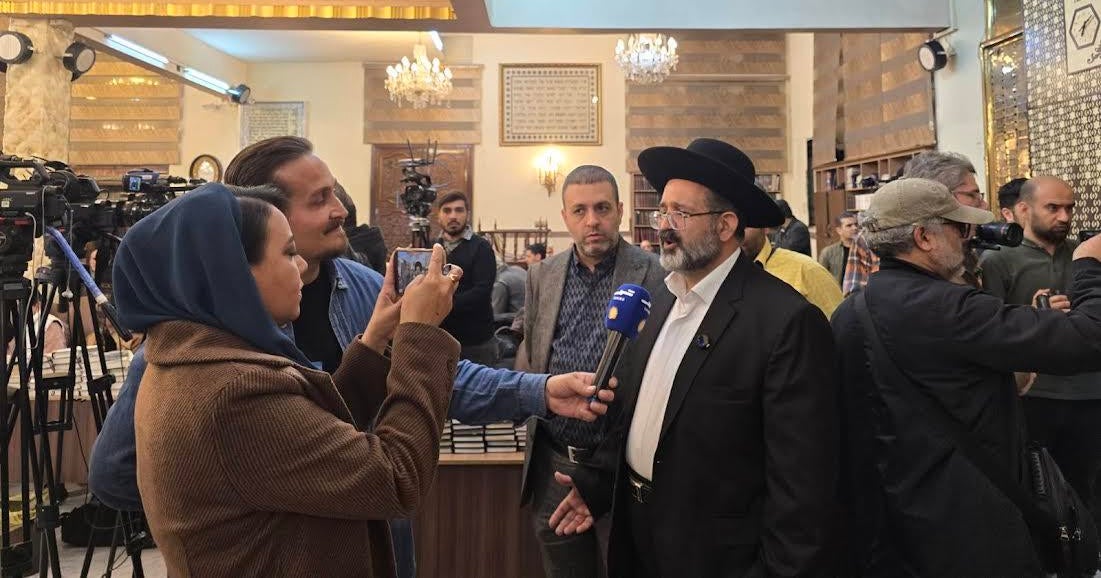
The Jewish community of Iran finds itself in an extraordinarily difficult position as tensions between their homeland and Israel escalate into open conflict. With approximately 12,000 Jewish Iranians still residing in the country, they represent one of the largest Jewish populations in the Middle East outside of Israel itself. This is a dramatic decline from the estimated 100,000 or more Jews who called Iran home before the 1979 Islamic Revolution transformed the nation into an Islamic Republic. In a rare glimpse into their lives, Iranian officials recently permitted foreign journalists, including CBS News, to visit one of Tehran’s main synagogues, where members of this ancient community shared their conflicted feelings about the seven-week war between the United States, Israel, and Iran. Speaking on condition of anonymity, these Iranian Jews revealed the complex emotional landscape they navigate daily—torn between their Iranian identity and their Jewish heritage, while facing discrimination yet feeling deep roots in their ancestral homeland. Their stories paint a picture of a community that has endured for millennia in Persia, now struggling to maintain its identity and safety amid geopolitical forces far beyond their control.
Living with Discrimination Yet Calling Iran Home
The Jewish community in Iran exists in a state of contradictions that would be difficult for outsiders to fully comprehend. Yacub, a 71-year-old grandfather who runs a small shop in Tehran, initially hesitated to speak with American media but eventually opened up about his experience as an Iranian Jew. He acknowledged the real restrictions his community faces: Jews cannot work in government positions or serve in the armed forces, and the judiciary system treats Jewish and Muslim citizens differently, with Muslims receiving higher monetary compensation when they become victims of crimes. Perhaps most painfully for a religious community, Jewish Iranians are prohibited from traveling to Israel to attend religious festivals, a restriction born from the decades-long animosity between the two nations. The Iranian government insists that Jews can practice their religion openly without persecution, yet these limitations tell a different story. Despite these challenges, Yacub expressed something surprising: overall satisfaction with his life in Iran. His sentiment reflects a deeper truth about diaspora Jewish communities—that Jewish identity and national identity can coexist, even when complicated by politics. The restrictions he described are significant, yet they haven’t severed his connection to the land where his family has lived for generations, demonstrating the resilience and adaptability that has characterized Jewish communities throughout history.
Identity Crisis When Homelands Collide
When the conflict between Israel, the United States, and Iran erupted at the end of February, Yacub experienced what he described as “a very strange feeling, full of contradictory ideas” about which side he belonged to and which he should support. This internal conflict represents perhaps the most painful aspect of being an Iranian Jew during wartime—the collision of two identities that would normally coexist peacefully. In the end, Yacub’s feelings toward Iran proved strongest, his connection to his birthplace and roots winning out. He recalled wisdom his father had shared years earlier: “We are Iranian Jews, and not some Jews who just live in Iran.” This distinction is crucial to understanding how this community sees itself. They are not temporary residents or reluctant inhabitants of Iran, but Iranians whose religion happens to be Judaism. This self-identification as Iranian first helps explain why, despite the discrimination they face and the existence of a Jewish state that might welcome them, many choose to remain. The synagogue they attended, with its photograph of Iran’s late Supreme Leader displayed prominently on the platform where the rabbi delivers sermons, symbolizes this complicated accommodation—a Jewish house of worship acknowledging the Islamic Republic’s authority while maintaining its distinct religious identity. For Iranian Jews, their heritage stretches back thousands of years in Persia, predating Islam itself, making their claim to Iranian identity as legitimate as anyone’s.
When Anti-Israel Rhetoric Becomes Antisemitism
Deborah, a 37-year-old mother working in Tehran’s healthcare industry, articulated a concern that cuts to the heart of the Jewish community’s anxiety during the conflict. While the Iranian government’s official narrative distinguishes between opposition to Israel and Zionism versus opposition to Jews and Judaism, Deborah observed something more troubling on the ground. She told CBS News that she hears “a nonstop narrative against Jews and Judaism” in propaganda songs, religious gatherings, and on state television and media broadcasting around the clock. This blurring of lines between anti-Zionism and antisemitism represents one of the most dangerous aspects of the conflict for Iranian Jews. When state media fails to maintain the distinction between political opposition to Israel and religious prejudice against Judaism, it creates an environment where Iranian Jews become suspect in their own homeland. Deborah made clear that she doesn’t support the war and considers herself Iranian, not Israeli, yet she finds herself hurt by rhetoric that targets her religion. Her situation became even more precarious when the U.S.-Israeli strikes began—she and her family wanted to leave Tehran but couldn’t because an elderly relative required ongoing medical treatment. Additionally, as a healthcare worker, she felt obligated to remain at her post during staff shortages. Her reflection on those frightening days reveals a universal truth about war: bombs don’t distinguish between religions, and Jewish Iranians could be killed as easily as Iranians of any other faith when missiles fall on Tehran.
Dreams of Peace from an Impossible Position
The Iranian Jews who spoke with CBS News shared a common, fervent hope: that peace might somehow be restored and that dialogue might replace violence. Deborah expressed what she acknowledged was “wishful thinking”—a dream that the Iranian and Israeli governments might “forget their differences and sit at a table to discuss and finally solve their problems through dialogue, not guns.” Sarah, a 31-year-old medical technician who repairs CT scan machines in hospitals, echoed this sentiment with even more urgency. She declared herself “100% Iranian” with no desire to leave her country, yet she cannot approve of “endless war-mongering against any people or country,” including Israel. Sarah expressed bewilderment at those who take to the streets chanting for the destruction of Israel, questioning why problems can’t be resolved peacefully. Her plea was direct and emotional: “I am begging both governments, just calm down and let us live in peace.” These appeals for peace come from people with no power to influence either government’s decisions, caught between nations whose “resentment is deeply rooted in ideology,” as Sarah acknowledged. Their voices represent not just the Iranian Jewish community but countless ordinary citizens on all sides who simply want to live their lives without fear of missiles, without having to choose between aspects of their identity, and without being viewed with suspicion by their own government or their coreligionists abroad. The tragedy of their situation is that they may be the people best positioned to understand both sides, yet they are the least empowered to bring about reconciliation.
An Ancient Community’s Uncertain Future
The Jewish community of Iran represents one of the oldest continuous Jewish populations in the world, with roots extending back to the Babylonian exile over 2,500 years ago. Persian Jews have survived the rise and fall of empires, from the ancient Persian Empire of Cyrus the Great—who is celebrated in Jewish tradition for allowing Jews to return to Jerusalem—through Islamic conquests, Mongol invasions, and into the modern era. The community thrived particularly during the Pahlavi dynasty before the 1979 revolution, when Iran and Israel enjoyed diplomatic relations and cultural exchange. The dramatic population decline from over 100,000 to approximately 12,000 tells the story of a community that has faced increasing pressure to leave, with many emigrating to Israel, the United States, and Europe. Those who remain do so for complex reasons: deep cultural and linguistic ties to Iran, family obligations, business interests, or simply the desire to maintain the Jewish presence in their ancestral homeland. Yet each regional crisis tests their commitment and their safety. The current conflict raises questions about whether this ancient community can survive another generation in Iran, or whether the pressures of being caught between hostile nations will finally prove insurmountable. The voices from Tehran’s synagogues reveal people trying to maintain normal lives—running shops, working in healthcare, raising families—while navigating extraordinary circumstances. Their stories deserve to be heard not as curiosities or political talking points, but as human testimonies to the costs of conflict and the universal desire for peace and security.