
Understanding the U.S. Naval Blockade of Iran: How It Works and What It Means
The Scale and Implementation of the Blockade
The United States military has launched one of its most significant naval operations in recent memory, implementing a complete blockade of Iranian ports as tensions between the two nations reach a critical juncture. The operation, which was officially declared fully operational late Tuesday night by Admiral Brad Cooper, head of U.S. Central Command, represents a massive show of American military force in the Middle East. According to Admiral Cooper’s statement, U.S. forces have successfully stopped all economic trade flowing into and out of Iran by sea, marking a dramatic escalation in the ongoing dispute between the two countries, particularly concerning the reopening of the strategically vital Strait of Hormuz.
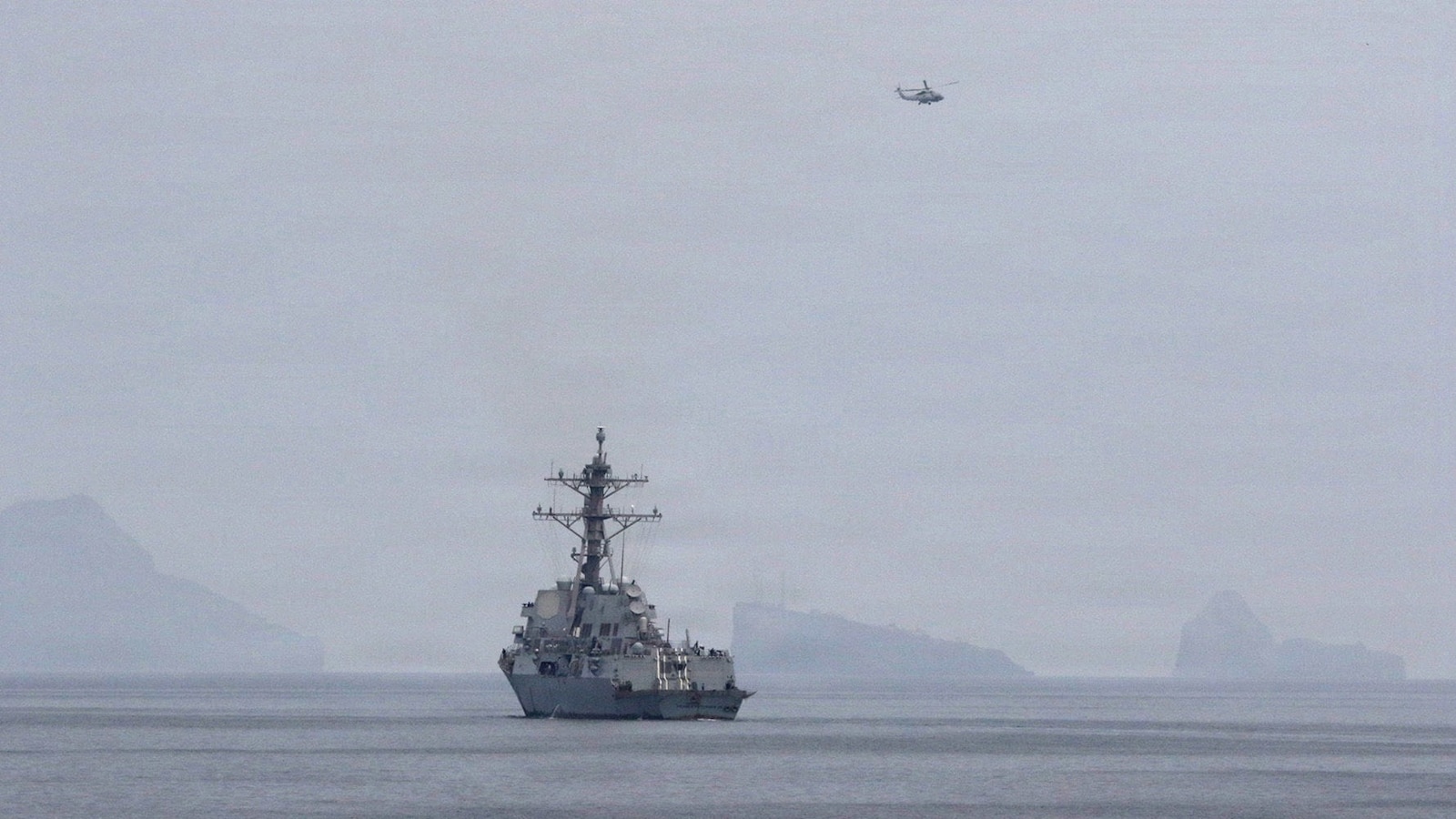
The magnitude of this operation cannot be overstated. More than 10,000 American military personnel, including sailors, Marines, and airmen, have been deployed to execute this blockade. The naval force includes over a dozen warships and dozens of aircraft, all working in coordinated fashion to monitor and control the waters surrounding Iranian ports and coastal areas. Among the 16 U.S. Navy ships currently stationed in the Middle East, 11 are destroyers specifically equipped and positioned to intercept vessels at sea. This formidable presence includes components from the Dwight D. Eisenhower Strike Group and various support vessels, all working together to create an impenetrable barrier around Iran’s maritime borders. The operation began with U.S. Central Command forces setting conditions for clearing mines in the Strait of Hormuz, demonstrating the comprehensive nature of this military undertaking. This blockade represents not just a show of force, but a carefully orchestrated operation that requires precise coordination, advanced intelligence gathering, and the ability to distinguish between legitimate maritime traffic and vessels attempting to breach the blockade.
How Naval Forces Control the Waters
Enforcing a naval blockade in the modern era is far more sophisticated than simply parking warships in strategic locations. The U.S. Navy’s approach combines cutting-edge technology, human intelligence, and coordinated military assets to create a comprehensive surveillance and interdiction network. Each destroyer deployed in the region is equipped with two SH-60 Sea Hawk helicopters that serve as the eyes and ears of the blockade operation. These helicopters can rapidly fly out to investigate potentially suspicious vessels approaching the blockade line, providing visual identification and real-time intelligence to the command structure. This capability is crucial because it allows the Navy to assess threats and verify vessel identities before they reach critical points in the blockade.
Beyond helicopters, the destroyers themselves are technological marvels equipped with sophisticated Aegis radar systems capable of tracking ships at considerable distances. This advanced radar technology creates a digital picture of all maritime traffic in the region, allowing commanders to monitor multiple vessels simultaneously and identify patterns that might indicate attempts to breach the blockade. The operation also relies heavily on accurate intelligence about ship movements, origins, and destinations. This intelligence component is particularly important given that the blockade specifically targets vessels leaving or headed to Iranian ports, meaning the Navy must differentiate between legitimate international maritime traffic and vessels that fall under the blockade’s restrictions.
Situational awareness is maintained through a variety of methods that work together to create what military experts call a complete operational picture. Unmanned drones monitor ship movements continuously, providing persistent surveillance without risking human pilots. Reconnaissance aircraft like the E-2 Hawkeye operate from aircraft carriers, using their powerful radar systems to track vessels across vast expanses of ocean. Intelligence services work to identify a ship’s origin or intended destination, often long before it approaches the blockade line. This multilayered approach means that virtually every vessel in the region is being tracked, categorized, and assessed for potential blockade violations. The P-8 Poseidon, a long-range maritime patrol and reconnaissance aircraft, plays a particularly crucial role in maintaining this comprehensive picture, working alongside helicopters and virtually every other U.S. aircraft in the region to monitor the waters below and feed information back to command centers.
The Warning Protocol and Communication Strategy
When a potentially suspicious vessel is identified approaching the blockade zone, the U.S. Navy follows a carefully scripted protocol designed to be both clear and legally defensible under international law. The destroyer’s crew will issue a warning by radio to the approaching ship using precisely worded language that has been carefully crafted to convey both the legal authority for the blockade and the consequences of non-compliance. The standard message states: “The U.S. has announced a formal blockade of Iranian ports and coastal areas. This is a legal action… If you do not comply with this blockade, we will use force. The whole of the United States Navy is ready to force compliance. Out.” This message serves multiple purposes beyond simply warning the vessel. It establishes the legal framework for the blockade, makes clear that the United States is prepared to use force if necessary, and provides the vessel’s captain with an opportunity to comply peacefully.
The warning system is designed to give vessels every opportunity to turn away voluntarily before any physical intervention becomes necessary. This approach reflects both international maritime law and the practical reality that most civilian vessels will comply rather than risk confrontation with the U.S. Navy. The radio warning also creates a documented record of the interaction, which can be important for legal and diplomatic purposes later. If a vessel ignores these warnings or attempts to evade the blockade, the situation escalates to the next level of enforcement, which involves physical boarding operations. This graduated response allows for de-escalation at multiple points while maintaining the credibility of the blockade. The careful wording and formal nature of these communications reflect decades of naval tradition and international maritime law, ensuring that the United States maintains its position that the blockade is a legitimate military operation conducted according to established international norms.
Boarding Operations: When Force Becomes Necessary
When warnings fail and a vessel continues toward Iranian waters or attempts to leave Iranian ports, the Navy must resort to boarding operations to enforce the blockade. These operations are among the most dangerous and complex tasks the military undertakes, requiring split-second timing, extensive training, and careful coordination among multiple units. Boarding parties can be composed of sailors, Marines, or special operations personnel, depending on the specific situation and the perceived threat level. The composition of each boarding party is carefully selected based on intelligence about the vessel, its crew, and its cargo. For routine inspections of commercial vessels, regular sailors trained in VBSS (Visit, Board, Search, and Seizure) operations may be sufficient. For vessels suspected of carrying weapons or staffed by potentially hostile crews, more specialized forces, including Navy SEAL teams, may be deployed.
The actual boarding operation is a tightly choreographed event where timing and surprise are crucial elements of success. Marines or other troops typically approach a vessel using one of two primary methods. They may fast-rope from helicopters directly onto the deck, which allows for rapid deployment and can overwhelm a crew before they have time to react or destroy evidence. Alternatively, boarding parties may climb from small, fast boats that approach the vessel from water level, using specialized equipment to scale the sides of larger ships. The goal in both cases is to establish control quickly, minimizing the opportunity for resistance or the destruction of evidence while also protecting both the boarding party and the vessel’s crew from injury.
Once aboard, teams are trained to quickly secure key areas of the ship in a predetermined sequence. The bridge must be controlled first to prevent the crew from altering the ship’s course or sending distress signals. The engine room is secured next to ensure the vessel cannot accelerate away or deliberately damage its propulsion systems. Communications spaces are also priority targets to prevent the crew from warning other vessels or coordinating resistance. Throughout this process, the boarding party must separate and control the crew, which involves gathering them in a secure location where they can be supervised while not posing a threat. This is done with as much restraint as possible, recognizing that most civilian mariners are not hostile combatants but simply workers caught in a geopolitical situation beyond their control.
Retired Admiral James Foggo, now Dean of the Center for Maritime Strategy, explains the inspection process: “If you’re looking for illegal shipments of arms or oil or anything else, you got to go on board. And that’s why we have boarding parties. If it’s an oiler, you’re looking at the records. I mean, oil is oil. It’s hard to tell when you look at black oil what well it came from. But you look at the records, and you try to find an indication in the records where they all came from.” This highlights the detective work involved in modern blockade enforcement. Boarding parties must examine manifests, shipping documents, communications logs, and physical cargo to determine whether a vessel has violated the blockade. According to Admiral Foggo, if something nefarious, criminal, or wrong is discovered, “you can impound the vessel and compel the vessel to go to a friendly port” where it can be held and its cargo examined more thoroughly. The 31st Marine Expeditionary Unit, currently aboard three amphibious ships in the region, provides a ready reserve of specially trained personnel who can be deployed to destroyers if additional boarding capacity is needed.
Air Surveillance: The Eyes Above the Waters
While surface ships form the physical barrier of the blockade, aircraft operating above provide the comprehensive surveillance network that makes the operation effective across the vast expanse of Iran’s coastline. Former CENTCOM commander John “Fozzie” Miller emphasizes that these aerial assets are critical to maintaining the blockade because radar systems on surface ships have inherent limitations when trying to monitor activities from water level. Airplanes and helicopters provide a more comprehensive view, especially across the sprawling coast of Iran, which extends for hundreds of miles and includes numerous small ports, inlets, and potential smuggling routes that could be exploited by vessels attempting to evade the blockade.
The P-8 Poseidon aircraft represents the backbone of the aerial surveillance effort. This long-range maritime patrol and reconnaissance aircraft can remain airborne for extended periods, using advanced sensor systems to detect, track, and classify vessels across enormous areas of ocean. Working alongside the P-8s are SH-60 helicopters, unmanned aerial vehicles, and essentially any other U.S. aircraft in the region that can contribute to creating what Miller calls “an accurate picture” of the maritime environment. This comprehensive surveillance capability means that the Navy maintains persistent awareness of virtually every vessel operating in the region, tracking their movements over time and building patterns that help identify normal commercial traffic versus potentially suspicious activities.
Miller explains the importance of this comprehensive awareness: “The larger area that you have an accurate picture of, the more capable you are of ensuring that your blockade, or any activity you’re doing is effective. Our Navy spends considerable time every single minute of every single day, understanding the sea space around them as far out as we possibly can.” This around-the-clock surveillance creates a situation where surprise becomes nearly impossible. Once a ship is flagged as potentially suspicious, the Navy can hail that vessel using radio communications to determine its origin, destination, and cargo. Miller compares the process to a traffic stop by police: trained military personnel ask questions about the ship’s manifest, records, and origin, comparing the answers with intelligence the Navy has already gathered through its surveillance network. This allows them to verify whether the vessel’s story matches the evidence collected through reconnaissance.
The effectiveness of this aerial surveillance network means that attempting to breach the blockade is exceptionally difficult. As Miller notes, “These are airplanes that will go fly for a very long period of time. There aren’t going to be a lot of surprises. It’d be very difficult for a ship to sneak through the blockade, and for us to find ourselves in a position where we suddenly had to, you know, sort of run one down because it snuck through the area.” This statement reflects the confidence military commanders have in their surveillance systems and the comprehensive nature of the blockade. The combination of satellite intelligence, long-range patrol aircraft, helicopters, drones, and surface ship radar creates multiple overlapping layers of detection that would be nearly impossible for a vessel to evade without being identified and intercepted.
The Broader Implications and Strategic Context
The implementation of this comprehensive naval blockade represents a significant escalation in tensions between the United States and Iran, with implications that extend far beyond the immediate military operation. The blockade is occurring against the backdrop of ongoing negotiations between the two nations, with the reopening of the Strait of Hormuz remaining a particular sticking point. This vital waterway is one of the world’s most strategically important maritime chokepoints, with roughly one-fifth of the global oil supply passing through it under normal circumstances. The fact that mine-clearing operations were part of the initial phases of this blockade suggests that the strait had been previously compromised, likely through Iranian mining activities designed to restrict its use.
The complete halt of economic trade going into and out of Iran by sea will have profound economic consequences for the Iranian economy, which relies heavily on maritime trade for both exports and imports. Iran exports significant quantities of oil when not under sanctions, and it imports manufactured goods, food products, and other materials necessary for its economy to function. By cutting off this maritime trade completely, the United States is applying maximum economic pressure designed to bring Iran to the negotiating table on terms more favorable to American interests. However, this strategy also carries significant risks, including the potential for military confrontation if Iranian forces attempt to break the blockade or if other nations object to what they see as an excessive use of force in international waters.
The international legal framework surrounding naval blockades is complex, and the United States has been careful to characterize this action as legal under international law. A blockade is generally considered legal during wartime, but the text indicates that the U.S. and Iran are currently in negotiations to “end the war,” suggesting that active hostilities are ongoing or have recently occurred. The warning message specifically states that “The U.S. has announced a formal blockade of Iranian ports and coastal areas. This is a legal action,” emphasizing the American position that this operation complies with international norms. However, other nations, particularly those with economic interests in Iran or philosophical objections to American military actions in the region, may challenge this characterization.
The scale of this operation also demonstrates the unique capability of the United States Navy to project power globally and sustain complex military operations far from American shores. Maintaining a blockade with more than 10,000 personnel, over a dozen warships, and dozens of aircraft requires a massive logistics operation to keep forces supplied with fuel, food, ammunition, and spare parts. The presence of the fast combat support ship USNS Supply alongside combat vessels highlights this logistical dimension, which is often overlooked but absolutely essential to sustaining military operations over time. The ability to coordinate activities among destroyers, aircraft carriers, amphibious ships, helicopters, fixed-wing aircraft, and special operations forces while maintaining continuous surveillance and readiness to intercept vessels demonstrates the sophisticated command and control systems that underpin modern American military power.
Looking forward, the success or failure of this blockade will likely depend on several factors beyond pure military capability. The willingness of third-party nations to respect the blockade rather than attempting to challenge it will be crucial. If major shipping nations or other military powers decide to test American resolve by attempting to run the blockade, the situation could escalate dramatically. The domestic political situation in both Iran and the United States will also play a role, as leaders in both countries face pressure from constituencies with different views on the confrontation. Finally, the humanitarian implications of a complete economic blockade may generate international pressure for a resolution, particularly if shortages of food, medicine, or other essential goods begin affecting Iran’s civilian population. As this situation continues to develop, the world will be watching to see how this demonstration of American naval power affects the broader geopolitical landscape in one of the world’s most volatile regions.