

The End of a Seven-Month Manhunt: Australia’s Most Wanted Fugitive Shot Dead
A Dramatic Conclusion to One of Australia’s Largest Manhunts
After seven grueling months of searching through some of Australia’s most unforgiving terrain, police announced on Monday that they had finally located and shot Desmond Freeman, a fugitive accused of murdering two police officers. The 56-year-old man, known to friends as “Dezi,” had been on the run since August of the previous year, when he allegedly opened fire on officers who came to his rural Victoria home with a search warrant. What followed was an extraordinary manhunt that would become one of the most resource-intensive police operations in Australian history, involving hundreds of officers, helicopters, dog squads, and even reinforcements brought in from New Zealand. The tragic incident that sparked this massive search resulted in the deaths of 59-year-old Detective Neal Thompson and 35-year-old Senior Constable Vadim De Waart, who were simply doing their jobs when they were allegedly gunned down in what police commissioner Mike Bush described as a “cold blood” killing. A third officer was wounded during the initial confrontation, adding to the gravity of the situation that would captivate and horrify the nation for months to come.
The Final Standoff at a Remote Property
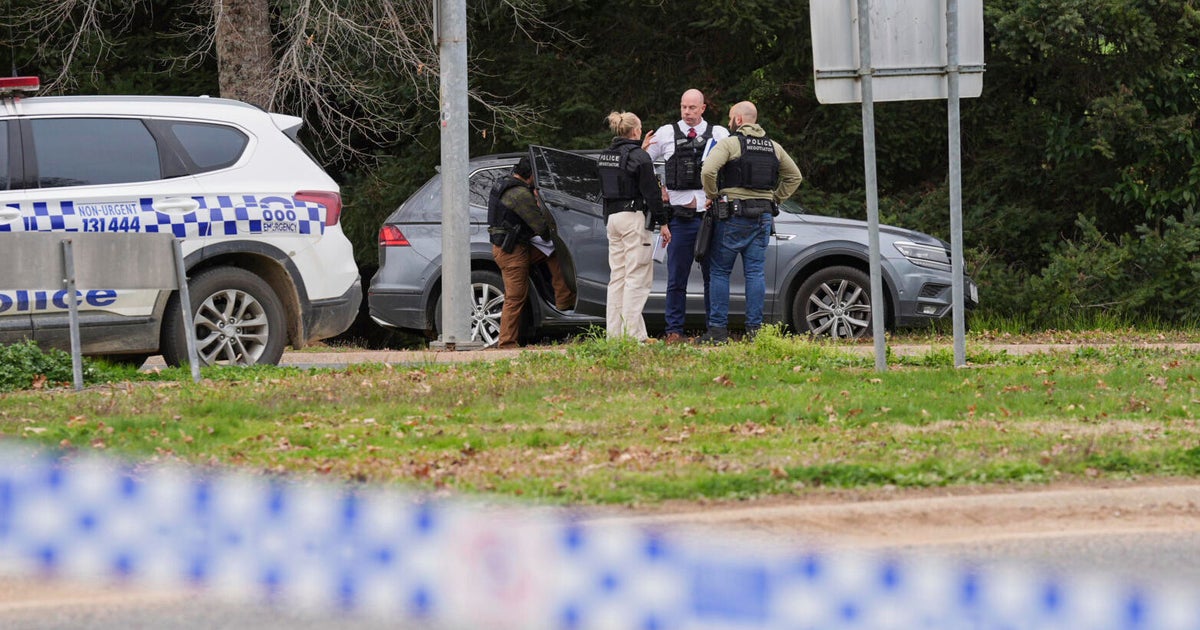
The manhunt finally came to an end when police tracked Freeman to a caravan on an extremely isolated property in rural Victoria, near the town of Thologolong, close to the border between Victoria and New South Wales. According to Police Commissioner Mike Bush, officers attempted to negotiate with Freeman and gave him multiple opportunities to surrender peacefully, but he refused to comply with their requests. This refusal ultimately led to the fatal shooting, which Bush defended as justified given the circumstances and the danger Freeman posed to the officers present. Local residents who spoke to media outlets painted a picture of just how remote the location was – describing it as completely “off the grid” and not the type of place someone would simply stumble upon by accident. Jasmine Teese, a Thologolong resident, explained that you would have to specifically know where this property was located to find it, adding that there wasn’t even a proper house on the site. Instead, the property owner lived among a collection of caravans, shipping containers, and old cars scattered across the land. The owner had reportedly been away for several weeks, creating what investigators believe may have been an opportunity for Freeman to hide there. Another local resident, cattle farmer Mike Gadd, expressed disbelief that Freeman had managed to remain undetected for such an extended period in their community.
Understanding the Man Behind the Manhunt
To understand how this situation escalated to such tragic proportions, it’s important to examine who Desmond Freeman was and what drove his intense hatred of authority. Media reports characterized Freeman as a conspiracy theorist and an adherent of the “sovereign citizen” movement – a loosely organized group of individuals who incorrectly believe they are not subject to governmental laws and regulations. This anti-authority ideology had manifested itself in Freeman’s previous interactions with the legal system, particularly during a court case where he was fighting a speeding penalty. Court documents reveal that Freeman referred to police officers as “frigging Nazis,” “Gestapo,” and “terrorist thugs” during these proceedings. His contempt for law enforcement reached disturbing levels during a 2024 hearing regarding his suspended driver’s license, where he told the court that even the sight of a police officer or patrol car affected him like “an Auschwitz survivor seeing a Nazi soldier,” according to reports from the Sydney Morning Herald. These extreme views would prove to have deadly consequences when officers arrived at his home in the small village of Porepunkah in August. While authorities have not publicly disclosed the exact reason for the search warrant, they did confirm that the team included members of the sexual offences and child investigation squad, suggesting the investigation involved serious allegations.
The Massive Search Operation
The scale of the operation to find Freeman was truly unprecedented in Australian law enforcement history. After the shooting in Porepunkah, Freeman disappeared into a national park characterized by dense bushland and dotted with dangerous, disused mineshafts – terrain that presented enormous challenges to search teams. At its peak, the manhunt involved approximately 450 police officers, making it one of the most significantly resourced police operations the country has ever seen, according to Commissioner Bush. The search effort deployed sophisticated resources including helicopters for aerial surveillance, specialized dog squads trained to track individuals through difficult terrain, and even brought in reinforcements from New Zealand to assist their Australian colleagues. Police considered Freeman to be armed and extremely dangerous, which complicated search efforts as officers had to balance thoroughness with their own safety. Adding to the challenge was Freeman’s reputation for possessing strong bushcraft and outdoor survival skills, which apparently helped him evade capture for months in the wilderness. Authorities believed that Freeman likely received assistance from people in the area who shared his anti-authority views and sympathized with his situation. Commissioner Bush stated plainly that “it would be very difficult for him to get to where he was without assistance,” suggesting that some community members may have actively helped him avoid detection.
A Community’s Pain and a Nation’s Reward
The impact of this case extended far beyond the immediate families of the fallen officers, touching the entire law enforcement community and the broader Australian public. In recognition of the seriousness of the situation and the danger Freeman posed to the community, authorities offered an AU$1 million reward (approximately $685,000 US dollars) for information leading to his capture – the maximum amount possible under Australian law. This substantial reward reflected both the determination to bring Freeman to justice and the acknowledgment that tips from the public might be essential to locating him in the vast, rugged terrain where he was hiding. The Police Association of Victoria, speaking after Freeman’s death was announced, chose to focus not on the fugitive but on honoring those who had lost their lives and those who had worked tirelessly to resolve the situation. “Today, we won’t reflect on the loss of a coward,” the association stated. “We will remember the courage and bravery of our fallen members and every officer that has doggedly pursued this outcome for the community.” Detective Neal Thompson, at 59 years old, had dedicated decades to serving his community, while Senior Constable Vadim De Waart, only 35, had his promising career and life cut tragically short. Both men were simply performing their duties when they were killed, a sobering reminder of the dangers that law enforcement officers face, even in a country like Australia where police shootings are relatively rare compared to some other nations.
A Broader Context of Violence Against Police
While police shootings are uncommon in Australia, this tragic incident is part of a concerning pattern of violence directed at law enforcement officers in recent years. According to the National Police Memorial website, the last police officer to be shot and killed on duty before the August incident involving Freeman was in 2023 in South Australia state. Perhaps even more chilling is a 2022 incident in Queensland state, where two officers were shot and killed by Christian extremists at a rural property in the region of Wieambilla. In that case, the three shooters were conspiracy theorists who harbored intense hatred toward police – a mindset disturbingly similar to Freeman’s worldview. That situation resulted in a six-hour siege before the three shooters were ultimately killed by police. These incidents highlight a troubling trend of anti-government and anti-police ideology leading to deadly violence in rural areas where individuals may feel emboldened to act on their extreme beliefs. As the state coroner now works to formally identify Freeman’s body and confirm the cause of death, the law enforcement community and the nation as a whole are left to process the conclusion of this months-long ordeal. The investigation will undoubtedly continue as authorities seek to understand exactly how Freeman evaded capture for so long and whether others should face charges for assisting him. For now, there is a sense of relief that a dangerous fugitive is no longer a threat, mixed with the ongoing grief for two officers whose lives were senselessly taken and the recognition of the dedication shown by the hundreds of officers who refused to give up the search for justice.