



Face the Nation: U.S.-Iran Conflict Escalates Amid Daring Rescue Mission
Dramatic Rescue Operation Succeeds Against the Odds
This Easter Sunday brought a glimmer of hope amid escalating tensions in the Middle East as U.S. special operations forces successfully rescued a missing weapons systems officer whose F-15E fighter jet was shot down over Iran on Friday. The dramatic 48-hour search-and-rescue operation, which Ed O’Keefe discussed on Face the Nation, involved dozens of U.S. commandos, numerous warplanes and helicopters, and even CIA operatives spreading disinformation to throw Iranian forces off the trail. The officer had been hiding in a mountainous crevice in southwestern Iran while Iranian Revolutionary Guards scoured the area, offering substantial cash rewards to locals who could find him first. President Trump announced the successful rescue on Truth Social in the early morning hours, calling it “an amazing show of bravery and talent by all.” However, the operation came at a cost—two C-130 transport planes were destroyed by American forces to prevent them from falling into enemy hands, and the rescued officer sustained serious injuries.
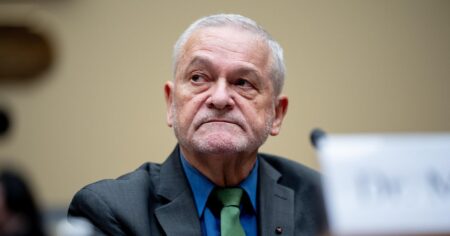
Retired General Frank McKenzie, former commander of U.S. Central Command, praised the operation’s execution while emphasizing the deeper significance of such missions. “It takes a year to build an aircraft. It takes 200 years to build a military tradition where you don’t leave anybody behind,” McKenzie told O’Keefe. The general highlighted two important lessons from the rescue: first, the excellence and rapid response capability of the joint U.S. military force, which trains endlessly for such scenarios; and second, a troubling sign for Tehran—Iranian authorities’ inability to locate the missing airman despite offering rewards and appealing to their population for information. This failure, McKenzie suggested, might indicate growing disaffection among the Iranian people with their government. The successful mission stands as a testament to American military professionalism and the unwavering commitment to bringing service members home, even when it means risking additional lives and resources in hostile territory.
Military Assessment: Campaign Progress and Strategic Challenges
According to General McKenzie’s analysis, the United States has made significant progress in degrading Iran’s military capabilities roughly thirty days into the current conflict. Iran and its proxies retain some ability to inflict damage—evidenced by recent attacks on petrochemical plants in the UAE, Kuwait, and Bahrain—but they no longer possess the capacity to achieve “mass effects” through coordinated large-scale attacks with dozens of rockets, missiles, or drones. McKenzie characterized the campaign’s progress as exceeding expectations, noting that if someone had presented him with the current situation when he commanded CENTCOM, he would have “rejected it as being too optimistic by far.” The systematic destruction of Iran’s military infrastructure, including weapons stockpiles, launch facilities, and naval assets, continues to limit Tehran’s ability to project power across the region.
The critical issue of reopening the Strait of Hormuz—a vital waterway through which much of the world’s oil supply passes—remains President Trump’s stated priority, with repeated ultimatums demanding Iran reopen the passage or face escalating attacks. McKenzie explained that military operations are systematically targeting the threats that make the strait dangerous: short-range rockets and missiles, fast attack craft resembling heavily armed speedboats, and Iran’s extensive mine stockpiles. The United States possesses the capability to reopen the strait through air and naval campaigns, though some ground operations in the form of raids might be necessary. McKenzie specifically mentioned Kharg Island as a potentially “lucrative target”—seizing it would cut off Iran’s oil exports while providing leverage for negotiations without permanently destroying global energy infrastructure. While President Trump has claimed the entire operation will conclude within two to three weeks, McKenzie cautiously avoided endorsing any specific timeline, instead emphasizing that the Iranians “would be very well served to listen to President Trump when he says he’s going to hit them, because he’s proven that he’s willing to do that.”
Political and Economic Fallout: Governors Face Domestic Consequences
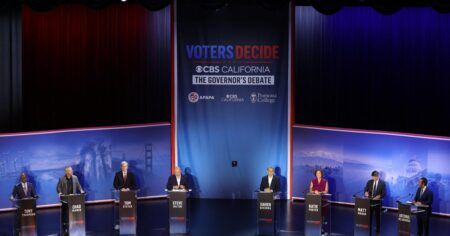
Maryland’s Democratic Governor Wes Moore, a veteran of the war in Afghanistan, expressed deep concerns about the current conflict during an interview at the state capitol in Annapolis. Moore, whose military background gives him unique perspective on the human cost of war, criticized the administration’s lack of clear articulation regarding the war’s purpose and definition of success. “We are very dangerously lurching again into another forever war,” Moore warned, drawing parallels to his own service in Afghanistan—a twenty-year conflict that cost over $2.5 trillion and 2,400 American lives, yet ended with the Taliban still in power. His critique focused not on the bravery of service members but on strategic decision-making at the highest levels: “I’m proud of them for choosing a life of service… But I am also praying for them and I’m praying for the leadership of this country that they will make decisions with them and their families in mind, and not just simply make decisions that I think have been just wrong-headed and foolish on their face.”
The economic impact of the conflict weighs heavily on state leaders dealing with constituents facing rising costs. Governor Moore pointed out that his mother’s energy bill jumped from $140 last March to nearly $500 this year, while gas prices have increased by over a dollar since the war began. When O’Keefe suggested Maryland could institute a gas tax holiday to provide relief, Moore firmly rejected the idea, arguing that the real solution lies in “stop fighting foreign wars” rather than state-level band-aids for federal policy decisions. The governor’s frustration extended to President Trump’s recent suggestion that states should pay for Medicare, Medicaid, and daycare because the federal government should focus solely on military protection. Moore dismissed this as “nonsense,” explaining that no state has the budget to assume responsibility for such massive programs, especially while also balancing their budgets—something the federal government doesn’t do. He described the unfair position governors find themselves in: expected to compensate for federal decisions while managing fiscal responsibility that Washington abandons.
Moral and Spiritual Guidance in Wartime
Archbishop Timothy Broglio, who oversees more than 200 Catholic priests serving as military chaplains, provided insight into the spiritual challenges facing service members during the Iran conflict. Speaking from the perspective of Catholic just war theory—rooted in St. Augustine’s teachings that war must be waged only as a necessity to obtain peace, with proportional response—Archbishop Broglio expressed significant reservations about the current military campaign. When asked directly whether the war with Iran is justified under Catholic teaching, he responded carefully but clearly: “I would think under the just war theory, it is not because while there was a threat with nuclear arms, it’s compensating for a threat before the threat is actually realized.” This assessment places him in alignment with Pope Francis, who has been urging negotiation rather than military escalation and recently stated that “God does not listen to the prayers of those who wage war but rejects them.”
The Archbishop acknowledged the difficult position this creates for Catholic service members who seek spiritual guidance while following military orders. For lower-ranking personnel like Marines receiving direct commands, he explained, “he’s not in a position really to resist that order… he has to obey unless it’s clearly immoral.” The military’s conscientious objector framework doesn’t allow for opposition to specific wars or actions—only blanket opposition to all warfare. This leaves individual service members in a moral bind: following legitimate orders that may contribute to a war their religious leaders consider unjustified. Archbishop Broglio and his fellow military chaplains have developed extensive programs to address “moral injury”—the psychological and spiritual wounds that come from killing, even when following lawful commands. His counsel to struggling service members is practical and compassionate: “Do as little harm as you can and try and preserve innocent lives.” Regarding Defense Secretary Pete Hegseth’s practice of openly invoking Jesus and praying from the Pentagon press room for blessings on the war effort, the Archbishop diplomatically noted it was “a little bit problematic,” explaining that “the Lord Jesus certainly brought a message of peace” and “it’s hard to cast this war as something that would be sponsored by the Lord.”
Political Ramifications and the 2026 Midterms
The political panel—consisting of Amy Walter from the Cook Political Report, David Sanger from The New York Times, and Jeff Mason from Bloomberg—analyzed the significant political risks President Trump faces as the Iran conflict continues. The war has fundamentally derailed what was supposed to be Republicans’ signature issue for 2026: affordability and bringing down costs for American families. Instead, gasoline prices have spiked, inflation is creeping upward, and the president’s budget proposal calls for $1.5 trillion in military spending while cutting domestic programs—the opposite of making life more affordable. Mason noted that Trump’s Wednesday night address to the nation represented a belated “sales pitch” for a war that most presidents would have explained before launching military action. The political risk “skyrocketed” when the F-15 was shot down, though the successful rescue provided some relief. Polling shows the war remains deeply unpopular with the American public overall, despite maintaining support within Trump’s base—84 percent of Republicans still back the military action, but nearly 70 percent of independents disapprove.
Amy Walter highlighted the enthusiasm gap emerging between the parties: “Democrats are fired up. Republicans are not. If that continues as we move through this electoral season, that’s when things get really bad for the Republican Party in November.” Trump’s approval ratings have dropped to the lowest point of his second term, driven partly by weakening support among his own party—not defection, but dispirited Republicans losing intensity and enthusiasm. The president’s comment about states paying for Medicare, Medicaid, and daycare struck the panel as particularly damaging, with Mason calling it campaign ad material that Democrats will undoubtedly exploit. David Sanger emphasized the unresolved strategic questions undermining Trump’s position: the Strait of Hormuz remains closed (a problem created after the war started), the nuclear material that was supposedly a justification for military action is now dismissed by Trump as unimportant since it’s buried deep underground, and promised regime change hasn’t materialized—just personnel shuffles in Tehran. Looking ahead to 2028, Walter suggested this could be the first presidential election in a decade where Donald Trump isn’t the centerpiece, forcing both parties to articulate positive visions rather than simply positioning themselves in relation to Trump’s dominance of American politics.
Space Exploration Continues: Artemis II Mission Update
Providing a stark contrast to earthly conflicts, NASA Administrator Jared Isaacman joined the broadcast from Mission Control in Houston to discuss the historic Artemis II mission currently underway. Four astronauts aboard the Orion spacecraft are approximately halfway through their mission, approaching the moon for tomorrow’s six-hour fly-by around the far side—making them the first humans to see certain parts of the lunar surface. The primary objective during this phase involves gathering critical data from the spacecraft’s life support system (ECLIS), as this marks the first time humans have traveled aboard Orion. The information collected will inform Artemis III, scheduled for just one year away, which will test the same spacecraft with lunar landers. By 2028, Artemis IV will use the vessel to transfer crew to landers and return American astronauts to the moon’s surface for the first time in over half a century.
Isaacman emphasized the significant changes NASA has implemented in recent months under the Trump administration’s directive to establish an enduring presence on the moon, including construction of a lunar base. The “Working Families Tax Cut Act” provided $10 billion in supplemental funding—”the biggest supplemental investment in NASA since the Kennedy era,” according to Isaacman. NASA is now embedding subject matter experts throughout the entire supply chain, from prime contractors to sub-contractors, monitoring every component on the critical path to ensure schedules and budgets stay on track. When questioned about the president’s proposed budget cutting NASA funding by more than 20 percent, Isaacman defended the approach, arguing that outcomes matter more than annual spending levels, especially given the substantial supplemental funding already secured. As the astronauts prepare to pass behind the moon for approximately 40 minutes of communications blackout during tomorrow’s fly-by, Isaacman said his primary concerns center on the life support systems and ultimately the thermal protection during reentry, when the crew will descend under parachutes: “Most importantly, I’m thinking about… when these astronauts are under parachute, safely in the water so we can get them back to their families.”