



The Gilgo Beach Serial Killer Case: A Potential Resolution After Decades
A Shocking Development in a Long-Standing Investigation
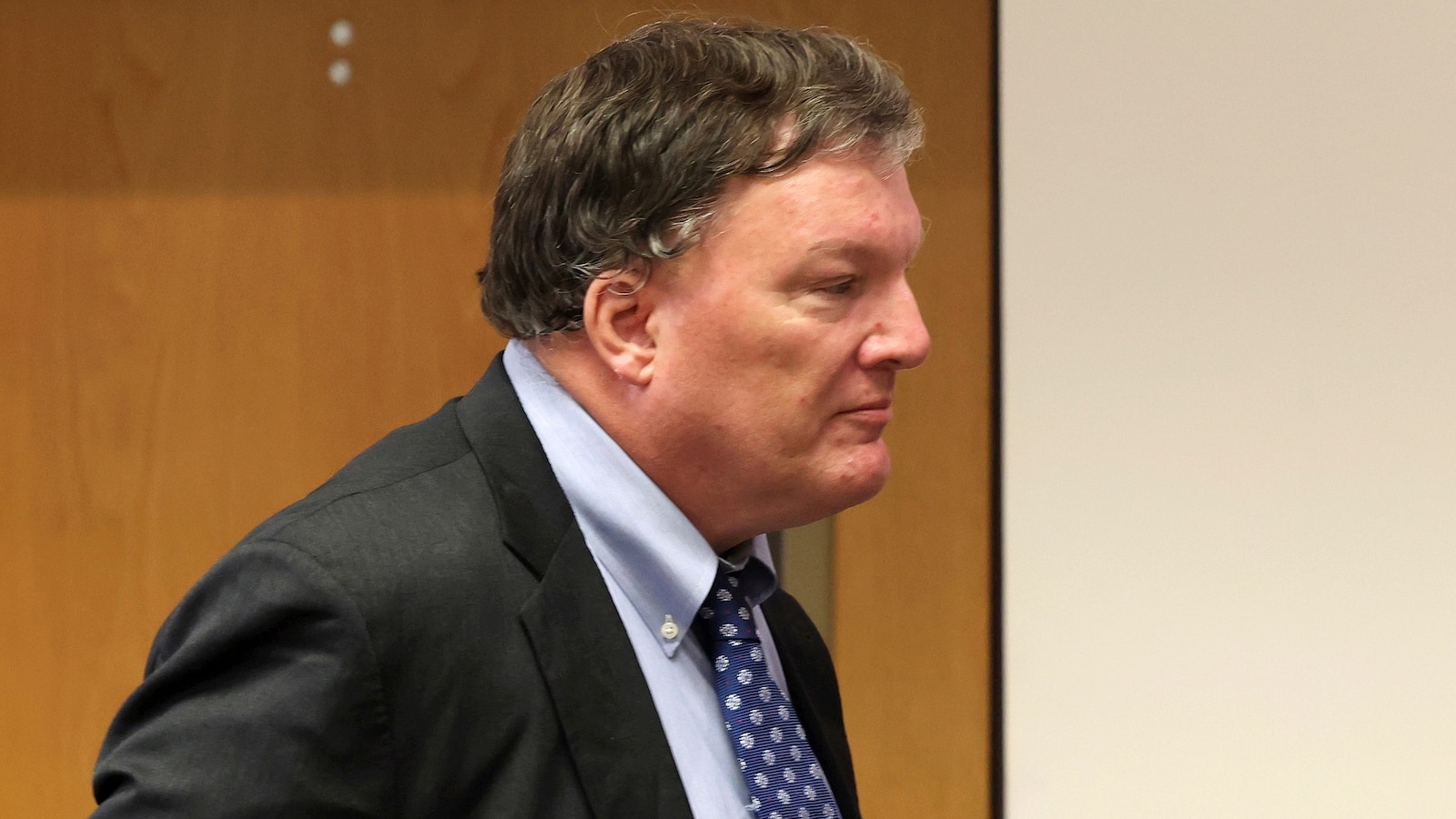
The notorious Gilgo Beach serial killer case may be approaching a dramatic turning point. Rex Heuermann, the man accused of murdering seven women whose bodies were discovered near Gilgo Beach and other locations across Long Island, New York, could be preparing to admit his guilt. According to sources close to the investigation who spoke with ABC News on Thursday, Heuermann is expected to appear in court on April 8, and there are strong indications that he may change his plea to guilty during this hearing. This development would mark a significant moment in a case that has haunted Long Island communities for more than three decades, bringing potential closure to families who have waited years for answers about their loved ones’ deaths.
The Suffolk County District Attorney’s Office, which brought charges against Heuermann for the deaths of these seven women, has remained tight-lipped about these reports, declining to offer any comment on the matter. Similarly, Heuermann’s legal representative did not immediately respond when contacted for a statement about the potential plea change. The silence from both sides only adds to the anticipation surrounding the upcoming court appearance, as the community and victim families await confirmation of whether this case might finally reach a resolution without proceeding to a lengthy trial.
The Accused and His Legal Journey
Rex Heuermann’s journey through the legal system began in July 2023 when authorities arrested him in connection with these murders. Since that arrest, he has been held in custody in Riverhead, maintaining his innocence through not guilty pleas to all charges. Until now, the case has been moving steadily toward a trial scheduled for September in Riverhead, where prosecutors would have presented their evidence against him in what was expected to be a complex and emotionally charged proceeding. The potential plea change would fundamentally alter this trajectory, possibly sparing victim families the trauma of a trial while also avoiding the uncertainty that comes with jury deliberations.
The anticipation of Heuermann’s possible guilty plea was initially brought to public attention by Newsday, which first reported on the likelihood of this significant development. If Heuermann does indeed change his plea and admits to these murders, it would represent one of the most significant moments in Long Island criminal history, potentially closing the book on a case that has generated national attention and left communities living in fear for years. The crimes attributed to Heuermann span nearly two decades, representing a pattern of violence that terrorized the region and left law enforcement searching for answers for much of that time.
The Victims: Lives Cut Tragically Short
The seven women whose deaths have been attributed to Heuermann represent individual tragedies that span nearly two decades. Their remains were discovered in various locations across Long Island between 1993 and 2011, each discovery adding another chapter to what would eventually be recognized as the work of a serial killer. These weren’t just statistics or case files—they were real people with families, friends, and lives full of potential that were violently stolen from them. Understanding their stories helps humanize a case that might otherwise be reduced to sensational headlines and criminal procedure.
Sandra Costilla was the first known victim, her life taken in 1993. Her remains were found in North Sea on Long Island, though it would be many years before her death would be connected to the other murders. Seven years after Costilla’s death, Valerie Mack became another victim in 2000, followed by Jessica Taylor in 2003. Both Taylor and Mack’s cases presented particularly disturbing evidence, as partial remains were discovered in multiple locations—near Gilgo Beach and in Manorville on Long Island—suggesting the killer had attempted to dispose of evidence in separated locations. This pattern would become a haunting signature of these crimes.
The killings continued into the late 2000s with Maureen Brainard-Barnes losing her life in 2007, her remains later discovered near Gilgo Beach. Then, between 2009 and 2010, three more women—Megan Waterman, Melissa Barthelemy, and Amber Lynn Costello—were killed and their bodies recovered near Gilgo Beach. This cluster of discoveries in the Gilgo Beach area eventually led to the case being widely known as the “Gilgo Beach murders,” though the true scope of the crimes extended both geographically and temporally beyond that single location. Each of these women left behind grieving families who have waited years for justice and answers about what happened to their loved ones.
The Investigation That Spanned Decades
The investigation into these murders represents one of the most challenging and prolonged criminal investigations in New York history. For years, law enforcement officials worked to connect the dots between the various remains discovered across Long Island, trying to determine whether they were dealing with one killer, multiple killers, or unrelated crimes. The geographical spread of the discoveries, combined with the extended timeline spanning from 1993 to 2011, made piecing together the puzzle extraordinarily difficult. Advances in forensic technology, particularly in DNA analysis, eventually helped investigators make connections that might have been impossible in earlier years.
The breakthrough that led to Heuermann’s arrest in 2023 came more than a decade after the last known victim was killed, demonstrating both the persistence of law enforcement and the challenges they faced in building a case. Cold case investigators had to work with evidence that in some cases was decades old, tracking down witnesses, reviewing old case files, and applying new investigative techniques to old evidence. The arrest brought renewed hope to victim families and communities that had begun to wonder if the person responsible would ever be identified and held accountable.
The Path Forward: Justice and Closure
As the April 8 court date approaches, victim families, law enforcement officials, and the Long Island community are preparing for what could be a pivotal moment in this long saga. If Heuermann does indeed plead guilty to these murders, it would spare families the ordeal of a trial while providing definitive answers about who was responsible for these deaths. A guilty plea would also eliminate the possibility, however remote, of an acquittal or mistrial that might leave questions lingering. For families who have waited years—in some cases decades—for closure, a guilty plea might represent the most direct path to finally beginning the healing process.
However, a plea change would also raise new questions. Would Heuermann provide details about the murders, helping families understand what happened to their loved ones? Would he reveal information about other potential victims that investigators might not have connected to him? Would he explain why he committed these crimes, offering some insight into what motivated such horrific acts? These questions matter deeply to families seeking to understand not just who killed their loved ones, but why, and whether there might be other victims whose families still don’t have answers. The coming weeks will determine whether these questions will be answered through a guilty plea and potential allocution, or whether the case will proceed to trial in September as currently scheduled, where such details might emerge through testimony and evidence presentation.
The Gilgo Beach case has haunted Long Island for generations, casting a shadow over communities and leaving families in anguish. Whatever happens on April 8, it will represent a significant moment in this ongoing story—a story of lives lost, families broken, communities fearful, and a justice system working to hold someone accountable for unthinkable crimes. The potential resolution of this case won’t bring back the seven women who lost their lives, but it might finally provide the accountability and closure that has been so long in coming.