
Devastating Fire Ravages Historic Glasgow Building, Bringing City’s Rail Network to a Standstill
A Weekend Blaze That Changed Everything
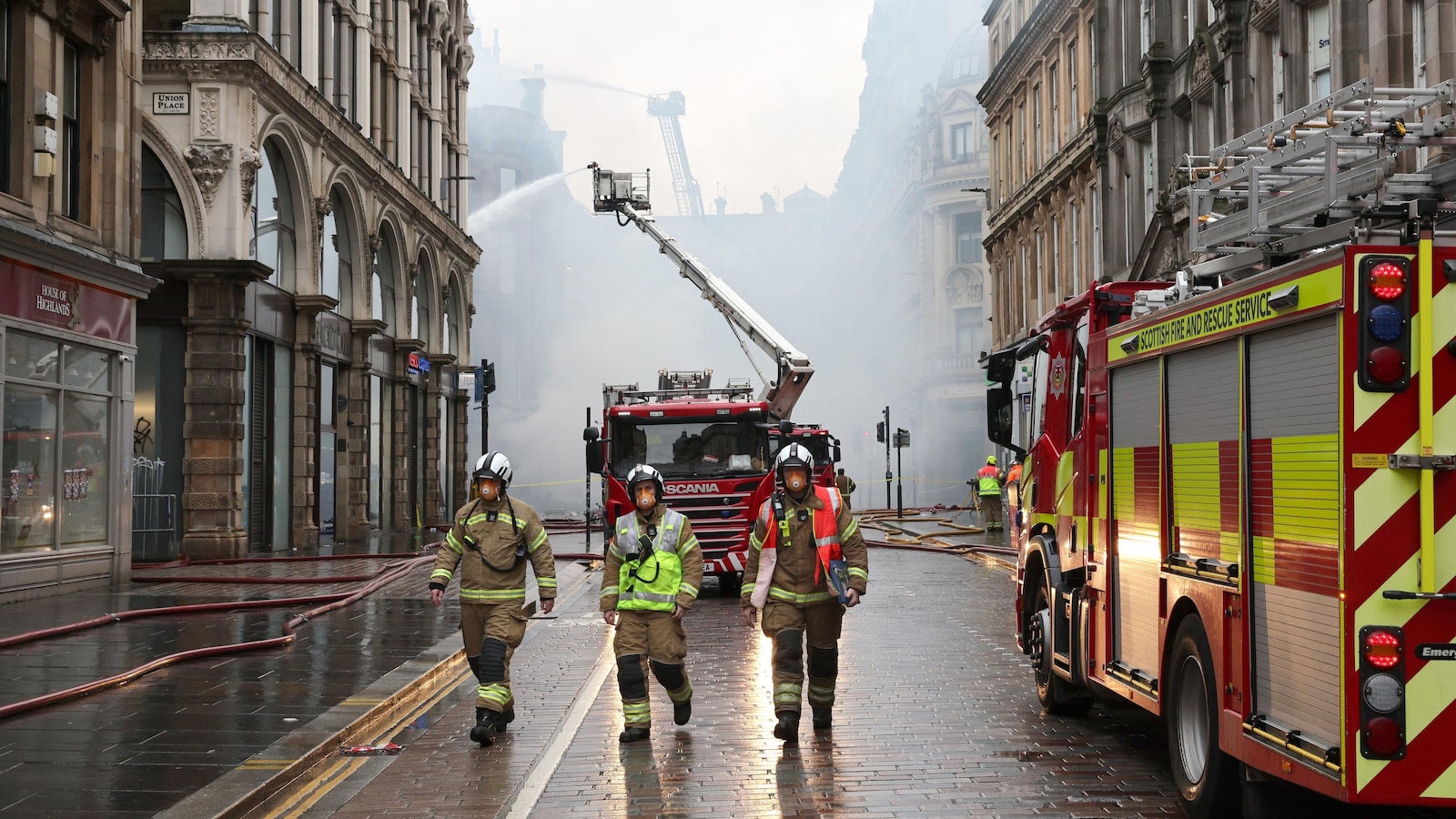
The heart of Glasgow was thrown into chaos this week when a catastrophic fire tore through a historic four-story building on Union Street, right next to one of Scotland’s most important transportation hubs. What started as a fire in a vape shop on a Sunday afternoon quickly escalated into an inferno that would consume an entire Victorian-era structure and bring the city’s rail network to its knees. As flames leaped from window frames and burst through the distinctive dome-capped roof, residents and visitors alike watched in horror as a piece of Glasgow’s architectural heritage was reduced to little more than a hollow shell. The building, which had stood proudly since 1851, bore witness to more than 170 years of the city’s history before succumbing to the relentless flames that burned throughout Sunday night and into Monday morning.
Transportation Crisis Unfolds
The immediate impact of the fire extended far beyond the destroyed building itself, creating a transportation nightmare for commuters and travelers across Scotland. Glasgow Central Station, the nation’s busiest railway hub, was forced to close its doors entirely as firefighters battled the blaze just next door. Rail operators scrambled to manage the fallout, announcing that all train services to, from, and passing through the station would face significant disruptions. With no clear timeline for when normal operations might resume, thousands of travelers found themselves stranded or searching for alternative routes. The closure represented more than just an inconvenience—it demonstrated how vulnerable modern infrastructure can be when disaster strikes at a critical junction. Business travelers, daily commuters, and tourists all found their plans thrown into disarray, highlighting the central role that Glasgow Central Station plays not just in the city’s daily life, but in Scotland’s broader transportation network.
Witnesses Describe a Scene From History
Those who witnessed the aftermath of the fire struggled to find words adequate to describe the devastation. Paul Sweeney, a member of the Scottish Parliament, drew a stark historical comparison that resonated with many when he likened the remains to scenes from the Blitz—the sustained German bombing campaign against Britain during World War II in 1940-41. His words painted a vivid picture of the destruction: “It’s been completely wiped out, destroyed. The building is a gutted shell. It looks like something out of the Blitz.” This comparison wasn’t mere hyperbole; the building had indeed been reduced to a haunting skeleton, with only its facade remaining upright, standing as a grim monument to what had been lost. The complete collapse of the interior structure left behind exactly the kind of hollow shell that characterized bombed-out buildings during wartime, creating an eerie echo of Glasgow’s past suffering during actual wartime bombardments decades ago.
Community Grief and Lost Livelihoods
Behind the police roadblocks that cordoned off the disaster zone, locals gathered to process what had happened to a building many considered an iconic part of their city’s landscape. Emma Reid spoke for many when she simply stated, “It’s just so sad. It’s such an iconic building.” Her words, though simple, captured the collective grief of a community watching a familiar landmark reduced to ruins. But the fire claimed more than just bricks and mortar—it destroyed the livelihoods of numerous small business owners who had built their dreams within those historic walls. A cafe, a fish and chip shop, and a hair salon were among the businesses completely wiped out by the flames, each representing someone’s investment, hard work, and source of income. Sexy Coffee, one of the affected businesses, took to Instagram to confirm the heartbreaking news that their shop had been completely destroyed, though they demonstrated remarkable resilience by vowing to rebuild and return stronger than before.
Silver Lining in a Dark Cloud
Amid all the destruction and disruption, there was at least one piece of genuinely good news to emerge from this disaster: the Scottish Fire and Rescue Service confirmed that there were no injuries reported. This remarkable outcome stands as a testament to either good fortune, quick evacuations, or both. That a fire of this magnitude—one that completely gutted a four-story building and burned through the night—resulted in no casualties is nothing short of miraculous. The building’s location next to Glasgow’s busiest train station meant that on a different day, at a different time, the outcome could have been far more tragic. The firefighters who worked tirelessly through Sunday night and into Monday morning deserve immense credit not only for their efforts to control the blaze but also for ensuring that the fire’s destructive path didn’t include human casualties. Their work, often dangerous and always demanding, prevented this disaster from becoming a tragedy of far greater proportions.
Looking Forward: Recovery and Resilience
As firefighters continued working into Monday to fully extinguish the blaze and ensure no hotspots remained, Glasgow found itself facing difficult questions about what comes next. The closure of Central Station with no reopening timeline created immediate practical challenges that would need creative solutions. Alternative transportation arrangements would need to be made, potentially for an extended period, affecting everything from business operations to daily commutes. The long-term question of what to do with the destroyed building presented an even more complex challenge. Should the 1851 structure be rebuilt to its original specifications, preserving the historical character of Union Street? Or would modern construction replace what was lost? The business owners who lost everything faced their own rebuilding decisions, weighing their emotional attachment to the location against the practical and financial challenges of starting over. Yet if Sexy Coffee’s immediate vow to rebuild is any indication, the spirit of Glasgow’s business community remains unbroken. The city has weathered storms before—including actual wartime bombing—and emerged resilient. This fire, devastating though it is, will likely become another chapter in Glasgow’s long history of overcoming adversity, adapting, and moving forward while honoring what was lost.