


Hawaii Faces Worst Flooding in Two Decades: A Community’s Struggle and Resilience
Unprecedented Devastation Sweeps Across the Islands
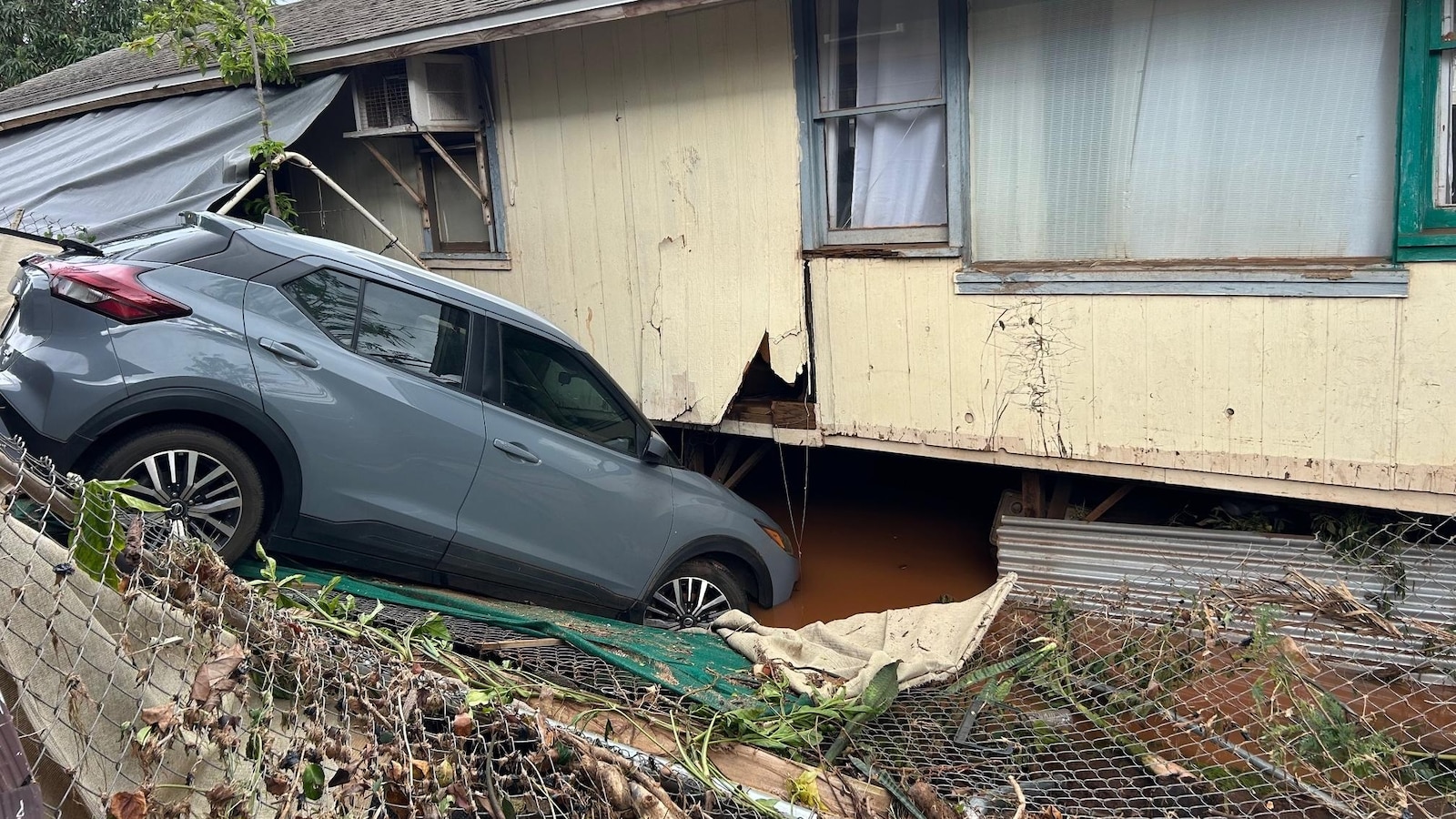
Hawaii has been hit by its most catastrophic flooding event in twenty years, leaving a trail of destruction that has fundamentally altered the lives of thousands of residents across the islands. The powerful floodwaters demonstrated nature’s raw force, literally lifting homes from their foundations and sending cars floating out of driveways as if they were toys. The aftermath has left countless properties coated in a distinctive reddish volcanic mud that has penetrated every surface imaginable, from floors to walls to kitchen counters. State officials estimate that hundreds of homes have sustained damage, along with multiple schools and at least one hospital facility. While the human toll has been mercifully limited with no reported deaths, more than 230 people required emergency rescue operations as the waters rose to dangerous levels. Governor Josh Green has estimated that the total cost of the disaster could exceed $1 billion when accounting for damage to critical infrastructure including airports, schools, roads, residential properties, and a hospital in Kula, Maui. This places the event as Hawaii’s most severe flooding crisis since 2004, when the Manoa neighborhood experienced devastating floods that destroyed homes and even inundated a University of Hawaii library with water and debris.
The Night Terror on Oahu’s North Shore
The flooding struck Oahu’s North Shore with particular ferocity, catching many residents completely off guard in the darkness of early Friday morning. This area, world-famous for its spectacular big wave surfing conditions, became the epicenter of the disaster when waters began rising rapidly after midnight. The timing couldn’t have been worse—heavy rainfall was pounding down on soil that had already been completely saturated by downpours from a winter storm that had hit just a week earlier. The combination created perfect conditions for catastrophic flooding, with raging torrents of water powerful enough to lift entire homes and vehicles. Emergency officials issued evacuation orders affecting approximately 5,500 people living north of Honolulu, though these orders were eventually lifted as conditions stabilized. The rescue operations were massive in scope, with emergency responders working tirelessly to save more than 230 people from the rising waters that threatened to engulf them. The scenes were surreal and terrifying—some residents, finding themselves trapped with water rising to waist or even chest height, were forced to improvise evacuation methods, with some actually paddling away from their flooding homes on surfboards, the very equipment that symbolizes the area’s famous surfing culture now serving as life-saving vessels in a desperate situation.
Agricultural Losses and Monday’s Return of Flooding
The disaster’s impact has extended far beyond residential areas, with Hawaii’s agricultural sector suffering devastating losses that threaten the livelihoods of countless farming families. According to a comprehensive survey conducted by Agriculture Stewardship Hawaii, the Hawaii Farm Bureau, and other agricultural organizations, farms across the state reported more than $9.4 million in damage as of Monday. Oahu farmers alone reported crop damage exceeding $2.7 million, representing not just financial loss but also the destruction of months or even years of careful cultivation and hard work. Just when residents hoped the worst had passed, Monday afternoon brought fresh anxiety as an intense band of showers moved over Oahu’s south side, causing stream levels to surge once again and transforming streets into rivers. The university neighborhood of Manoa was particularly hard hit, where one resident, Natalie Aczon, witnessed the frightening speed at which conditions could deteriorate. She had simply gone to the drugstore to pick up medication for her mother, spending perhaps fifteen minutes inside, but by the time she emerged, water was roaring down the street next to the shopping center like a wild river. The scene was chaotic, with people running from businesses, and one man watching in horror as his white car was literally lifted and carried away by the powerful current, elevated by the sheer force of the rushing water.
The Nightmare of Volcanic Mud Cleanup
The floodwaters have receded in many areas, but they’ve left behind a particularly challenging legacy in the form of thick, reddish volcanic mud that has proven to be an absolute nightmare to clean up. Michael McEwan and his wife Heather Nakahara experienced this firsthand when they returned to their home in Waialua on Oahu’s North Shore over the weekend. The scene that greeted them was like something from a disaster movie—their kitchen counters were completely covered in red silt, furniture had been piled up in chaotic heaps blocking their hallway, and mysteriously, a folding table they had never seen before was somehow lodged beneath their heavy sleeper sofa. Even more bizarrely, two additional mystery tables had materialized in their backyard, presumably carried there by the floodwaters from neighboring properties. The couple’s ordeal during the flood itself had been harrowing—they found themselves trapped in a bedroom closet for a terrifying eight-hour period with their two small terriers and three parrots, waiting for daybreak when McEwan was finally able to attract the attention of firefighters driving down their road. The rescuers demonstrated remarkable ingenuity and bravery, tying a rope to a tree next to the couple’s bedroom window, which served as a guide rope through a narrow channel of still-flowing water to safety. Now facing the monumental cleanup task, McEwan explained that they’ll likely have permanent reminders of the flooding throughout their house because of the unique properties of the red volcanic mud. “It’s full of iron, so it stains everything brownish-yellow,” he noted, describing how the mud’s composition makes it particularly destructive to property and nearly impossible to fully remove once it has penetrated porous surfaces.
Climate Change and Infrastructure Concerns
Weather officials have pointed to several factors that combined to create such devastating conditions. Parts of Oahu received between 8 to 12 inches of rainfall in a remarkably short period, according to the National Weather Service. This deluge came on top of another recent storm that had already dumped vast amounts of rain just days earlier, meaning the ground had no capacity left to absorb additional moisture. Kaala, Oahu’s highest peak, received nearly 16 inches of rain late last week, which was added to the 26.6 inches that had already fallen between March 10 and 16. The culprits behind these deluges were winter storm systems known as “Kona lows,” weather patterns characterized by southerly or southwesterly winds that bring moisture-laden air to the islands. More concerning for Hawaii’s long-term future, experts emphasize that the intensity and frequency of these heavy rainfall events have been increasing as a direct result of human-caused global warming, suggesting that such disasters may become more common in the years ahead. Adding to the crisis was a frightening moment regarding the 120-year-old Wahiawa dam north of Honolulu. As waters rose Friday, officials warned that the dam was “at risk of imminent failure,” a particularly terrifying prospect given that the earthen structure was originally built in 1906 to support sugar production and was reconstructed following a collapse in 1921. The state has classified Wahiawa dam as having “high hazard potential,” meaning that a failure “will result in probable loss of human life.” Records show the state has sent the current owner, Dole Food Co., four notices of deficiency since 2009, and in 2019 even fined the company $20,000 for failing to address safety deficiencies on time. Fortunately, worries eased as water levels subsided, and Dole issued a statement saying “the dam continues to operate as designed with no indications of damage.”
Community Response and the Road to Recovery
Despite the overwhelming nature of the disaster, the response from Hawaii’s tight-knit communities has been nothing short of inspiring. Molly Pierce, a spokesperson for the Oahu Emergency Management Agency, described how volunteers have been showing up from across Oahu and even from other islands to help clear away the thick muck and debris that has buried so many properties. In some North Shore neighborhoods, residents have had to trudge through silt reaching up to their knees or even deeper just to access their properties, making every step of the recovery process physically exhausting. Pierce compared the wet volcanic mud to heavy, wet snow in terms of its weight and difficulty to move, while noting that when it dries, the iron-rich dust stains everything it touches, and when wet, it clings tenaciously to all surfaces. As of Monday, Oahu Emergency Management had received more than 400 reports of damaged or destroyed homes from Friday’s floods alone, not counting Monday’s additional flooding in southern areas. The scale of the disaster has prompted coordinated relief efforts, with Governor Green recommending on Sunday that those wishing to support impacted households donate to the Hawaii Community Foundation, which has activated its Stronger Hawaii Fund specifically for this disaster. Additionally, the nonprofit Hawaiian Council launched the Kako’o Oahu initiative to provide assistance with housing and other critical needs for displaced residents. As Hawaii begins the long process of recovery and rebuilding, residents are demonstrating the resilience and aloha spirit for which the islands are famous, coming together to support neighbors and strangers alike through one of the most challenging periods in recent island history.