
Ancient Cave Discovery Beneath Welsh Castle Could Rewrite Britain’s Prehistoric Story
A Remarkable Find Hidden in Plain Sight
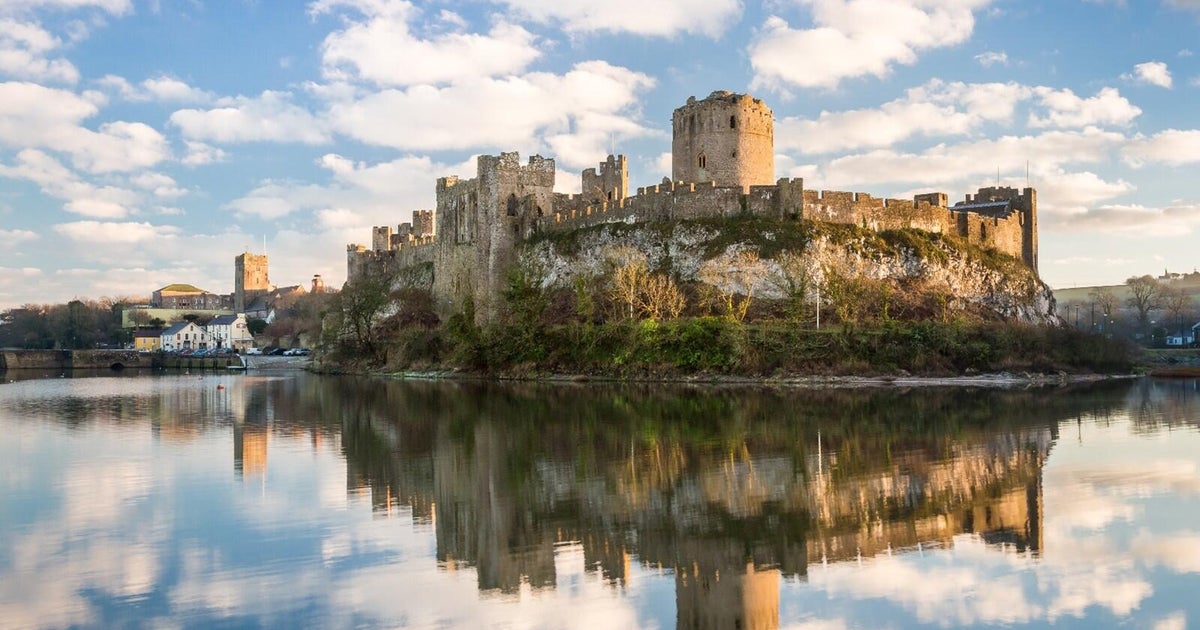
Imagine walking through a medieval castle, admiring its stone walls and historic battlements, completely unaware that beneath your feet lies a treasure trove of prehistoric secrets spanning over 100,000 years. That’s exactly what researchers have discovered at Pembroke Castle in Wales, a famous tourist destination known as the birthplace of Henry Tudor, who would become King Henry VII of England. What makes this discovery particularly extraordinary is that this enormous cave system, called Wogan Cavern, was previously believed to have been completely emptied by Victorian-era archaeologists. However, recent investigations have revealed that the site is far from depleted – in fact, it may be one of the most significant prehistoric sites ever discovered in Britain. The cave has already yielded incredible finds, including the bones of hippopotamuses that once wallowed in Welsh rivers during a warmer climate period approximately 120,000 years ago, challenging everything we thought we knew about which animals lived in ancient Britain.
An Underground Time Capsule Spanning Millennia
The Wogan Cavern site is accessed through a dramatic spiral staircase descending from the 11th-century castle above, creating a literal journey through time as visitors move from the medieval world into the prehistoric past. Dr. Rob Dinnis from the University of Aberdeen, who is leading the ambitious five-year archaeological project, has called this a “once-in-a-lifetime discovery,” emphasizing that there is simply no other site like it anywhere in Britain. The cave has preserved an incredibly detailed record of life in Wales across multiple climate periods and human occupations. Among the fascinating finds are bones from woolly mammoths, woolly rhinoceroses, reindeer, and wild horses – animals that paint a picture of a dramatically different Welsh landscape, sometimes frozen and harsh, other times temperate and lush. What makes the site even more exceptional is the presence of stone tools and evidence of human occupation spanning tens of thousands of years, offering researchers an unprecedented opportunity to study how different human species adapted to changing environments and climates in this corner of Britain.
Evidence of Britain’s Earliest Human Inhabitants
Perhaps the most thrilling aspect of the Wogan Cavern discoveries is what they reveal about the earliest people to call Britain home. The cave contains extremely rare evidence of early Homo sapiens – our direct ancestors – who lived in the region between 45,000 and 35,000 years ago, representing some of the very first modern humans to venture into Britain after previous populations had been driven out by ice age conditions. But the human story at this site may reach back even further. Researchers have found tantalizing hints of even earlier occupation, possibly by Neanderthals, our evolutionary cousins who dominated Europe before the arrival of Homo sapiens. The discovery of bones from mammoths and reindeer alongside stone tools crafted by these ancient peoples provides a vivid snapshot of life during these distant periods. These early inhabitants would have been sophisticated hunter-gatherers, capable of surviving in challenging environments, tracking large game animals, and creating the tools necessary for daily survival. The cave also shows evidence of occupation by later hunter-gatherers who returned to the area around 11,500 years ago as the last Ice Age finally released its grip on Britain and the climate gradually warmed.
A Window Into Ancient Climate and Extinct Species
One of the most scientifically valuable aspects of the Wogan Cavern site is what it can teach us about past climate change and the ecosystems that existed in ancient Britain. The presence of hippopotamus bones is particularly striking – these massive semi-aquatic mammals require warm rivers and lakes, indicating that Wales experienced a warm interglacial period around 120,000 years ago, with temperatures potentially even warmer than today. This would have been during what scientists call the “last interglacial,” a time between ice ages when Britain was connected to mainland Europe and animals could freely migrate across the landscape. The discovery of woolly mammoths and woolly rhinoceroses, on the other hand, speaks to much colder periods when ice sheets advanced and Britain became a frozen tundra. Professor Kate Britton of the University of Aberdeen explained that because the bones found in the cave are exceptionally well-preserved, scientists can extract a wealth of information about past environments and ecosystems using modern analytical techniques that weren’t available to earlier generations of archaeologists. This includes advanced methods of analyzing bone chemistry to understand what animals ate, studying DNA preserved in ancient remains, and using dating techniques to establish precise timelines for when different species inhabited the region.
Adding New Chapters to Pembroke Castle’s Rich History
For Pembroke Castle itself, this discovery adds an entirely new dimension to a site already steeped in history. The castle has long been celebrated as a masterpiece of medieval military architecture and as the birthplace of Henry VII in 1457, whose victory at the Battle of Bosworth Field ended the Wars of the Roses and established the Tudor dynasty that would rule England for over a century. Now, visitors to the castle can appreciate that human connection to this location extends not just hundreds of years into the medieval past, but tens of thousands of years into the prehistoric era. Jon Williams, the castle manager, expressed the excitement that everyone at the site feels about the ongoing work in Wogan Cavern, noting that the discovery of this prehistoric archive beneath a beloved historic landmark is transforming how they understand and present the location to visitors. When excavations resume in May as part of the five-year project, the castle will become a active archaeological research site, offering the public a rare chance to witness how scientists piece together the story of our ancient past. The project team hopes to create educational programs that help visitors understand the enormous span of human history represented at this single location, from Neanderthals to Homo sapiens to medieval kings.
Fitting Into the Bigger Picture of Human Evolution
The discoveries at Pembroke Castle arrive at an exciting time for our understanding of human evolution and ancient history. Recent years have seen a series of remarkable findings that have challenged and refined our understanding of where we came from and how different human species interacted. Earlier this year, researchers confirmed that fossils from Morocco dating back more than 773,000 years support the theory that Homo sapiens originally evolved in Africa before spreading to other continents. We now know that Neanderthals primarily inhabited Europe and western Asia, while the more recently identified Denisovans lived across parts of Asia. In Ethiopia, scientists have identified fossils proving the existence of additional ancient human relatives who lived alongside the famous “Lucy” specimen. Perhaps most intriguingly, research from 2022 demonstrated that Neanderthals and modern humans coexisted in parts of France and Spain for up to 2,900 years, providing ample opportunity for cultural exchange and interbreeding – something we now know happened because most people of European descent carry small amounts of Neanderthal DNA. The Wogan Cavern adds crucial British evidence to this global story, potentially documenting the transition period when Neanderthals disappeared and modern humans became the sole surviving human species. As the five-year research project unfolds, each new discovery from beneath this Welsh castle will help fill gaps in our understanding of this pivotal chapter in human history, reminding us that the story of our ancestors is still being written, sometimes in the most unexpected places.