
Hungary’s Pivotal Election: A Battle for Democracy and Europe’s Future
A Nation at the Crossroads
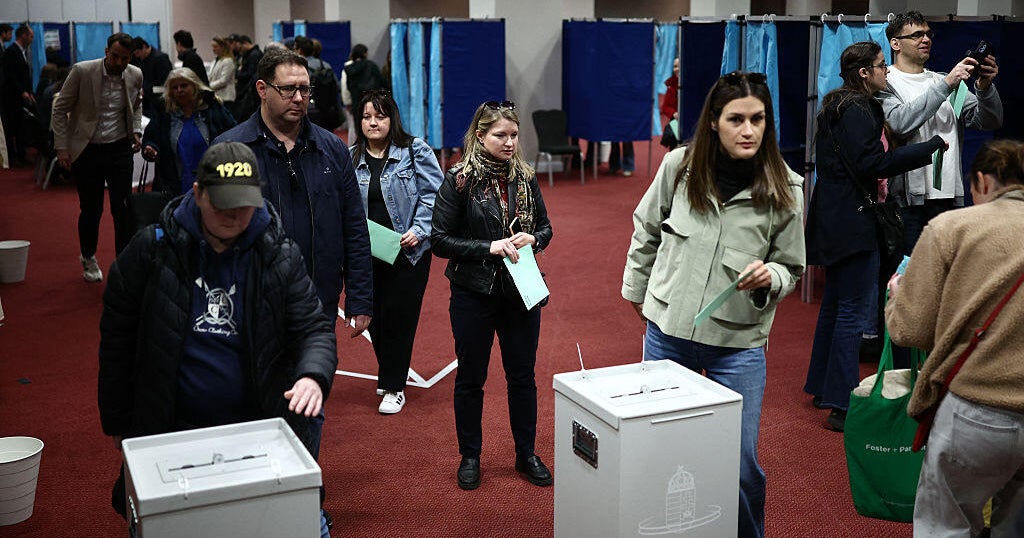
Hungarians headed to polling stations on Sunday in what many observers are calling the most significant election in Europe this year. The stakes couldn’t be higher: voters are deciding whether to continue down the path set by Viktor Orbán, the European Union’s longest-serving leader, or to chart a new course with challenger Péter Magyar. The election represents far more than a simple change of leadership—it’s a referendum on Hungary’s place in Europe, its commitment to democratic values, and its relationship with both East and West. As polls opened at 6 a.m. across the country, both candidates arrived at their respective polling stations in Budapest almost simultaneously, a symbolic moment that underscored the dramatic confrontation taking place. Orbán, speaking to reporters after casting his vote, expressed confidence and gratitude toward his supporters, declaring simply: “I’m here to win.” Magyar, meanwhile, framed the election in stark terms as “a choice between East or West, propaganda or honest public discourse, corruption or clean public life,” urging all Hungarians to exercise their democratic right to vote.
Viktor Orbán’s Transformation: From Freedom Fighter to Controversial Strongman
The story of Viktor Orbán is one of remarkable political transformation. The 62-year-old prime minister began his career as a liberal, anti-Soviet activist fighting for democracy in the waning days of communist rule in Eastern Europe. Today, he stands as something entirely different: a Russian-friendly nationalist who has become a hero to far-right movements across the globe. Since taking office in 2010—sixteen years ago—Orbán has systematically reshaped Hungarian politics and society. His government has been accused by independent watchdogs and European Union officials of launching what amounts to a sustained assault on Hungary’s democratic institutions and the rule of law. The results of these policies have been dramatic and troubling. According to Transparency International, a respected U.K.-based anti-corruption organization, Hungary has descended to become the most corrupt country within the entire European Union. This remarkable fall from grace represents not just a statistical decline but a fundamental reshaping of Hungarian governance, where checks and balances have been weakened, media independence has been undermined, and state resources have increasingly been used for partisan political purposes.
The Trump Connection: Transatlantic Populism
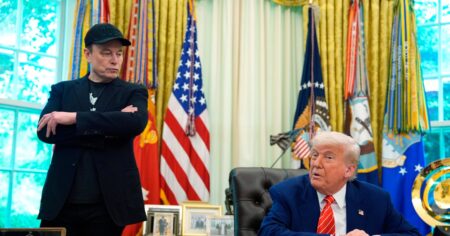
Orbán’s relationship with former and current U.S. President Donald Trump has become one of the defining features of his recent tenure. The two men have formed one of the closest alliances between any American president and a European leader, a partnership that began during Trump’s first election in 2016 and has only deepened over the subsequent decade. The Hungarian prime minister has been more than just a distant supporter; he’s been an enthusiastic advocate for Trump’s vision of politics, and Trump has reciprocated by praising Orbán’s “strong leadership.” This relationship has become even more visible in recent years, reaching a new level of public display when Vice President JD Vance traveled to Budapest last week to campaign alongside Orbán. This unprecedented move—an American vice president actively supporting a foreign leader’s reelection campaign—demonstrated just how intertwined the political fortunes of the Trump administration and Orbán’s government have become. For many Hungarians and European observers, this close alliance with Trump represents either a valuable connection to American power or a dangerous alignment with authoritarian tendencies, depending on one’s political perspective.
Record Turnout Signals High Stakes
The Hungarian people clearly understand the significance of this election. By 11 a.m., after just five hours of voting, turnout had reached an extraordinary 54.14% according to the National Election Office—a record in Hungary’s post-communist history. This represented approximately 997,000 more voters casting ballots by that time compared to the previous election in 2022. Such exceptional participation reflects the deep feelings on both sides of Hungary’s political divide. For Orbán’s supporters, the election represents a chance to validate their vision of Hungary as a sovereign nation that refuses to bow to pressure from Brussels and maintains its traditional values against what they see as Western cultural imperialism. For his opponents, however, the election is nothing less than a last chance to rescue Hungarian democracy from what they view as authoritarian decay and to restore the country’s standing within the European community. Young voters, in particular, seem energized by the stakes. Marcell Mehringer, a 21-year-old voter in Budapest, captured this sentiment when he explained his decision to vote: “primarily so that Hungary will finally be a so-called European country, and so that young people, and really everyone, will do their fundamental civic duty to unite this nation a bit and to break down these boundaries borne of hatred.”
The Choice Before Hungary: Democracy, Corruption, and Europe
The competing visions presented by Orbán and Magyar couldn’t be more different. Magyar has positioned his campaign as a fight to restore integrity to Hungarian public life, to choose Western democratic values over Eastern authoritarianism, and to replace propaganda with honest public discourse. His message resonates with Hungarians who are frustrated with the corruption rankings, concerned about press freedom, and worried about Hungary’s increasing isolation within the European Union. These voters see the election as an opportunity to rejoin the community of democratic European nations and to restore the checks and balances that characterized Hungarian democracy in its earlier post-communist years. On the other side, Orbán presents himself as a defender of Hungarian sovereignty against an overbearing European Union that he claims seeks to impose values and policies against the will of the Hungarian people. His supporters appreciate his willingness to stand up to Brussels, his defense of traditional Christian values, and his management of the economy, which has delivered benefits to many Hungarians even as critics point to corruption and cronyism. For these voters, Orbán represents strength, stability, and a refusal to submit to what they see as arrogant Western European dictates.
Implications for Europe and Beyond
The outcome of this election will reverberate far beyond Hungary’s borders. For the European Union, an Orbán victory would mean continued friction with one of its member states, ongoing battles over rule of law and democratic standards, and persistent challenges to EU unity on issues ranging from migration to relations with Russia. A Magyar victory, conversely, could signal a new era of cooperation and Hungary’s return to the European mainstream. For the global far-right movement, which has looked to Orbán as a successful model of populist governance, the election serves as a test of whether such movements can sustain power over the long term or whether democratic opposition can successfully mobilize to restore pluralism. The exceptionally high turnout suggests that Hungarian voters understand these stakes and are determined to have their voices heard. As polls closed at 7 p.m., the nation waited anxiously for results that will determine not just who leads Hungary, but what kind of country it will be and what role it will play in Europe’s future. Whether voters chose the familiar path of Orbán’s continued leadership or the promise of change offered by Magyar, the decision represents a pivotal moment in Hungary’s post-communist journey and a test of democracy’s resilience in the face of authoritarian pressures.