
Hungary’s Energy Crossroads: New Leadership Faces Russian Dependency Challenge
A Historic Victory with Clear Demands
In a watershed moment for Hungarian politics, Peter Magyar’s supporters flooded the streets of Budapest in the early hours before his decisive electoral victory over Viktor Orbán, who had dominated Hungarian politics for sixteen years. Their chants of “Russians out!” echoed through the capital, capturing the sentiment that propelled Magyar to power. Throughout his campaign, the now prime minister-elect didn’t mince words, characterizing his predecessor as a “puppet of the Kremlin” and repeatedly vowing to liberate Hungary from Moscow’s shadow. The election results delivered a clear mandate from Hungarian voters who were ready for change. However, as Magyar prepares to take office, the transition from campaign promises to concrete policy action presents formidable challenges. The most pressing issue isn’t political rhetoric or diplomatic posturing—it’s the hard economic reality of Hungary’s deep entanglement with Russian energy infrastructure, which has become the backbone of the nation’s economy during Orbán’s long tenure.
The Legacy of Orbán’s Energy Deals
Viktor Orbán’s sixteen-year reign transformed Hungary into one of Russia’s most reliable energy customers in Central Europe. The outgoing prime minister systematically deepened Hungary’s dependence on Russian energy across all major sectors—oil, natural gas, and nuclear power. Today, the overwhelming majority of Hungary’s crude oil flows through Russia’s Druzhba pipeline, a vast network that has connected Eastern European nations to Russian oil fields for decades. Natural gas supplies tell a similar story, with most imports arriving through contracts with Gazprom, Russia’s state-controlled gas monopoly. Perhaps most significantly, Hungary’s nuclear energy sector has become virtually inseparable from Russian expertise and technology. Since 2014, Russia’s state-owned nuclear giant Rosatom has been constructing reactors at Hungary’s Paks Nuclear Power Plant, creating long-term technical dependencies that cannot be easily severed. While some of this reliance stems from Hungary’s geographic circumstances as a landlocked nation with limited access to global energy markets, the extent of the dependence reflects deliberate policy choices. Hungary’s oil refineries have been specifically calibrated to process Russian-grade crude, making any shift to alternative sources both technically complex and financially demanding.
Viable Alternatives Exist, But at a Price
Despite the depth of Hungary’s Russian energy ties, experts believe that alternatives are within reach, though they come with significant costs. Sergey Vakulenko, a senior fellow at the Carnegie Russia Eurasia Center, maintains that Hungary could technically function without Russian oil and gas, albeit with substantial economic adjustments. For oil, Hungary could increase its use of the Adria pipeline, which brings crude from the Adriatic Sea through Croatia and Serbia. This infrastructure already serves multiple Central European countries, including Hungary, and could theoretically handle increased volume. For natural gas, Hungary could draw more heavily on the continental European energy grid, though this option would almost certainly mean paying premium prices compared to the discounted rates Russia has offered. During the campaign, Magyar signaled his willingness to pursue these alternatives seriously. His expected foreign minister appointee, Anita Orbán (no relation to Viktor), has made reducing Russian energy consumption her signature issue for two decades. Balázs Váradi, founder of the Budapest Institute for Policy Analysis, confirmed that this has been “her thing for 20 years,” suggesting genuine commitment to the cause rather than mere political opportunism.
The Financial Reality Check
The transition away from Russian energy sources won’t just be technically challenging—it will put significant strain on Hungary’s already fragile economy. Vakulenko points out that oil purchased through the Adria pipeline would carry international market prices, substantially higher than the discounted rates Hungary has enjoyed for Russian crude. This price differential could impact everything from transportation costs to manufacturing expenses, rippling throughout the Hungarian economy. Nuclear fuel presents another complicated picture, as Hungary’s power plants remain heavily dependent on Russian technology and materials. Natural gas poses perhaps the longest-term challenge. While the European Union has set an ambitious 2027 deadline to eliminate all Russian natural gas imports from member states, even Magyar acknowledged during his campaign that meeting this timeline would be unrealistic for Hungary. Instead, he has proposed a more feasible 2035 target, giving his country an eight-year window to develop alternative supply chains and infrastructure. Váradi anticipates that Magyar will seek to negotiate this timeline with EU officials while simultaneously pushing for increased structural funds from Brussels as compensation for the economic burden of transitioning away from cheap Russian energy—essentially seeking EU financial support as a quid pro quo for political alignment with Western energy policy.
Magyar’s Pragmatic Approach
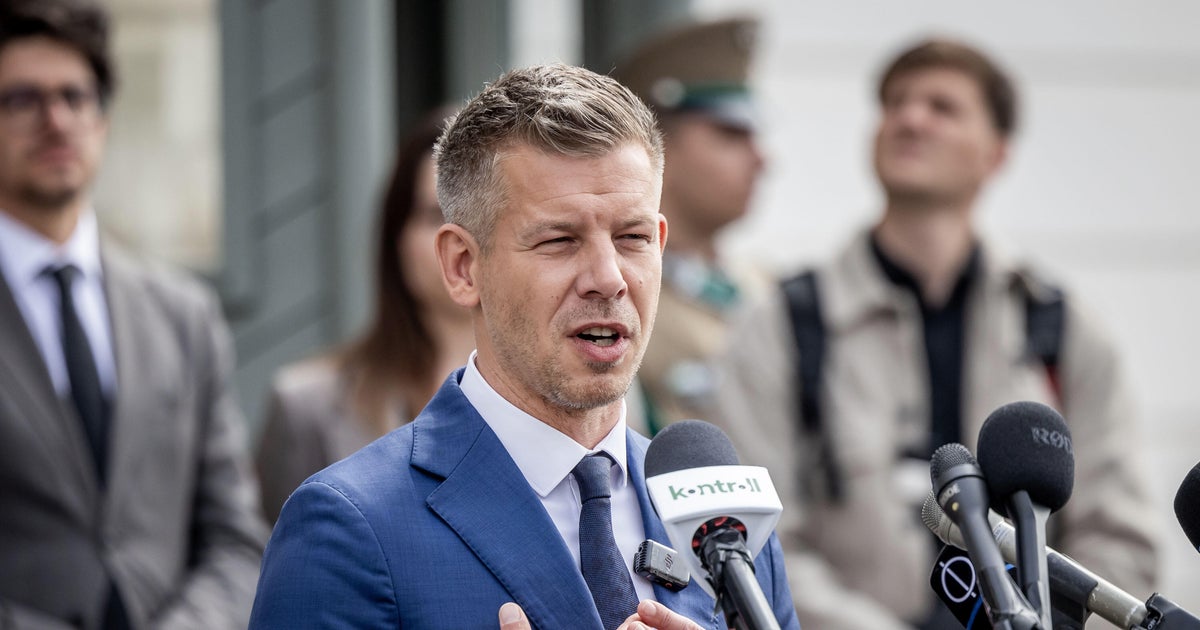
In his first press conference following the April 12 election victory, Magyar demonstrated a pragmatic awareness of the constraints he faces. “No one can change geography. Russia and Hungary are here to stay. The government will procure crude oil and gas in the cheapest and safest way possible,” he stated, acknowledging the enduring reality of Hungary’s geographic position in relation to Russia. This statement reveals a leader trying to balance campaign commitments with governing realities. Unlike some of his more fiery campaign rhetoric, Magyar’s initial post-election comments suggest he understands that completely severing energy ties with Russia overnight would be neither economically feasible nor politically sustainable. Instead, his approach appears to favor gradual realignment—maintaining necessary economic relationships while systematically reducing dependency and reorienting toward Western European energy systems. This measured stance may disappoint some of his most ardent supporters who chanted “Russians out!” in Budapest’s streets, but it reflects the complex position of a leader who must now deliver results rather than simply inspiring slogans.
A Test of Principles and Economics
The coming months and years will reveal whether Peter Magyar can successfully navigate the treacherous path between political principles and economic realities. Energy policy experts remain cautiously optimistic about Hungary’s prospects for gradual realignment away from Russian dependency. Vakulenko summarized the situation succinctly: “None of these points is a complete killer. But this is a decision of principles versus economics.” This framing captures the essential dilemma facing Magyar’s incoming government—the technical alternatives exist, the political will appears present, but the economic costs may test Hungarian society’s commitment to reducing Russian influence. Success will likely require Magyar to secure substantial EU financial support, negotiate favorable terms for alternative energy supplies, invest in infrastructure modifications to handle non-Russian crude, and maintain public support during a potentially painful economic transition period. The stakes extend beyond Hungary’s borders. If Magyar succeeds in reducing his country’s dependence on Russian energy while maintaining economic stability, he could provide a roadmap for other Central European nations in similar situations. Conversely, failure could strengthen the argument that Russian energy dependence is simply too economically advantageous to abandon, regardless of political considerations. As Magyar prepares to take office, all eyes will be watching to see whether this historic electoral victory can translate into meaningful policy change, or whether the gravitational pull of cheap Russian energy will prove too strong to escape.