
IAEA Warns of Potential Nuclear Crisis Following U.S.-Israeli Strikes on Iran
Growing Concerns Over Radiological Safety in the Middle East
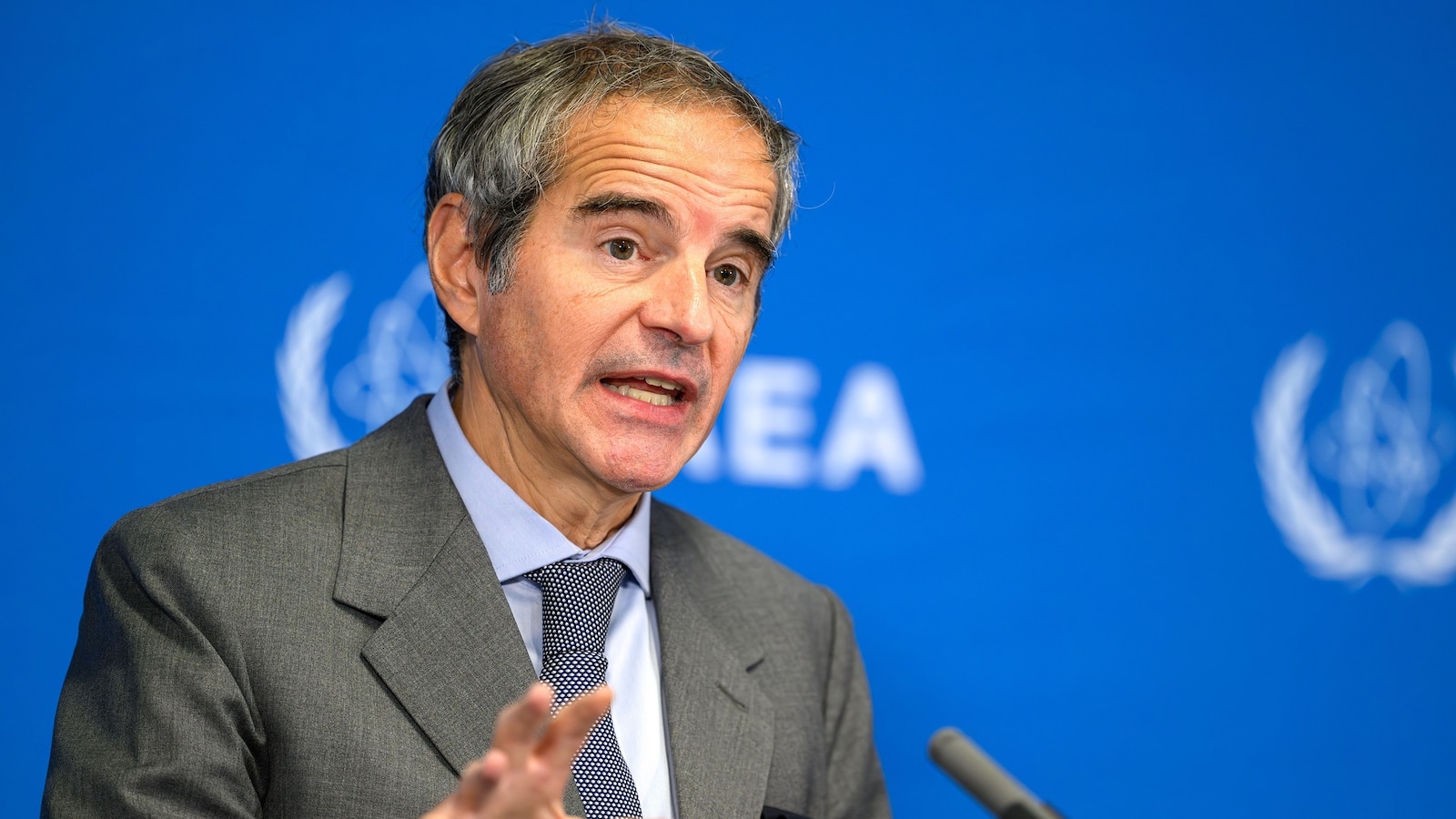
The international community is holding its breath as the International Atomic Energy Agency (IAEA) issued a stark warning on Monday about the possibility of radioactive contamination following recent U.S.-Israeli military operations in Iran. Speaking from the agency’s headquarters in Vienna, IAEA Director General Rafael Mariano Grossi delivered a sobering message to the Board of Governors: while there’s no immediate evidence of damage to Iran’s nuclear infrastructure, the threat of a radiological release with potentially catastrophic consequences cannot be dismissed. This warning comes at a time of heightened tensions in the Middle East, where military conflicts and nuclear facilities exist in dangerous proximity to one another.
Director General Grossi’s statement walked a careful line between providing reassurance and raising alarm. On one hand, he confirmed that initial monitoring showed no signs that strikes had directly hit Iran’s nuclear facilities, and radiation levels in neighboring countries remained within normal background ranges. The Bushehr Nuclear Power Plant, Tehran Research Reactor, and other nuclear fuel cycle facilities appeared to have escaped damage in the recent attacks. However, Grossi made it abundantly clear that the situation remains extremely fluid and concerning. The very fact that military operations are occurring in a country with significant nuclear infrastructure creates an inherent risk that keeps nuclear safety experts awake at night. The IAEA’s extensive knowledge of where nuclear and radiological materials are located throughout the region positions them well to respond, but the hope is that such expertise will never need to be deployed in an emergency scenario.
The Scale of Potential Disaster
Perhaps the most chilling aspect of Grossi’s address was his frank assessment of what could happen if things go wrong. “We cannot rule out a possible radiological release with serious consequences, including the necessity to evacuate areas as large or larger than major cities,” he warned. This statement puts the potential crisis into stark perspective—we’re not talking about a localized incident that could be contained with minimal disruption. Instead, the IAEA is preparing for a scenario that could require the mass evacuation of populations equivalent to major metropolitan areas. Such an event would create a humanitarian crisis of unprecedented proportions, displacing millions of people, contaminating agricultural land and water sources, and creating health consequences that could span generations.
The IAEA has emergency protocols in place through its Incident and Emergency Centre (IEC), which has assembled a team dedicated to collecting information and assessing the evolving situation in Iran. However, the ongoing conflict has created significant obstacles to effective communication and monitoring. The IEC has been attempting to establish contact with Iranian nuclear regulatory authorities but has so far received no response. This communication blackout is particularly troubling because timely information is critical in assessing and responding to nuclear emergencies. Without direct contact with Iranian officials on the ground, the IAEA is forced to rely on remote monitoring and indirect intelligence, which may not provide the complete picture needed to ensure public safety or coordinate an effective response should the worst occur.
International Law and the Prohibition Against Attacking Nuclear Sites
Director General Grossi reminded the international community of a fundamental principle that has been repeatedly affirmed in past General Conference resolutions: armed attacks on nuclear facilities should never take place under any circumstances. This prohibition exists because such attacks could result in radioactive releases with grave consequences that extend far beyond the borders of the state being attacked. Nuclear contamination doesn’t respect national boundaries—radioactive particles can be carried by wind and water across continents, affecting populations who have no connection to the underlying conflict. The 1986 Chernobyl disaster demonstrated this reality when a single reactor accident in Ukraine spread radioactive contamination across much of Europe. An attack on a nuclear facility could create similar or even worse consequences, with the added complication that it would be an intentional act in a conflict zone rather than an industrial accident.
The IAEA’s position is clear: regardless of the political disputes or security concerns that drive military conflicts, nuclear facilities must remain off-limits. Grossi urged all parties involved in the current crisis to return to diplomacy and regulation as the means to achieve long-term assurance that Iran will not acquire nuclear weapons. This appeal for diplomatic solutions comes at a time when military action seems to have taken precedence over negotiation, creating a dangerous dynamic where short-term tactical goals might produce long-term catastrophic consequences. The international nuclear regulatory framework exists precisely to prevent such scenarios, but it can only function when nations choose to engage with it rather than bypass it through military means.
The Justification for Military Action and Intelligence Disputes
President Donald Trump defended the preemptive attack on Iran over the weekend, citing “imminent threats” from the Iranian Revolutionary Guard as justification for military action aimed at toppling the Iranian regime. However, the president provided no concrete evidence to support these claims of imminent danger, raising questions about the intelligence basis for such a significant military operation. Even more troubling, U.S. intelligence agencies appeared to contradict the president’s characterization of the threat. According to the Defense Intelligence Agency, while Iran is indeed working on developing long-range missile capabilities, they are not expected to have a missile capable of reaching the United States until 2035—more than a decade away. This disconnect between presidential statements and intelligence assessments raises serious concerns about the decision-making process that led to strikes near nuclear facilities and whether the level of threat truly justified such risky military action.
The recent military operations represent an escalation of a pattern that began last year when the U.S. bombed three of Iran’s nuclear sites. Since those strikes, nuclear weapons experts have observed signs that Iran is attempting to rebuild its nuclear program and resume uranium enrichment activities. However, these same experts have been careful to note that there is no evidence Iran is close to building an actual nuclear bomb. This distinction is important—uranium enrichment is a lengthy, complex process with many stages between low-level enrichment for peaceful purposes and weapons-grade material suitable for a bomb. The gap between Iran’s current capabilities and an actual nuclear weapon provides a window for diplomatic intervention, yet that window appears to be closing as military actions replace negotiated solutions. The destruction of nuclear facilities, rather than preventing a nuclear weapons program, may actually incentivize Iran to pursue such weapons more aggressively as a deterrent against future attacks.
The Path Forward and International Implications
As the world watches this crisis unfold, several critical questions demand answers. How can the international community ensure that nuclear facilities remain protected even during armed conflicts? What mechanisms exist to verify the safety of nuclear sites when communication with national authorities breaks down? And most fundamentally, how can diplomatic channels be reopened when military actions have already been taken? The IAEA stands ready to provide hands-on assistance if a radiological release occurs, but prevention is infinitely preferable to response. The agency’s readiness to help should be seen not as reassurance but as an indication of how serious the situation has become.
The current crisis in Iran illustrates the complex intersection of nuclear proliferation concerns, regional security dynamics, and the devastating humanitarian consequences that can result when these issues are addressed through military force rather than diplomacy. Neighboring countries are nervously monitoring their radiation levels, emergency response teams are on standby, and millions of people in the region face the possibility that their lives could be upended by radioactive contamination. The international community must find a way to de-escalate the situation before Director General Grossi’s worst-case scenario becomes reality. The prohibition against attacking nuclear facilities exists for good reason—when such attacks occur, everyone loses. Whether through resumed negotiations, enhanced IAEA monitoring, or multilateral diplomatic initiatives, a path must be found that addresses legitimate security concerns without risking a nuclear catastrophe that could affect millions of innocent people across the Middle East and beyond. The stakes are simply too high for any other outcome.