
The Killing of Iran’s Supreme Leader: A New Chapter in Middle East Tensions
A Coordinated Strike That Changed the Region
In the early hours of a Saturday morning in Tehran, the world witnessed a dramatic shift in Middle East geopolitics. Iran’s Supreme Leader Ali Khamenei was killed in what officials described as a meticulously planned joint operation between the United States and Israel. The strike targeted Khamenei’s office compound in the heart of Iran’s capital, marking one of the most significant assassinations in modern Middle Eastern history. President Donald Trump confirmed American involvement through social media, praising the intelligence capabilities that made the operation possible. Israeli Air Force jets carried out the actual attack, guided by intelligence gathered over months of careful surveillance by the CIA and Israeli Defense Forces. The operation represented an unprecedented level of coordination between the two allied nations, demonstrating their shared commitment to reshaping the region’s political landscape. What made this strike particularly remarkable was the precision involved – intelligence agencies had tracked Khamenei’s movements and routines for months, knowing exactly when and where to strike for maximum effect while he met with other senior officials.
The Intelligence Operation Behind the Strike
The success of this operation hinged on extraordinary intelligence work that spanned several months. The CIA played a crucial role in tracking Khamenei’s daily routines and movements, building a comprehensive picture of his schedule and security arrangements. This surveillance effort revealed that despite previous concerns about hiding in bunkers during periods of tension, Khamenei actually spent considerable time working above ground in his official offices. The intelligence breakthrough came when American agencies learned that the supreme leader would be meeting with other top Iranian officials on that particular Saturday morning in Tehran. This information was shared with Israeli counterparts, who provided additional intelligence about the compound’s layout and security measures. The New York Times first reported details of the CIA’s involvement, though the full extent of the intelligence cooperation between American and Israeli agencies likely remains classified. What’s clear is that both nations maintained high confidence in their intelligence assessment, which led to the final decision to proceed with the strike. The operation’s timing was adjusted to Saturday morning based on this intelligence, ensuring maximum likelihood of finding Khamenei and other senior leaders together in one location.
Iran’s Response: Mourning and Threats of Revenge
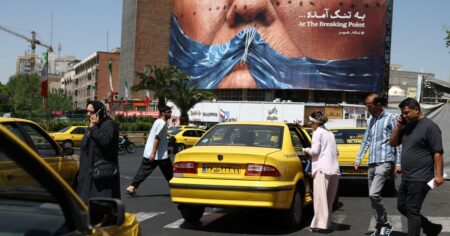
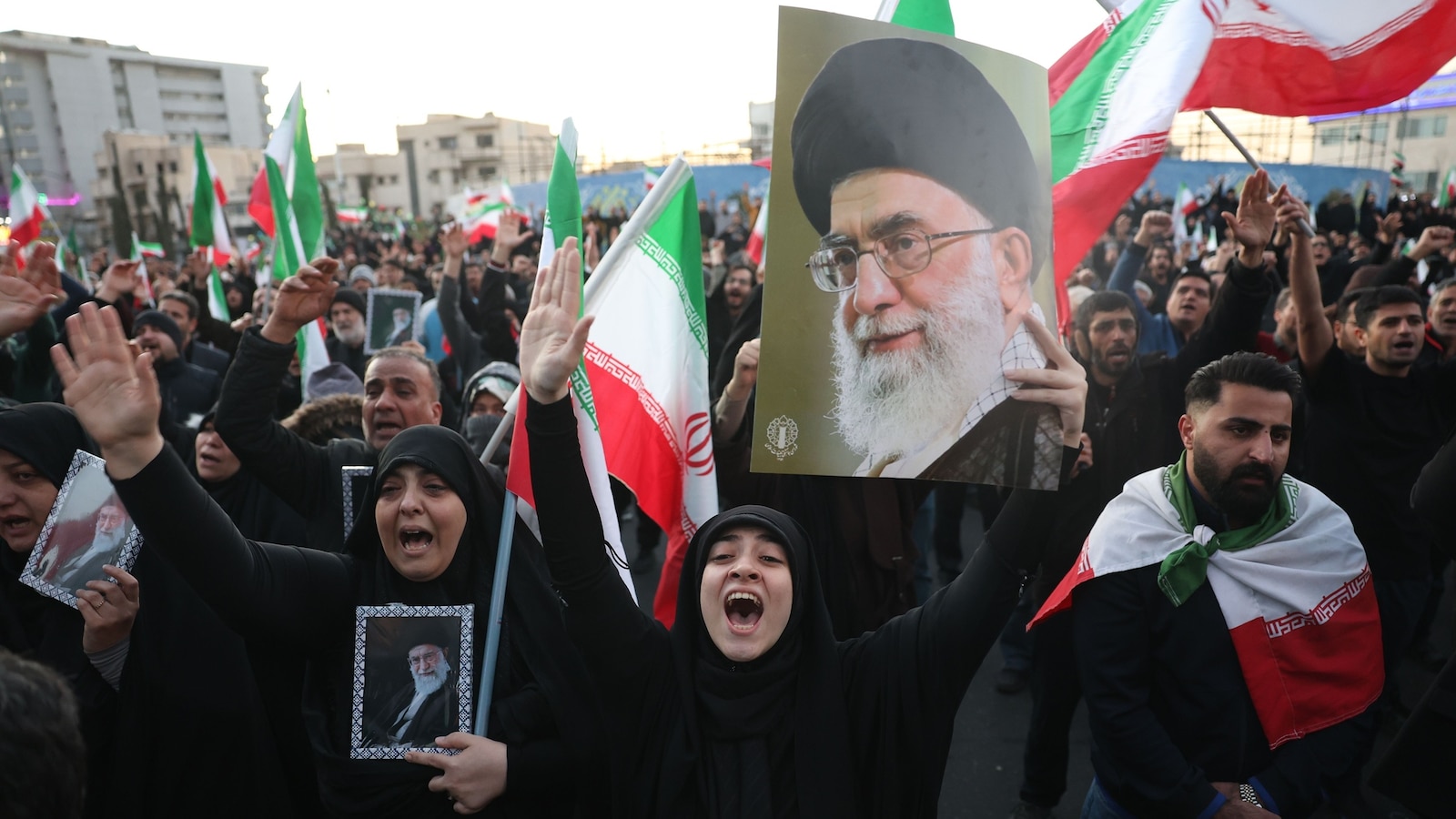
The aftermath of Khamenei’s death revealed a deeply divided Iranian society. Thousands of Iranians poured into Tehran’s streets on Sunday to mourn their fallen leader and demand revenge against those responsible for his death. Iranian President Masoud Pezeshkian described Khamenei as having been “martyred at the hands of the most wicked villains in the world,” vowing that Iran would pursue “bloodshed and revenge against the perpetrators and commanders of this historical crime.” Ali Larijani, head of Iran’s Supreme National Security Council, issued particularly ominous warnings to Americans, stating that “by stabbing the hearts of the Iranian nation, their hearts will be stabbed.” However, the public response wasn’t uniformly supportive of the regime. Videos also emerged showing some Iranians actually celebrating Khamenei’s death, reflecting long-standing grievances against the theocratic government. This divided reaction made more sense given recent context – just months earlier, in January, the regime had violently suppressed nationwide anti-government protests, killing more than 7,000 people according to the U.S.-based Human Rights Activists News Agency. This brutal crackdown had revealed the depth of popular dissatisfaction with the Islamic Republic’s leadership, suggesting that while many Iranians mourned Khamenei as a religious and national figure, others saw his death as a potential opening for change.
Khamenei’s Legacy and Impact on the Middle East
Ali Khamenei had led Iran’s Islamic Republic for over three decades, ascending to the supreme leadership position in 1989 after the death of the revolution’s founding father, Ayatollah Ruhollah Khomeini. His journey to power began during the 1979 Revolution that toppled the Shah’s monarchy and established Iran as a theocratic state. As a longtime ally and confidant of Khomeini, he served as Iran’s president from 1981 to 1989 before being selected as the second Supreme Leader. Throughout his time in power, Khamenei remained deeply committed to the revolutionary ideology that framed the United States and Israel as existential threats to Iran. Israeli officials described him as the “architect of the plan to destroy the state of Israel” and the “head of the Iranian octopus,” referring to Tehran’s extensive network of proxy forces throughout the Middle East. Under his leadership, the Islamic Revolutionary Guard Corps evolved from a revolutionary militia into the dominant military, economic, and political force within Iran. Perhaps most significantly for regional stability, Khamenei patronized the IRGC’s Quds Force, which exported Iran’s revolutionary ideology across the Middle East by founding, funding, training, and arming groups like Lebanese Hezbollah, Hamas, the Houthis in Yemen, and various Shiite militias in Iraq—including some that fought against American forces during the occupation after 2003.
The Fatal Meeting and Those Who Died
The strike that killed Khamenei proved devastating to Iran’s leadership structure. According to the Israeli Defense Forces, approximately 40 senior Iranian officials died alongside the supreme leader in the compound. The IDF emphasized that this was “a precise, large-scale operation carried out by the Israeli Air Force, guided by accurate IDF intelligence, while he was in his central leadership compound in the heart of Tehran.” Among the confirmed dead were some of Iran’s most powerful figures: Rear Admiral Ali Shamkhani, secretary of the Defense Council, and Major General Mohammad Pakpour, commander-in-chief of the Islamic Revolutionary Guards Corps. These weren’t peripheral figures but core members of Iran’s security and military establishment. The fact that so many senior officials were gathered together in one location, and that American and Israeli intelligence knew about this meeting in advance, speaks to the sophistication of the surveillance operation. Satellite imagery from Planet Labs showed a plume of black smoke rising from the compound following the strike, providing visual confirmation of the attack’s impact. Khamenei’s presence above ground, rather than in the heavily fortified bunkers where he was believed to spend much of his time during periods of tension, proved to be his fatal mistake—one that intelligence agencies had apparently anticipated and planned for.
What Comes Next: Transition and Continued Conflict
Iran now faces a period of uncertain transition as it attempts to navigate both internal succession and external threats. According to the Islamic Republic’s constitution, a three-person temporary leadership council has been formed, consisting of President Masoud Pezeshkian, Ayatollah Alireza Arafi (selected by the Guardian Council), and Gholamhossein Mohseni Ejei, head of Iran’s judiciary. This interim council will govern until the 88-member Assembly of Experts—composed of Shiite clerics elected every eight years with candidacies approved by the Guardian Council—can choose a new supreme leader, which Iranian law mandates must happen “as soon as possible.” Meanwhile, both American and Israeli leaders have made clear their intentions to continue military operations and push for regime change. Trump wrote on social media that he hoped “the IRGC and Police will peacefully merge with the Iranian Patriots, and work together as a unit to bring back the Country to the greatness it deserves,” suggesting American support for internal opposition forces. He added ominously that “the heavy and pinpoint bombing, however, will continue, uninterrupted throughout the week or, as long as necessary to achieve our objective of PEACE THROUGHOUT THE MIDDLE EAST.” Israeli officials similarly vowed to continue targeting senior figures within the Islamic Republic regardless of location. The killing of Khamenei represents not an end to conflict but potentially the beginning of a new, even more dangerous phase in Middle Eastern tensions, with Iran’s response and the selection of a new supreme leader likely to shape the region’s trajectory for years to come.