
Iran Defies U.S. Naval Blockade as Ships Continue Passing Through Strategic Waters
Ships Navigate Hormuz Despite U.S. Military Claims
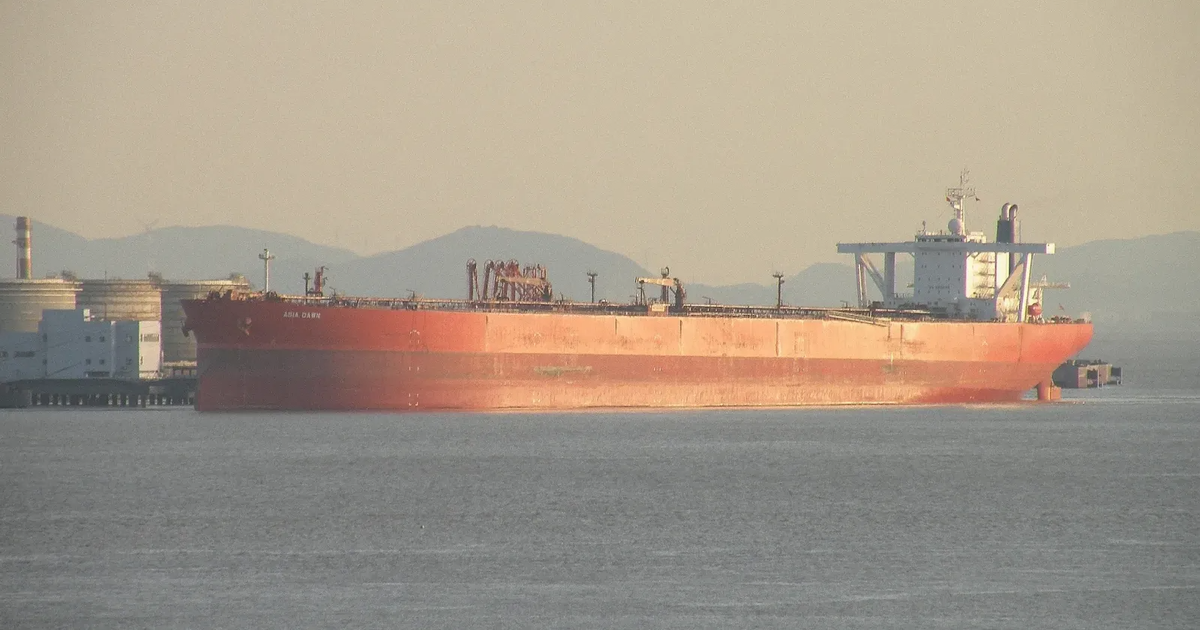
In a direct challenge to American military authority in the Persian Gulf, multiple vessels reportedly successfully entered Iranian waters on Wednesday morning, just hours after a senior U.S. commander announced that a blockade of Iranian ports was “fully implemented.” According to Iran’s state-run Fars News Agency, the transit included a massive supertanker with the capacity to transport 2 million barrels of oil, as well as a bulk carrier loaded with food supplies. The Iranian media emphasized that the supertanker sailed through the Strait of Hormuz with its tracking system deliberately switched on, operating in full view rather than attempting to hide its movements. This bold transit appears to contradict claims made by Admiral Brad Cooper, the CENTCOM Commander, who stated late Tuesday that U.S. forces had “completely halted economic trade going into and out of Iran by sea” within just 36 hours of implementing the blockade. The developments have raised serious questions about the effectiveness of the U.S. maritime operation and whether American forces are truly maintaining the level of control they claim over this critical waterway.
Tracking Data Reveals Complex Picture of Maritime Activity
Independent ship tracking data from MarineTraffic.com paints a complicated picture of what’s actually happening in the waters around Iran. The Chinese-owned tanker Alicia, which has previously docked at Iranian ports and was previously sanctioned under a different name for carrying Iranian crude oil, was among the vessels that made the journey through the strait overnight Tuesday. Interestingly, the Alicia had been heading toward the Persian Gulf and reached the Omani coast on Saturday—the day before the blockade was even announced. When the blockade officially began on Monday, tracking data showed the vessel appeared to change course in the Gulf of Oman, seemingly responding to the new restrictions. However, it ultimately continued its journey through the Strait of Hormuz during the overnight hours, accompanied by at least two other oil tankers. Additionally, two Iran-flagged container ships, both currently subject to U.S. sanctions, appeared to leave the Persian Gulf on Tuesday and were observed sailing close to Iran’s southern coastline on Wednesday, suggesting ongoing maritime activity despite the announced blockade.
Understanding the U.S. Blockade Parameters
The U.S. naval blockade officially came into effect on Monday and is designed to target vessels entering or departing from Iranian ports and coastal areas throughout the region. According to statements released by U.S. Central Command (CENTCOM) on Sunday, the blockade is being “enforced impartially against vessels of all nations entering or departing Iranian ports and coastal areas, including all Iranian ports on the Arabian Gulf and Gulf of Oman.” This language suggests the operation is meant to apply regardless of a ship’s flag or country of origin. However, U.S. military officials were careful to emphasize that American forces would not interfere with freedom of navigation for vessels simply transiting the Strait of Hormuz to reach non-Iranian ports. This distinction is crucial because the Strait of Hormuz serves as a vital chokepoint for global energy supplies, with vast quantities of oil and liquefied natural gas passing through this narrow waterway daily on their way to markets in Asia, Europe, and beyond. Any disruption to this flow could have immediate and severe consequences for global energy prices and economic stability, which likely explains why U.S. officials stressed they would not impede legitimate traffic.
The Mystery of Missing Ships and Dark Sailing
One of the more intriguing aspects of the situation involves vessels that have effectively disappeared from tracking systems. According to available data from MarineTraffic, it remains unclear whether the Alicia or any of the other sanctioned vessels actually docked at Iranian ports after the U.S. blockade took effect. What is known, however, is that at least two vessels turned off their transponders—the electronic devices that broadcast a ship’s location—while near Iranian coastal waters in recent days. This practice, which mariners call “going dark,” makes these ships essentially invisible to open-source tracking services like MarineTraffic that the public and media rely on to monitor maritime movements. The Rich Starry, a tanker that is sanctioned under a different name by the U.S., sailed through the strait overnight Monday but then, according to tracking data, turned around and went back into the Strait of Hormuz before turning off its transponder as it approached Iran’s Qeshm Island. Similarly, the Elpis, another sanctioned tanker that had apparently come from the Iranian port of Bushehr, stopped broadcasting its location on Tuesday near where the Rich Starry had turned around. These disappearances complicate efforts to understand what’s really happening in the region and whether ships are successfully reaching Iranian ports or being turned away.
Sanctioned Vessels and the Challenge of Verification
A CBS News analysis of ship tracking data from earlier this week revealed that numerous Iran-linked vessels appeared to pass through the Strait of Hormuz in the hours immediately after the blockade began on Monday, raising questions about enforcement during the critical early period. Among these was the Christianna, which had previously stopped at the Iranian port of Bandar Imam Khomeini, located at the far northern end of the Persian Gulf. The Murlikishan, which is under U.S. sanctions due to its connections to Iran, journeyed westward through the strait overnight Monday, accompanied by another tanker called the Peace Gulf. While the Peace Gulf is not currently sanctioned by the United States, records show it made a port call in Iran in December 2025. However, experts caution that verifying the true activities of these vessels presents significant challenges. Ships can engage in a practice called “spoofing,” where they broadcast false location reports to conceal their actual whereabouts. It’s also entirely possible for a ship to broadcast that it’s heading to one destination while actually traveling to a completely different port. Furthermore, CBS News has acknowledged it cannot confirm the exact location where the U.S. blockade is actually being enforced, adding another layer of uncertainty to assessments of the operation’s effectiveness.
Economic Stakes and Future Implications
The standoff over Iran’s maritime access carries enormous economic implications for the Islamic Republic and the broader region. Admiral Brad Cooper emphasized this reality in his statement, noting that “an estimated 90% of Iran’s economy is fueled by international trade by sea.” If the United States can successfully maintain a comprehensive blockade, it would effectively strangle Iran’s economy by cutting off its ability to export oil—its primary source of revenue—and to import essential goods, including food, medicine, and industrial equipment. By Wednesday morning, three additional tankers, all currently under sanctions, appeared to be positioned to attempt passage through the strait into the Persian Gulf, suggesting that shipping companies and possibly the Iranian government are testing the blockade’s strength and the U.S. military’s willingness to physically intercept vessels. The coming days and weeks will likely determine whether this blockade proves to be a effective tool of economic pressure or whether it becomes another example of the difficulties great powers face in controlling determined adversaries who are willing to use creative methods—including dark sailing, flag switching, and ship-to-ship transfers—to evade restrictions. For global observers, the situation also raises concerns about potential military confrontations in one of the world’s most strategically important waterways and what impact any escalation might have on energy markets and international shipping.