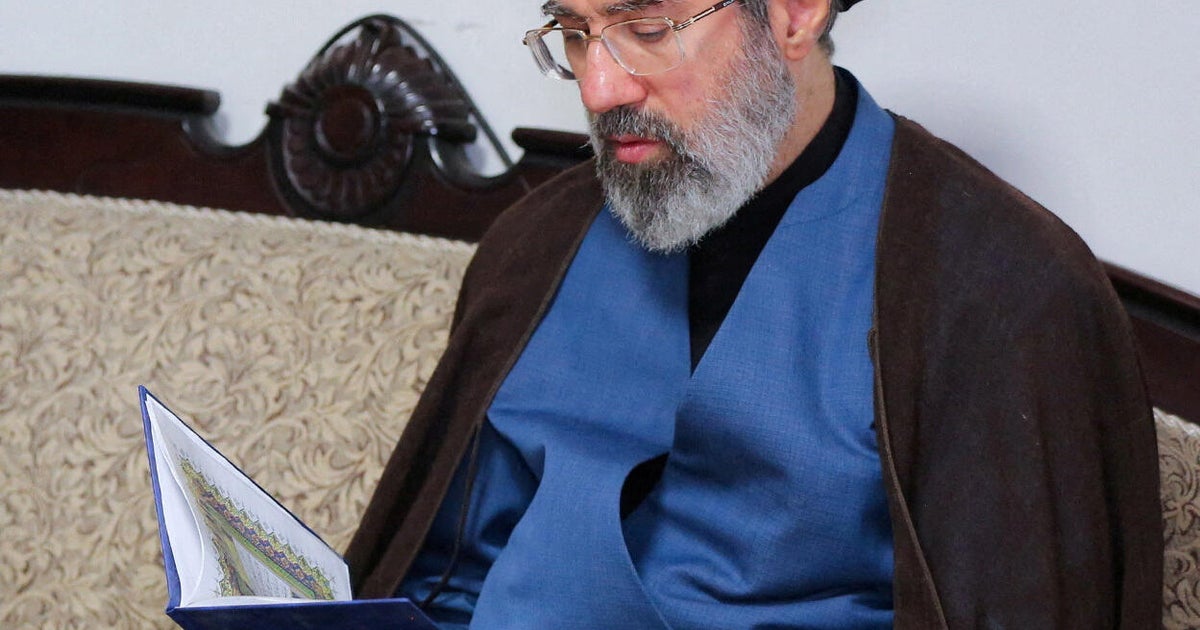

Iran Enters New Era as Mojtaba Khamenei Becomes Supreme Leader
The Shadow Prince Emerges from Behind the Curtain
In a development that marks a watershed moment for the Islamic Republic of Iran, Mojtaba Hosseini Khamenei has been named the country’s new supreme leader following the death of his father, Ayatollah Ali Khamenei, in a February 28th strike that also killed approximately 40 other senior Iranian officials. The announcement by Iranian state media introduces the world to a man who has spent decades deliberately avoiding the spotlight, operating instead as a powerful behind-the-scenes figure within Iran’s complex political machinery. At 57 years old, the younger Khamenei represents something the Islamic Republic has never seen before: a hereditary transfer of the nation’s highest religious and political authority. Unlike his father and the founder of the Islamic Republic, Ayatollah Ruhollah Khomeini, Mojtaba has never held elected office, never delivered public speeches that might reveal his political philosophy, and has rarely been photographed in public. His selection by the Assembly of Experts—an 88-member council of clerics overseen by the 12-member Guardian Council—signals that Iran’s ruling establishment has chosen continuity and stability over change during one of the most precarious periods in the nation’s history.
A Life Forged in War and Shaped by Power
Mojtaba Khamenei’s path to supreme leadership was paved long before his formal selection. His formative years were shaped by the crucible of the Iran-Iraq War in the 1980s, where he served and sustained injuries that would forge lasting bonds with the military establishment, particularly the Islamic Revolutionary Guard Corps (IRGC). These connections would prove invaluable in the decades to come. Following theological studies in Qom, Iran’s spiritual and clerical heartland, Mojtaba positioned himself not as a public religious figure but as an indispensable operative within the machinery of power. When his father ascended to the position of supreme leader in 1989 following Khomeini’s death, the younger Khamenei effectively became one of his most trusted aides, a position that gave him unprecedented access to the inner workings of the Iranian state. For the past eight years, he has maintained a dual role, teaching at the Qom seminary while simultaneously wielding influence that extended far beyond the classroom. His authority grew exponentially after 2009, when massive protests following disputed presidential elections—known as the Green Revolution—threatened the stability of the regime. During this crisis, Mojtaba is believed to have played a significant role in coordinating the government’s response, which involved brutal crackdowns, killings, and mass arrests that successfully suppressed the movement but left deep scars on Iranian society.
The Man Behind the Curtain: Power Without Visibility
Perhaps the most remarkable aspect of Mojtaba Khamenei’s rise to power is how little the Iranian public—and the world—truly knows about him. Leading what can only be described as a deliberately secretive existence, he has never delivered a public speech, rarely appears at public events, and has cultivated an image of complete opacity. This absence of public record makes assessing his political positions challenging, though analysts who have studied his actions and associations generally classify him as a hardliner aligned with the most conservative elements of Iran’s political spectrum. His authority has derived not from religious scholarship or popular legitimacy but from proximity to power itself. Married with at least two children—a son and a daughter—Mojtaba has maintained the appearance of a modest family life while wielding extraordinary influence over Iran’s security services, military apparatus, and governmental institutions. This paradox—immense power combined with deliberate invisibility—has been his defining characteristic. Unlike religious leaders who build authority through scholarship, public teaching, and spiritual guidance, Mojtaba’s influence has been purely institutional and relational, rooted in his control of key power centers rather than popular support or theological authority.
The Revolutionary Guard Connection: Where True Power Resides
In Iran’s unique political system, the Islamic Revolutionary Guard Corps represents far more than a military force—it is an economic powerhouse, a political kingmaker, and the ultimate guarantor of the regime’s survival. Mojtaba Khamenei’s deep and longstanding ties to the IRGC represent the foundation of his power and explain why the Assembly of Experts selected him during this moment of crisis. The IRGC controls vast sectors of Iran’s economy, from construction and telecommunications to oil and banking, making it not just a military organization but an economic empire. It also serves as the regime’s ideological enforcement arm, ensuring that challenges to the Islamic Republic’s fundamental nature are swiftly addressed. Mojtaba’s relationships within this organization, forged during the Iran-Iraq War and carefully nurtured over decades, give him direct access to the institutions that truly run Iran. His selection as supreme leader sends a clear message: the security and military establishments that have driven Iran’s confrontational regional policies, its nuclear program, and its support for proxy forces across the Middle East will retain their influence and perhaps even strengthen their grip on power. For those hoping that leadership change might bring moderation or reform, Mojtaba’s IRGC connections suggest continuity rather than change in Iran’s strategic direction and domestic policies.
An Unprecedented Dynastic Turn in Revolutionary Iran
The selection of Mojtaba Khamenei represents a profound ideological contradiction for a government founded on revolutionary principles that explicitly rejected monarchical rule. The Islamic Revolution of 1979 toppled the Pahlavi dynasty partly on the grounds that hereditary power was incompatible with Islamic governance and the will of the people. The revolutionary constitution established the position of supreme leader as one to be filled by the most qualified Islamic jurist, selected by an assembly of religious experts based on scholarly credentials and spiritual authority. In practice, however, Mojtaba’s elevation transforms Iran’s system into something resembling the very dynastic model the revolution claimed to abolish. This is not lost on Iran’s population, particularly younger generations who have grown increasingly frustrated with the gap between the regime’s revolutionary rhetoric and its oligarchic reality. The transition keeps power firmly within the Khamenei family, raising questions about whether the Islamic Republic has evolved into a theocratic dynasty in all but name. For the ruling elite, this arrangement offers predictability and continuity at a moment when Iran faces extraordinary external pressures and internal challenges, from economic sanctions and regional conflicts to widespread public discontent. For critics of the regime, both inside Iran and abroad, it represents further evidence that the revolution has betrayed its founding principles.
International Reactions and the Road Ahead
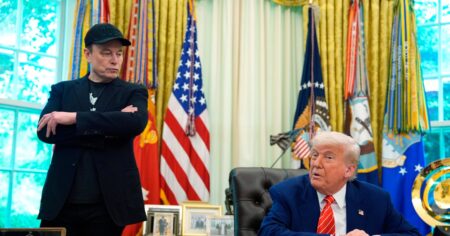
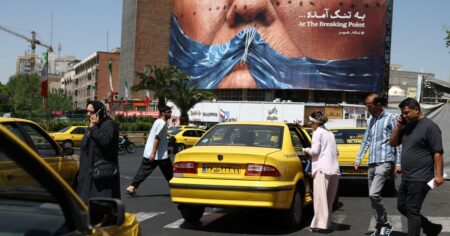
The international response to Mojtaba Khamenei’s selection has been swift and, in some quarters, dismissive. President Trump, never one for diplomatic subtlety, previously called Mojtaba a “lightweight” and declared that any supreme leader appointed without U.S. approval “is not going to last long”—a statement that reveals both American skepticism about his legitimacy and the depth of antagonism between Washington and Tehran. This hostile external environment, combined with Iran’s ongoing conflicts, proxy wars, and nuclear standoff, means that Mojtaba inherits a nation under siege. Domestically, he faces a population that has grown increasingly disillusioned with clerical rule, as demonstrated by periodic protests over economic conditions, political repression, and social restrictions. Women’s rights activists, labor movements, ethnic minorities, and a broad spectrum of civil society have repeatedly challenged the regime despite severe consequences. Whether Mojtaba will continue his father’s hardline approach or surprise observers with unexpected pragmatism remains an open question, though his track record suggests continuity rather than reform. His deep connections to the security apparatus mean he has the tools to maintain control through repression, but whether repression alone can sustain the Islamic Republic through its mounting challenges is increasingly uncertain. As Iran enters this new era under its second Khamenei supreme leader, the fundamental question is not just who holds power, but whether the system itself can adapt to survive, or whether the contradictions between its revolutionary ideology and dynastic reality will ultimately prove unsustainable.