

The Aftermath of U.S.-Israeli Military Campaign Against Iran: A Complex and Uncertain Future
The Campaign’s Initial Promise and Reality
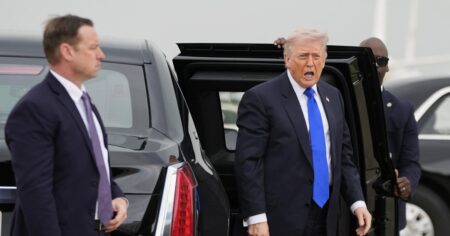
In late February, President Donald Trump and Israeli Prime Minister Benjamin Netanyahu launched what they described as a decisive military campaign against Iran, with Trump boldly urging the Iranian people to seize control of their government. “When we are finished, take over your government. It will be yours to take. This will be probably your only chance for generations,” Trump declared as “major combat operations” began. The month-long assault that followed appeared devastatingly effective on the surface, significantly degrading Iran’s military capabilities and eliminating many of its most senior leaders. The most significant casualty was Supreme Leader Ayatollah Ali Khamenei himself, who died alongside dozens of top Iranian officials in airstrikes targeting his official residence in Tehran during the opening phase of the war. Despite Trump’s confident assertion that “the war has been won,” the situation on the ground tells a more complicated story. Iranian forces continue launching attacks against Israel, regional U.S. military bases, and American allies throughout the Middle East. Perhaps most significantly, commercial shipping through the strategically vital Strait of Hormuz remains severely disrupted, with numerous cargo vessels stranded on both sides of this narrow waterway that serves as the southern gateway to the Persian Gulf.
The Emergence of a Hardened Leadership
President Trump has claimed that “complete regime change” has occurred in Iran, insisting that the leaders now emerging are “more moderate” and “much more reasonable” than their predecessors. He specifically named Mohammad Bagher Ghalibaf, the powerful speaker of Iran’s parliament, as America’s direct negotiating partner—though Ghalibaf himself has denied this characterization. However, analysts and experts who have studied the situation closely paint a dramatically different picture. The cadre of officials now taking control in Tehran, including Ghalibaf, appear just as committed to the Islamic Republic’s foundational principles as those they’re replacing. Many are veterans of the powerful Islamic Revolutionary Guard Corps (IRGC), bringing military backgrounds and hardline perspectives to their new positions of authority. Danny Citrinowicz, formerly the Israel Defense Forces’ top Iran researcher and now with the Institute for National Security Studies, offers a sobering assessment: “The regime in Tehran is weaker than it was before the conflict, but it is also more radical. The IRGC has further consolidated its influence over decision-making, eroding what little internal balance once existed within the regime.” This dynamic represents precisely the opposite outcome that American officials initially promised.
Strategic Leverage and the Strait of Hormuz
Perhaps the most significant unintended consequence of the military campaign has been Iran’s newfound leverage over the Strait of Hormuz, described by Ali Vaez of the International Crisis Group as a “weapon of mass disruption.” If the Islamic Republic survives both the war and the immediate aftermath—including potential anti-regime uprisings—its new leaders may feel emboldened to maintain control over this critical waterway through which a substantial portion of the world’s oil supply passes. This strategic advantage could prove far more valuable than any military capabilities the regime lost during the conflict. This thinking appears to be crystallizing among Iranian leadership. Ghalibaf himself told Iran’s state news agency that the country’s strategy now rests on controlling “three pillars: missiles, the streets, and the Strait.” Inside Iran, residents are witnessing this fundamental shift firsthand. A Tehran resident who spoke under the pseudonym Darius (fearing government reprisal) described a growing sentiment that “the source of legitimacy for the Islamic republic is shifting” away from the clerical establishment and toward the IRGC. “Now, the de facto leaders of the country are the generals in the IRGC. And they are actually running the show at the moment,” he explained. This represents a profound transformation in how power is distributed and exercised within the Iranian state.
The IRGC’s Rising Dominance
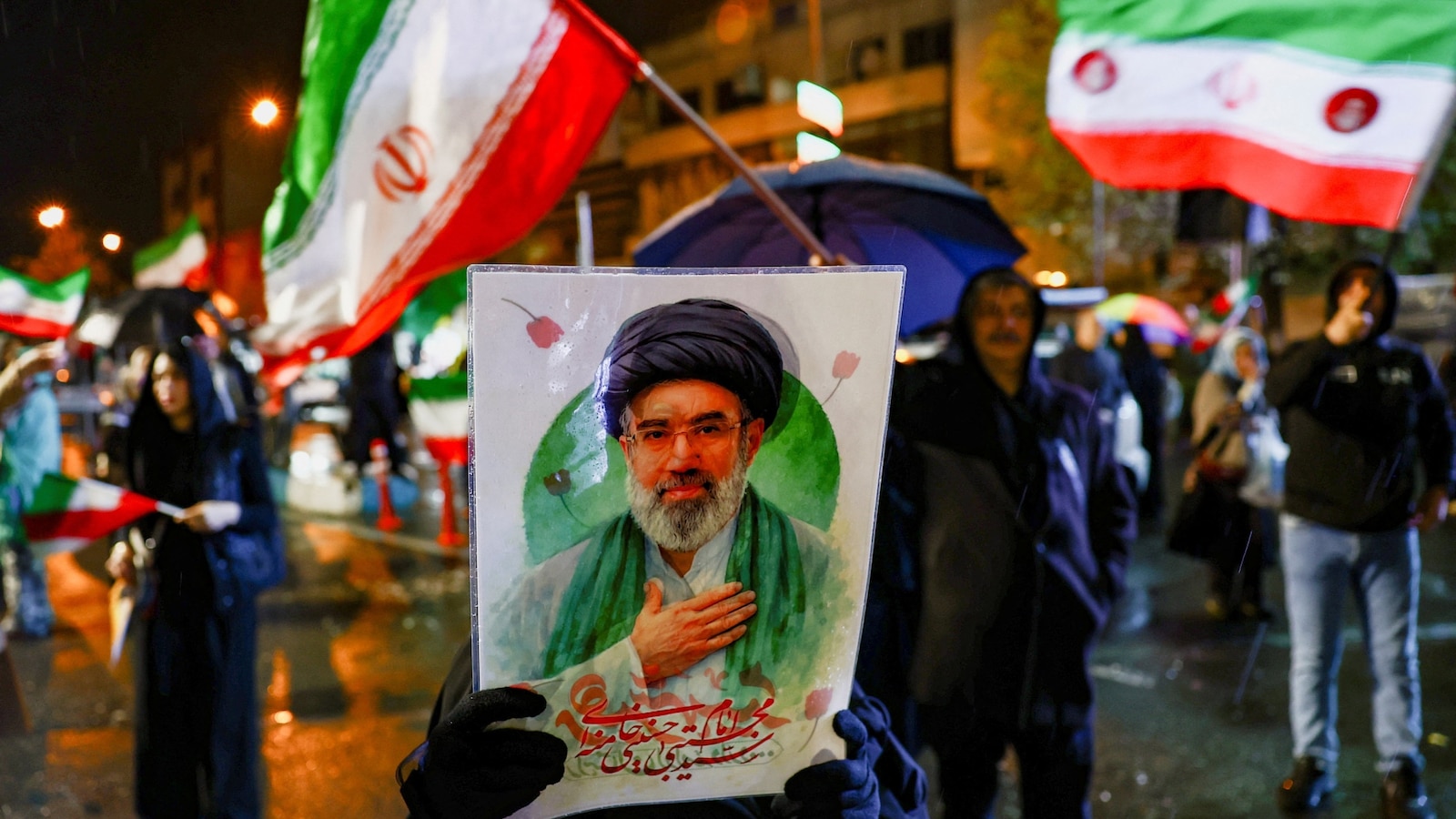
The Islamic Revolutionary Guard Corps has long been Iran’s most powerful military, political, and economic institution, but the recent conflict has accelerated its consolidation of control. Formed shortly after the 1979 Iranian Revolution by Ayatollah Ruhollah Khomeini, the IRGC expanded its influence dramatically during the devastating Iran-Iraq War of 1980-1988, where its battlefield exploits and ideological fervor established it as the embodiment of Iran’s concept of “sacred defense.” Even before the recent U.S.-Israeli campaign, many experts warned that assassination strikes targeting top leadership risked empowering the IRGC to seize complete control of the state’s mechanisms of power. The new supreme leader, Mojtaba Khamenei (son of the slain Ali Khamenei), served in an elite IRGC unit during the Iran-Iraq War, and his rise was reportedly strongly supported by the force. His newly appointed advisers and key officials similarly come from IRGC ranks, including his military adviser Mohsen Rezaei, the new secretary of Iran’s Supreme National Security Council Mohammad Bagher Zolghadr (who replaced Ali Larijani after he was killed by Israeli airstrikes), and the influential Ghalibaf, who has long maintained close ties to the younger Khamenei.
Challenges for American Negotiators
The decentralized power structure that has emerged in Tehran poses significant challenges for American negotiators seeking a peace agreement. Iranian Foreign Minister Abbas Araghchi credited a “mosaic defense” strategy—a decentralized approach—with enabling Iran’s military to continue launching retaliatory strikes despite the killing of so many senior officials. However, this same decentralization has created confusion, with Araghchi and President Masoud Pezeshkian at times denying Iranian responsibility for attacks that appeared to originate from Iranian forces. Citrinowicz argues that the assassinations have created a “worse” strategic situation by dispersing power. The centralized decision-making authority that Ali Khamenei once wielded no longer exists. “Now, how are you going to work with them? It’s going to be very hard to reach an agreement with them,” he said of the newly emergent leadership group. President Trump himself seemed to acknowledge this fragmentation when he stated earlier this month, “We have nobody to talk to, and you know what, we like it that way.” Secretary of State Marco Rubio told “Good Morning America” that there are “fractures” within Iranian leadership, though he declined to specify with whom the administration is actually communicating. The instability of potential negotiating partners poses another problem—figures identified as possible negotiators may not survive long enough to complete any deal, as demonstrated by Larijani’s death after being mentioned as a prime candidate.
Long-Term Implications and Uncertain Outcomes
As the conflict has progressed, both U.S. and Israeli officials have quietly backed away from earlier regime change rhetoric, refocusing instead on degrading Iran’s conventional military capabilities and nuclear program. However, the unintended consequences may far outweigh these tactical achievements. Analysts suggest the new hardline leadership may now be more inclined to pursue nuclear weapons, abandoning previous commitments not to do so. Tehran’s control over the Strait of Hormuz represents leverage that could persist long after the shooting stops, with Iranian officials suggesting that coordination with Tehran and payment of tolls for transit will become the new baseline. Secretary of State Rubio acknowledged this reality, warning of “an Iran that may decide that they want to set up a tolling system in the Strait of Hormuz” immediately after the conflict ends. Experts believe Iran will insist on a conclusive settlement rather than merely a ceasefire that would allow the U.S. and Israel to rearm and resume hostilities later. While Tehran previously appeared willing to make concessions on its nuclear program, Iranian leaders now see an opportunity to secure “substantial sanctions removal” and preserve leverage over the strategic waterway. Dalia Dassa Kaye of UCLA’s Burkle Center for International Relations noted that “nobody’s getting their wish list,” and regardless of when the conflict ends, “it’s going to take years to recuperate the damage.” The costs—in lives, economic disruption, geopolitical stability, and long-term strategic positioning—have already been paid. As she pointedly observed, “This is not something you put back in a box.” The campaign that began with promises of swift victory and democratic transformation has instead produced a more militarized, hardline Iranian regime with newfound strategic leverage over one of the world’s most critical shipping chokepoints.