


The Ukraine War: A Forgotten Conflict as Global Attention Shifts to Iran
Europe’s Largest War Since WWII Continues Amid Waning International Focus
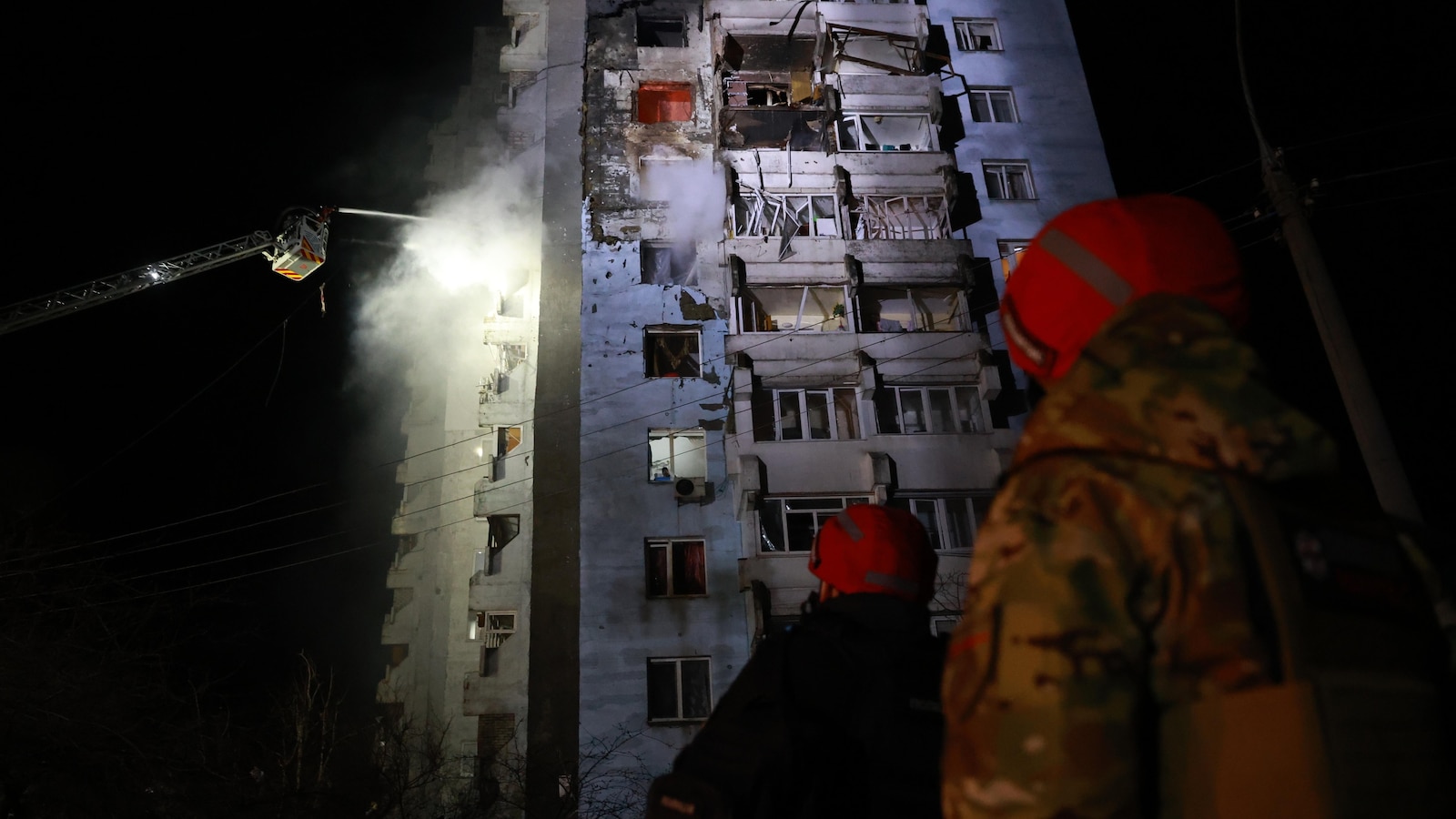
As the war in Ukraine enters its fifth year, the recent escalation of conflict in Iran has pulled global attention away from what remains Europe’s most significant military confrontation since World War II. This shift in focus comes at a critical moment when Russia has launched a renewed spring offensive, and both sides are demonstrating no signs of backing down. The past week alone has witnessed some of the war’s most intense exchanges, with Russia launching nearly 1,000 drones and 34 missiles at Ukraine in a single massive bombardment on Tuesday. Ukraine responded the following day with approximately 400 drones targeting Russian regions and Crimea—the largest overnight attack of its kind since the conflict began. These escalating attacks underscore a grim reality: despite fading headlines in Western media, the war in Ukraine remains as fierce and deadly as ever, with neither side willing to compromise or retreat from their positions.
The timing of the Iran conflict couldn’t be worse for Ukraine’s international support structure. Just as momentum was building around peace negotiations facilitated by the Trump administration, these talks have essentially ground to a halt as American diplomatic resources redirect toward the Middle East crisis. This sudden shift has left Ukrainian President Volodymyr Zelenskyy and his government in a precarious position, watching helplessly as the international community’s attention—and more importantly, its military and financial resources—flows away from their desperate situation. The Trump administration has even issued warnings that it might withdraw support entirely if peace efforts fail to produce results, a threat that hangs over Ukraine like a sword of Damocles. For European nations, Ukraine’s fate remains their paramount foreign policy concern, driven by well-founded fears that Russian President Vladimir Putin’s ambitions extend far beyond Ukraine’s borders. The specter of Russian expansionism haunts European capitals, where leaders understand that allowing Ukraine to fall could embolden Moscow to target other former Soviet territories or even NATO members.
Economic Pressures and Military Supply Challenges
The economic dimensions of this conflict reveal how quickly fortunes can change in modern warfare. Just weeks ago, Western sanctions appeared to be tightening their grip on Russia’s economy, showing promising signs of constraining Moscow’s ability to fund its military operations. However, a controversial decision by the United States has dramatically altered this equation. Earlier this month, the Trump administration granted a temporary waiver on oil sanctions against Russia, ostensibly aimed at freeing Russian oil cargo stranded at sea and alleviating supply shortages triggered by the Middle East conflict. This measure has resulted in billions of dollars flowing into Russian coffers, money that Zelenskyy rightly points out will directly enable Russia’s continued military campaign against his country. The Ukrainian president publicly criticized the move as “not the right decision,” but his protests have fallen on largely deaf ears as Washington prioritizes stabilizing global oil markets during the Iran crisis.
The military supply situation presents even more immediate concerns for Ukraine’s defense capabilities. American Patriot air-defense missiles, which have proven crucial in defending Ukrainian cities from Russian missile barrages, are being redirected from Europe toward the Middle East as the United States repositions resources to support operations related to the Iran conflict. Zelenskyy has warned bluntly that Ukraine will “definitely” face critical shortages of these sophisticated defense systems. The numbers he cited paint a sobering picture of the supply challenges: the United States produces approximately 60 to 65 Patriot missiles per month, totaling about 700 to 800 missiles annually. Yet on the first day of the Middle East war alone, 803 missiles were reportedly used—essentially consuming an entire year’s production in a single day. This stark arithmetic demonstrates the impossible mathematics of fighting multiple high-intensity conflicts simultaneously with finite defense industrial capacity. Recognizing this reality, Ukraine has attempted some creative diplomacy, offering its battle-tested drone defense technology to Gulf states in exchange for the high-end air-defense missiles these countries possess—missiles that Ukraine desperately needs to counter Russia’s continued bombardment of its cities and infrastructure.
Financial Crisis and Russia’s Spring Offensive
Ukraine’s financial situation has become equally critical. The country desperately needs funding not just to maintain its military operations but to keep its war-devastated economy functioning. The European Union has promised a substantial 90-billion-euro (approximately $104 billion) loan package designed to fund Ukraine’s armed forces and support its economy over the next two years. However, this lifeline remains frustratingly out of reach, blocked by Hungary’s opposition. This Hungarian obstruction exemplifies how single member states can paralyze European Union decision-making, leaving Ukraine in financial limbo at the worst possible moment. Without this funding, Ukraine faces the prospect of simultaneously fighting a military war against Russia and an economic war against collapse, a two-front battle that no nation can sustain indefinitely.
Meanwhile, Russia has wasted no time exploiting Ukraine’s vulnerabilities and the world’s distracted attention. After a relatively quiet winter period along the front lines, Russian forces are now executing the early phases of a spring offensive as the fields dry out and become passable for heavy military equipment. According to Elina Beketova from the Center for European Policy Analysis, a Washington-based think tank, Russian forces are aggressively assaulting Ukraine’s eastern “Fortress Belt” of cities with intensified pressure both on the ground and in the air. The situation in Ukraine’s eastern Donbas region—the industrial heartland that Russian President Vladimir Putin has long coveted—is described as “critical,” though Ukrainian troops maintain they are holding their defensive positions. Beketova notes that “over the past weeks, the Russians have intensified pressure on the battlefield and in the air,” employing new tactical approaches with mechanized infantry and armor. Robert Murrett, a retired U.S. Navy vice admiral now serving as deputy director of Syracuse University’s Institute for Security Policy and Law, confirms that Russia is experimenting with fresh tactical methods in its offensive operations, suggesting Moscow has learned from earlier failures and adapted its approach.
The Brutal Reality on the Ground
The scale of the current fighting is staggering. General Oleksandr Syrskyi, commander-in-chief of Ukraine’s armed forces, reported this week that fierce combat is occurring along the entire roughly 1,250-kilometer (750-mile) front line that snakes through eastern and southern Ukraine. Despite Russia’s renewed offensive efforts, Moscow’s forces have managed only incremental territorial gains across rural areas. Currently, Russia occupies approximately 20% of Ukraine, including the Crimean Peninsula, which Russia illegally seized back in 2014 in the opening chapter of this long conflict. Russian military bloggers, who often provide insights into Moscow’s strategic thinking, expect new Russian efforts to establish additional footholds in the southern Zaporizhzhia and Dnipropetrovsk regions. Such advances would pave the way for possible future pushes toward these regions’ capital cities, which serve as vital industrial hubs for Ukraine’s economy and war effort.
Russia’s military tactics have remained brutally consistent: surround cities, cut them off from supplies and reinforcements, then systematically bomb them into rubble while the trapped civilian population suffers. This approach was horrifically demonstrated in Mariupol, Bakhmut, and other Ukrainian cities that have been reduced to ruins. After devastating Ukraine’s power grid during one of the harshest winters in recent memory—leaving millions of civilians without heat, electricity, or running water in sub-zero temperatures—Russian drone and missile barrages targeting civilian areas have continued without pause. The human toll has been catastrophic. According to the United Nations Human Rights Monitoring Mission in Ukraine, more than 15,000 Ukrainian civilians have been killed in this war, though the actual number is likely much higher as many deaths in occupied territories go unreported. These aren’t just statistics; they represent thousands of individuals—parents, children, grandparents, teachers, doctors, and ordinary people whose lives were violently cut short.
Ukraine’s Response and the Bleak Outlook for Peace
In response to relentless Russian attacks, Ukraine has developed and deployed an impressive array of long-range drones and missiles capable of striking targets deep inside Russian territory. These Ukrainian strikes have targeted the infrastructure that keeps Moscow’s war machine operational: oil refineries that fund military operations, chemical plants producing military supplies, ammunition depots stockpiling weapons, and military logistics hubs coordinating Russian operations. Some of these strikes have reached targets as far as 1,500 kilometers (900 miles) from Ukraine’s borders, demonstrating Kyiv’s growing technological sophistication and determination to take the fight to Russian soil. These attacks serve both military and psychological purposes, showing Russian citizens that their country’s war of aggression carries consequences within their own borders.
Unfortunately, the prospects for a negotiated peace remain dim. As Murrett observes, Washington’s diplomatic efforts are essentially “on hold” while the White House is “totally distracted by Iran.” Months of U.S.-mediated talks between Russian and Ukrainian delegations have failed to produce breakthroughs on the fundamental issues that must be resolved for any lasting peace: which side controls disputed Ukrainian territory, what security guarantees will prevent future Russian invasions, and what accountability there will be for war crimes. Russia has flatly rejected Ukraine’s offers of a ceasefire, while European leaders have accused Putin of deliberately stalling peace negotiations while his military attempts to capture more Ukrainian land to strengthen Russia’s bargaining position. Murrett’s assessment is sobering: the Kremlin has “never come off its maximalist demands” for a settlement, and only “overwhelming” Western military and financial support for Ukraine might force Putin to moderate his position. Without such support—which appears increasingly unlikely as global attention and resources flow toward the Middle East—Ukraine faces the prospect of a grinding war of attrition that it may lack the resources to win. The coming months will be critical, as Ukraine struggles to maintain its defense against a renewed Russian offensive while the world looks elsewhere, and the brave Ukrainian people continue fighting for their survival with diminishing international support.