
Britain Doubles Down on Clean Energy Amid Global Fossil Fuel Crisis
A Bold Stance Against Fossil Fuel Dependency
In a decisive move that puts Britain at odds with former President Trump’s energy philosophy, the UK government announced Tuesday that it will accelerate its commitment to achieving net-zero emissions rather than retreat to fossil fuel extraction. This announcement comes as energy prices surge worldwide due to the ongoing conflict between the United States and Iran, creating what Energy Secretary Ed Miliband describes as the second major fossil fuel shock in just five years. The first occurred in 2022 when Russia’s invasion of Ukraine sent energy costs soaring across Europe. Now, with the U.S.-Israeli military campaign against Iran disrupting global oil markets once again, the British government faces a critical choice: return to oil drilling or push forward with renewable energy. Prime Minister Keir Starmer and his cabinet have firmly chosen the latter path, arguing that the recent crises prove beyond doubt that fossil fuel dependence creates vulnerability rather than security. “We need to get off the fossil fuel rollercoaster,” Starmer declared, summarizing his government’s position that the volatile nature of global oil and gas markets poses an unacceptable risk to British households and businesses. The government is rolling out a comprehensive package of new policies specifically designed to “break the link” between unpredictable international gas prices and what British citizens pay for electricity, fundamentally restructuring how the nation powers itself.
The Energy Security Paradox
Ed Miliband’s statement captures the essence of Britain’s strategic thinking on energy policy. “As we face the second fossil fuel shock in less than 5 years, the lesson for our country is clear,” he said. “The era of fossil fuel security is over, and the era of clean energy security must come of age.” This represents a fundamental reframing of what “energy security” means in the 21st century. Traditionally, energy security meant having access to oil and gas reserves, either domestically or through reliable international partners. But the events of recent years have demonstrated the fragility of this model. When Russia invaded Ukraine, European nations that had become dependent on Russian gas found themselves vulnerable to supply disruptions and price manipulation. Now, with conflict erupting between the United States and Iran—a major oil-producing region—global energy markets have once again been thrown into chaos. The UK has experienced this firsthand, with energy prices skyrocketing since the war began, putting immense pressure on household budgets already strained by years of economic uncertainty. The British government’s analysis suggests that renewable energy sources like wind and solar, while requiring significant upfront investment, offer something fossil fuels cannot: predictability and independence from geopolitical turmoil. Once built, wind turbines and solar panels generate electricity at a relatively stable cost, unaffected by conflicts thousands of miles away or the decisions of oil-producing cartels.
Trump’s Counter-Argument and Political Pressure
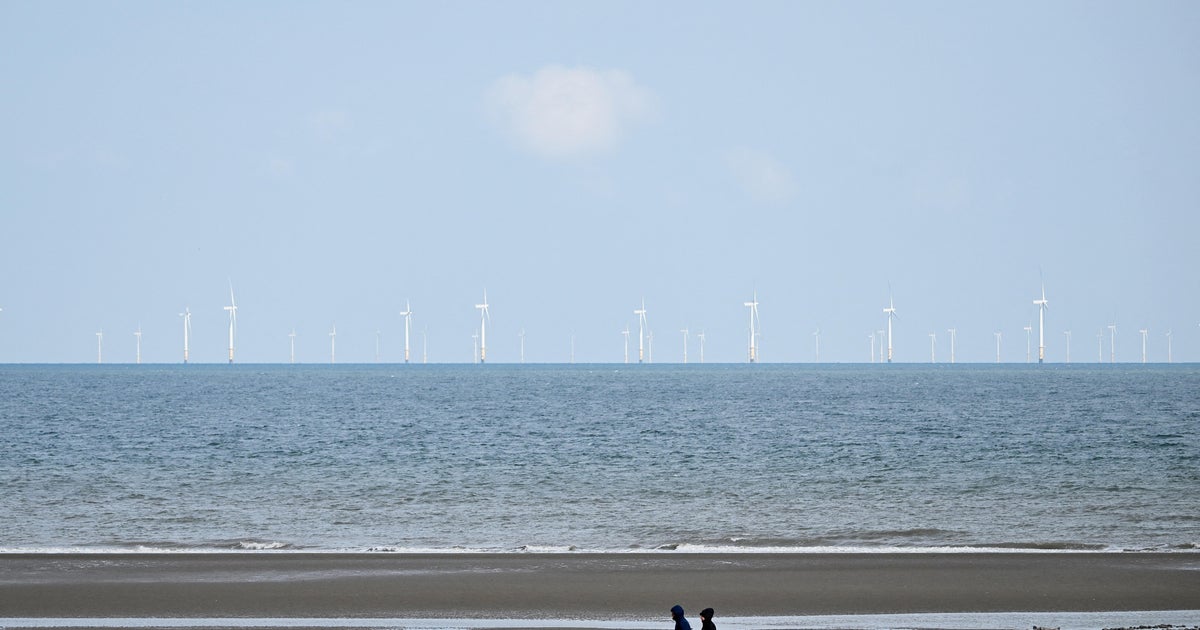
Not everyone agrees with Britain’s renewable energy push, particularly former President Donald Trump, who has never been shy about sharing his opinions on other nations’ policies. Taking to Truth Social last Tuesday, Trump urged the UK to reverse course and embrace fossil fuel extraction. “DRILL, BABY, DRILL!!!” he posted, his signature energy slogan from his presidential campaigns. “It is absolutely crazy that they don’t. Europe is desperate for Energy, and yet the United Kingdom refuses to open North Sea Oil, one of the greatest fields in the World. Tragic!!” Trump didn’t stop there, adding “AND, NO MORE WINDMILLS!” in reference to wind turbines, which he has consistently opposed throughout his political career, claiming they are unsightly, harm wildlife, and are economically inefficient. His intervention has given ammunition to opposition parties in Britain, particularly conservative groups who argue that the government should reverse its 2025 ban on drilling for oil and gas in the North Sea. These critics contend that with energy prices soaring and households struggling, it makes no sense to leave potential domestic energy sources untapped. They argue that extracting British oil would reduce dependence on foreign energy, keep money within the UK economy, and create jobs in regions that have historically benefited from the oil industry. The political pressure has intensified as ordinary Britons see their energy bills climbing, creating a constituency that might be receptive to promises of cheaper domestic energy, even if the long-term environmental costs are significant.
The North Sea Reality Check
However, the debate over North Sea drilling contains a critical detail that both Trump and domestic critics often gloss over: the North Sea is what energy experts call a “mature basin.” According to the Energy & Climate Intelligence Unit, a nonprofit research organization, approximately 90% of the North Sea’s natural resources have already been extracted over decades of production. This isn’t a vast untapped reserve waiting to solve Britain’s energy problems—it’s a largely depleted resource that has already given most of what it has to offer. Even more importantly, energy analysts emphasize that oil extraction isn’t like flipping a light switch. If the British government were to reverse its policy tomorrow and approve new North Sea drilling, oil would not flow immediately. The process of locating remaining oil deposits, conducting environmental assessments, securing financing, building the necessary infrastructure, and finally beginning production takes years—typically between five and ten years for offshore operations. This timeline means that North Sea oil could not address the current energy crisis or even the next one. By the time new North Sea oil reached the market, Britain could have instead invested those same years and resources into expanding its renewable energy capacity, which can often be brought online more quickly and provides the long-term price stability the government is seeking. Furthermore, any oil extracted from the North Sea would be sold on global markets at global prices, meaning British consumers would see little direct benefit even after production began.
Market Uncertainty and the Hormuz Question
The immediate energy crisis driving this debate centers on the Strait of Hormuz, one of the world’s most critical oil chokepoints. Roughly one-fifth of global oil supply passes through this narrow waterway between Iran and the Arabian Peninsula, making it a vital artery for world energy markets. The ongoing conflict between the United States and Iran has raised fears that this strait could be closed, either through military action or Iranian retaliation, which would send oil prices soaring to unprecedented levels. On Friday, oil prices actually dropped as rumors circulated that the Strait of Hormuz would be reopened, suggesting that tensions were de-escalating. However, those hopes were quickly dashed over the weekend when it became clear that the situation remained unresolved. Market uncertainty continues to dominate, particularly as a temporary ceasefire between the United States and Iran approaches its expiration date. Traders and governments alike are left guessing whether the conflict will escalate further, potentially leading to a prolonged closure of the strait, or whether diplomatic efforts might succeed in defusing tensions. This uncertainty itself drives up prices, as markets hate unpredictability and build risk premiums into commodity costs. For the British government, this situation reinforces their core argument: as long as the nation depends on oil and gas, it remains hostage to events completely outside its control, subject to the decisions of governments and military forces operating in distant regions with their own interests and conflicts.
A Different Vision of Energy Independence
Ultimately, the British government’s position represents a fundamentally different vision of what energy independence looks like in the modern world. Rather than pursuing traditional energy security through domestic fossil fuel extraction—an approach that even under the best circumstances would take years to implement and would tap largely depleted resources—Britain is betting its future on renewable energy sources that can be built domestically, maintained locally, and operate independently of global commodity markets and geopolitical conflicts. The government’s new policy package aims to restructure Britain’s electricity system so that renewable sources like wind, solar, and nuclear power increasingly set electricity prices rather than natural gas, breaking the direct link between global gas price volatility and British household energy bills. This transition requires significant investment in renewable infrastructure, energy storage systems to address the intermittent nature of wind and solar power, and grid modernization to handle more distributed and variable energy sources. It’s an ambitious undertaking that carries its own risks and challenges, including substantial upfront costs and technical hurdles. However, for Starmer, Miliband, and their government, the repeated fossil fuel shocks of recent years have demonstrated that the status quo carries even greater risks. Whether this gamble pays off will depend on how quickly Britain can build out its renewable capacity, how effectively it can manage the transition away from fossil fuels, and whether the government can maintain political support for this approach even during difficult periods when energy prices remain high. What’s clear is that Britain is charting a course distinctly different from the fossil fuel advocacy of figures like Trump, wagering that true energy security in the 21st century comes not from drilling more oil, but from building systems that don’t need it at all.