
Tragic School Strike in Iran Claims Dozens of Young Lives
Devastating Attack on Elementary School Leaves Community in Mourning
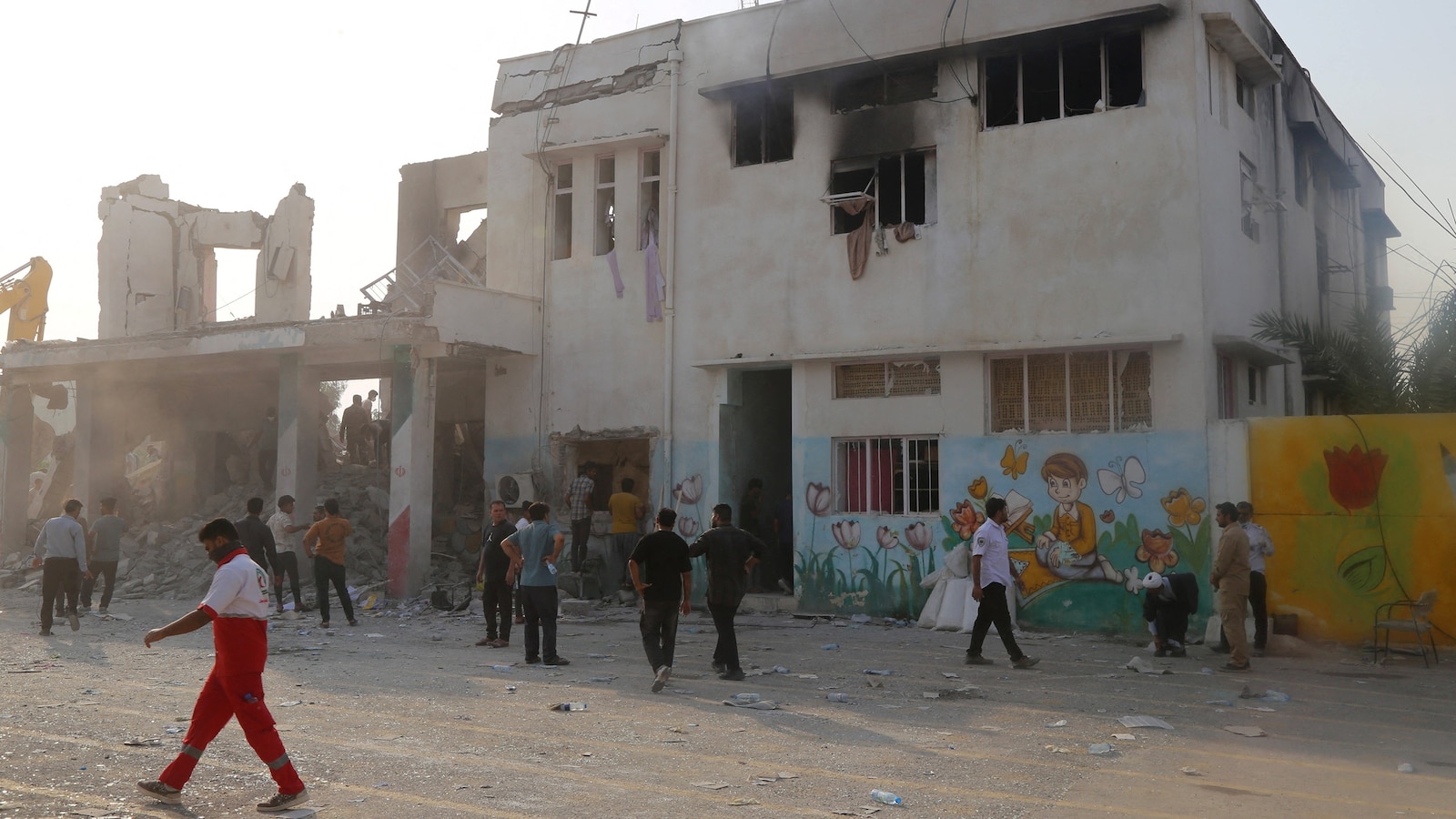
In a heartbreaking incident that has shocked the international community, an all-girls elementary school in Iran became the site of a deadly military strike on Saturday morning. The Shajare Tayyiba Elementary School, located in the southern city of Minab in Hormozgan province, was struck during what should have been an ordinary school day. Iranian officials reported that at least 85 people lost their lives in the attack as of mid-morning Eastern Time, with that number potentially rising as rescue efforts continued throughout the day. The local governor, speaking through Iran’s Tasnim News Agency, confirmed that an additional 92 people sustained injuries in the bombing. The school, filled with young students at the time of the strike, represents one of the most devastating single incidents of civilian casualties in recent conflicts in the region.
The human toll of this tragedy extends far beyond mere numbers. Earlier reports from IRIB, Iran’s state broadcaster, painted an even more specific and heartbreaking picture: 57 schoolgirls were among the deceased, with another 60 children injured. While Iranian officials had not immediately provided a complete breakdown of how many children versus adults were killed or wounded, the fact that the strike occurred “in broad daylight, when packed with young pupils,” as described by Iranian Foreign Minister Abbas Araghchi, suggests that the majority of casualties were indeed children. Images broadcast on Iranian state television showed rescue workers and local residents desperately searching through rubble and debris, their hands pulling away chunks of concrete and twisted metal in hopes of finding survivors. The scenes of destruction displayed collapsed walls, scattered school supplies, and the remnants of what was once a place of learning and growth for young girls in the community.
Iranian Leadership Condemns the Strike as a War Crime
The Iranian government’s response was swift and filled with outrage. President Masoud Pezeshkian issued a strongly worded statement through the IRGC-affiliated Fars News Agency, characterizing the attack as yet another atrocity in a long history of aggression against Iran. “This barbaric act is another black page in the record of countless crimes committed by the aggressors against this land that will never be erased from the historical memory of our nation,” Pezeshkian declared. His words reflected not just immediate anger but a deeper sense of historical grievance, positioning this attack within a broader narrative of perceived Western and Israeli hostility toward Iran. Foreign Minister Abbas Araghchi took to social media platform X to express his horror at the targeting of a school full of children during daylight hours, emphasizing the vulnerability of the young students who were simply attending their classes when violence shattered their lives.
The Iranian government’s characterization of the event as a deliberate attack on civilians raises serious questions about the nature of modern warfare and the protection of non-combatants, particularly children. For the families of Minab, this Saturday transformed from an ordinary day into an unimaginable nightmare. Parents who had dropped their daughters off at school that morning expecting them to return home with homework and stories about their day instead faced the horrifying prospect of identifying their children among the casualties. The community’s grief is compounded by the sudden, violent nature of the deaths—these were not casualties of a prolonged siege or collateral damage that could be somehow rationalized, but the destruction of a clearly identified school building during school hours.
U.S. Military Response and Investigation Promises
In response to the Iranian allegations, U.S. Central Command acknowledged the reports and committed to investigating the incident, though a spokesman was careful to maintain that American forces do not deliberately target civilians. Captain Tim Hawkins, speaking on behalf of CENTCOM, stated, “Unlike Iran, we have never — and will never — target civilians. We take these reports seriously and are looking into them.” He emphasized that “the protection of civilians is of utmost importance, and we will continue to take all precautions available to minimize the risk of unintended harm.” This response reflects the delicate position the U.S. military finds itself in—needing to defend its operational procedures and ethical standards while acknowledging that something went terribly wrong in Minab.
The United States military prides itself on what it describes as a rigorous targeting process that employs multiple forms of intelligence to verify that intended targets are indeed enemy installations or forces rather than civilian infrastructure. This multi-layered approach theoretically includes satellite imagery, human intelligence, signals intelligence, and cross-referencing with databases of protected sites such as schools, hospitals, and religious buildings. However, the gap between theory and practice can sometimes be tragically wide, particularly in fast-moving combat situations or when operating in regions where intelligence may be incomplete or outdated. Captain Hawkins’ statement acknowledged that investigating claims of civilian casualties can be extremely difficult, especially in areas controlled by forces hostile to the United States, where access for independent verification may be impossible. This creates a problematic situation where those accused of causing civilian deaths are also primarily responsible for investigating themselves, a dynamic that undermines confidence in accountability.
International Law and the Protection of Educational Institutions
The strike on the Shajare Tayyiba Elementary School represents a clear violation of international humanitarian law if it was indeed a deliberate attack, as schools and educational facilities are explicitly protected under the laws of armed conflict. The Geneva Conventions and their Additional Protocols, which form the backbone of international humanitarian law, provide special protection to civilian objects, and schools are specifically mentioned as institutions that must not be targeted. Even if a school were being used for military purposes—a claim not made in this case—the principle of proportionality would require that any military advantage gained from an attack be weighed against the expected civilian harm, and the deaths of dozens of schoolchildren would almost certainly fail this test.
The international community has increasingly recognized the devastating impact of attacks on educational institutions, not just in terms of immediate casualties but also in the long-term disruption to education and development. The Global Coalition to Protect Education from Attack, a non-profit organization dedicated to monitoring and preventing military strikes on academic institutions, has documented an alarming trend worldwide. Between 2022 and 2023 alone, the organization recorded more than 6,000 attacks on schools, universities, students, and educational personnel across the globe. Even more shocking, their research found that approximately 10,000 students and education personnel were killed, injured, abducted, or otherwise harmed during this two-year period. These statistics reveal that the Minab school strike, while particularly deadly, is unfortunately part of a larger pattern of education under attack in conflict zones around the world.
The Broader Context of Civilian Suffering in Modern Conflicts
The tragedy in Minab highlights the increasing danger faced by civilians, and particularly children, in contemporary armed conflicts. Unlike the conventional wars of the past, where front lines were more clearly defined and battles took place away from population centers, modern warfare often unfolds in urban and suburban areas where the distinction between military and civilian targets becomes blurred. Precision-guided munitions, despite their name, are only as precise as the intelligence guiding them, and errors in targeting—whether due to faulty intelligence, technical malfunctions, or human error—can result in catastrophic consequences for innocent people. The school in Minab was not located in a remote area but in a city, among homes and businesses, in a province near the strategically important Strait of Hormuz.
For the girls of Minab who survived the attack, the psychological trauma will likely last a lifetime. Educational psychologists who have studied the impact of violence on children in conflict zones report that survivors often experience post-traumatic stress disorder, anxiety, depression, and learning difficulties that can persist for years. Many will be too frightened to return to school, and some may never complete their education. The broader community, too, suffers from such attacks—trust in the safety of public institutions is shattered, and the social fabric that holds communities together can be torn apart. Parents throughout Iran, and indeed throughout regions experiencing conflict, must now grapple with the terrifying calculation of whether sending their children to school is worth the risk, a decision that no parent should ever have to make. As investigations into what exactly happened in Minab continue, one thing remains painfully clear: dozens of young lives were cut short, hundreds of families are grieving, and a community has been forever changed by violence that struck at the heart of its future—its children and their education.