
Israel Intensifies Military Operations in Lebanon Amid Growing Regional Tensions
Escalating Strikes on Beirut and Southern Lebanon
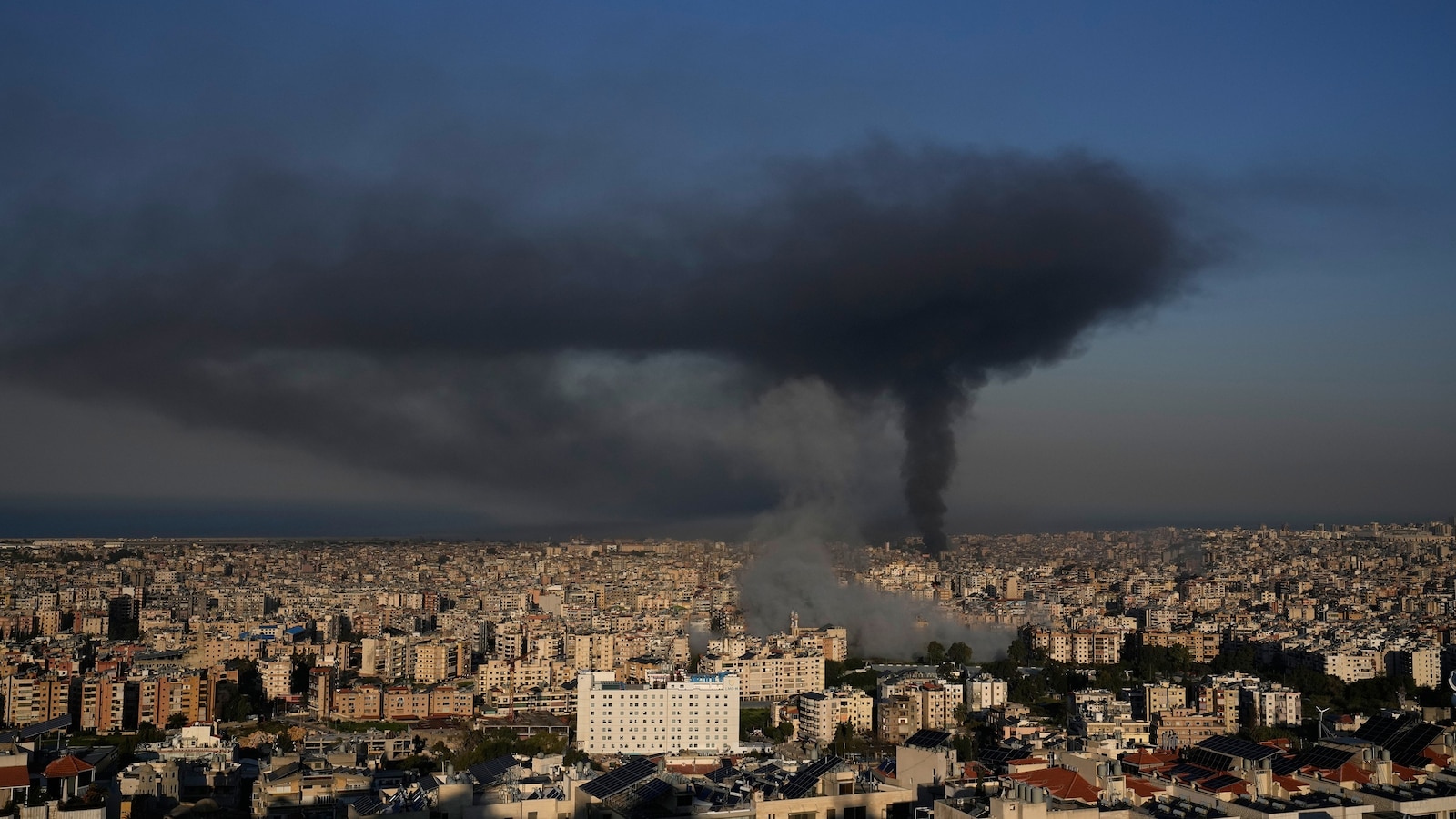
The skies over Lebanon’s capital continued to thunder with explosions Thursday morning as Israeli forces maintained their aggressive bombing campaign, marking a dangerous expansion of what has increasingly become a wider conflict involving the United States, Israel, and Iran. The offensive has particularly targeted Hezbollah, Iran’s powerful proxy force operating throughout Lebanon, bringing devastating consequences to civilian areas. In the hours and days leading up to these latest attacks, the Israeli Defense Forces issued multiple evacuation warnings covering significant portions of Beirut and extensive areas of southern Lebanon. Since Monday alone, Israeli statements confirm that hundreds of targets across the country have been struck, transforming what had been periodic, targeted operations into a sustained bombardment campaign that has sent shockwaves through Lebanese communities and raised alarm among international observers about the potential for further regional escalation.
By Thursday afternoon, the situation had grown even more dire when Israeli military authorities dramatically expanded their evacuation orders to include residents of the densely populated southern suburbs of Beirut. The directive from the Israel Defense Forces specifically listed four neighborhoods and effectively ordered the complete evacuation of the entire Dahiyeh area on the capital’s outskirts—a zone that has historically served as a Hezbollah stronghold but is simultaneously home to thousands of ordinary Lebanese families and functions as a vital commercial center. According to Israeli military figures, more than 300,000 people have already fled their homes in southern Lebanon, creating a massive humanitarian displacement crisis. The IDF’s warnings were stark and unambiguous: heading south was described as “strictly prohibited,” with authorities cautioning that any movement in that direction “could endanger your lives.” This forced exodus has separated families, disrupted livelihoods, and left countless Lebanese citizens uncertain about when—or if—they might be able to return to their homes and communities.
The Human Cost and Expanding Conflict Zone
The human toll of this renewed military campaign has been devastating, with Lebanese Health Ministry officials reporting that at least 77 people have been killed and 527 others wounded since Israel resumed its intensive strikes on Monday. These casualties represent not just statistics but individual tragedies—families torn apart, children left without parents, communities shattered by violence. The scope of the evacuation orders has grown increasingly broad, with anyone living south of the Litani River in Lebanon now being instructed by the IDF to abandon their homes and flee northward. This sweeping directive has raised serious concerns among Lebanese residents and international observers that Israel may be preparing for a significant ground incursion into southern Lebanon in the coming days and weeks, reminiscent of previous conflicts that have scarred the region. Local reports confirm that tens of thousands of people have already abandoned their homes in parts of Southern Lebanon and other areas identified as Hezbollah strongholds, streaming northward with whatever belongings they could hastily gather, seeking safety in regions they hope will remain beyond the reach of Israeli airstrikes.
Wednesday’s bombardment of Beirut concentrated heavily on Dahiyeh, the densely populated southern suburb known as a Hezbollah stronghold, sending massive plumes of smoke billowing into the sky above the capital. Perhaps even more concerning was the strike on the Comfort Hotel in Hazmieh, another southern neighborhood of Beirut, which occurred without warning in the early morning hours. A local council member confirmed to media outlets that this attack was particularly troubling because Hazmieh is predominantly a Christian neighborhood not under Hezbollah control, with foreign embassies scattered throughout the area and the Lebanese Presidential Palace located just a quarter mile from the targeted hotel. Lebanese officials interpreted the strike on neighborhoods like Hazmieh as evidence of an emboldened Israeli strategy—a signal that previous restraints have been removed and that the scope of acceptable targets has dramatically expanded. This shift in tactics suggests that Israel may be moving beyond targeting exclusively Hezbollah military infrastructure and is now willing to strike areas that previously might have been considered off-limits due to their civilian character or proximity to sensitive government and diplomatic facilities.
Israel’s Strategic Objectives and Military Preparations
Israeli officials have been explicit in their justification for the escalating campaign, asserting on Wednesday that Hezbollah continues to operate in direct coordination with Iran, making the Lebanese militant group an integral part of the broader regional confrontation. While Israeli forces had conducted periodic strikes in southern Lebanon during October and November—targeting what they described as Hezbollah-associated locations following the ceasefire between Israel and Hamas in Gaza—the current offensive represents a significant escalation in both intensity and geographic scope. In February, ahead of their direct military action against Iran, Israeli forces launched strikes against targets in Baalbek in eastern Lebanon, claiming to have killed “several” members of Hezbollah’s missile unit across three different locations. However, this week’s attacks marked the first time Israel had struck Beirut itself since June 2025, representing a dramatic expansion of the conflict back into the heart of Lebanon’s capital and signaling that Israel considers the current situation sufficiently serious to justify operations that risk significant civilian casualties and international condemnation.
The immediate trigger for this week’s intensive campaign came after Hezbollah fired rockets into northern Israel overnight Monday into Tuesday. The Israeli military responded with unambiguous warnings that Hezbollah “will pay a heavy price” for the attack. IDF spokesperson Brigadier General Effie Defrin described how, immediately following the rocket fire, Israeli forces “launched a large-scale attack against Hezbollah terrorist targets throughout Lebanon, including Beirut.” Defrin detailed the military’s operations, noting that “we attacked dozens of the organization’s headquarters and launch sites. We attacked senior commanders—some of the last surviving senior veterans of this organization. We are currently examining the results of the attack.” His language suggested that Israel is attempting to systematically dismantle Hezbollah’s leadership structure and military capabilities. When questioned about whether the IDF was preparing for a ground incursion into Lebanon, Defrin’s response was telling: the troops are “well prepared.” He revealed that Israel has mobilized close to 100,000 soldiers, with “dozens of battalions, divisions and brigades prepared in defense on the northern border, prepared for all possibilities—in defense and in attack. All possibilities are on the table.”
Hezbollah’s Response and the Threat of Open War
The response from Hezbollah has been equally defiant, with the deputy head of the organization’s political council, Mahmoud Qamati, issuing a stark warning on Tuesday that essentially accepted Israel’s challenge for broader conflict. “The enemy wanted an open war, which he has not stopped since the ceasefire agreement decision, so let it be an open war,” Qamati declared in a public statement. This rhetoric represents a dangerous escalation in the exchange between the two sides, with both apparently willing to accept the consequences of a full-scale military confrontation. Hezbollah’s willingness to engage in sustained conflict with Israel—backed by its Iranian sponsors and emboldened by its arsenal of rockets and missiles—creates the potential for a regional war that could draw in multiple countries and produce catastrophic humanitarian consequences. The organization has demonstrated in previous conflicts that it possesses both the military capability and the organizational resilience to sustain prolonged campaigns against Israeli forces, making the prospect of “open war” a genuinely alarming scenario that could claim thousands of lives on both sides of the border.
Israeli military operations have targeted what they describe as critical Hezbollah military infrastructure, including an underground weapon storage facility and multiple command centers in Beirut during the latest wave of strikes. The IDF has claimed that its targets encompassed underground weapons caches, additional command and control centers, and sites that Hezbollah allegedly used for planning terrorist attacks, gathering intelligence, and conducting propaganda operations. By striking these facilities—particularly the underground storage areas—Israel appears to be attempting to degrade Hezbollah’s military capabilities before any potential ground operation, following a strategy of aerial bombardment to weaken enemy defenses prior to committing ground forces. The targeting of media facilities, including the heavily-damaged building housing Hezbollah’s television station al-Manar, also suggests that Israel is pursuing a comprehensive approach that aims to undermine not just Hezbollah’s military capacity but also its ability to communicate with supporters and shape public perception. Images of destroyed vehicles outside the al-Manar facility and other strike sites throughout Beirut have circulated widely, providing visual evidence of the campaign’s intensity and its impact on Lebanon’s infrastructure and urban landscape, raising questions about how long civilian populations can endure such sustained bombardment and what the long-term consequences will be for Lebanon’s already fragile stability and economy.