
Lebanon Emerges as Critical Sticking Point in U.S.-Iran Ceasefire Agreement
Deep Divisions Over Ceasefire Terms Threaten Fragile Peace
The tentative ceasefire between the United States and Iran, announced with great fanfare earlier this week, is already showing dangerous cracks, with Lebanon emerging as the central point of contention that could unravel the entire agreement. What should have been a straightforward pause in hostilities has instead exposed deep disagreements between the parties involved, raising serious questions about whether the deal was ever truly understood the same way by both sides. Iran and Pakistan, which brokered the agreement, insist that Lebanon and Iran’s other regional allies were explicitly included in the cessation of hostilities. Meanwhile, the United States and Israel maintain with equal conviction that Lebanon was never part of the deal, leaving observers wondering how such a fundamental disagreement could exist over what should be the most basic terms of a ceasefire. As Israeli strikes continue to rain down on Lebanese territory and Iran issues increasingly stern warnings about “explicit costs and strong responses” to what it views as clear violations of the agreement, the fragile two-week truce appears increasingly unlikely to hold, let alone pave the way for the comprehensive negotiations both sides claim to want.
Iran’s Position: A Clear Agreement Being Brazenly Violated
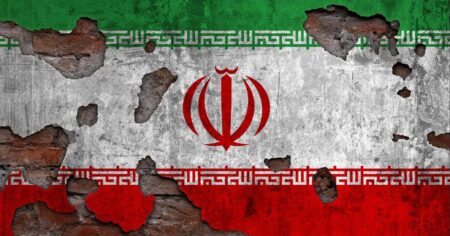
From Iran’s perspective, the situation is straightforward and deeply troubling—a ceasefire agreement that clearly included Lebanon and other Iranian allies is being blatantly violated while the United States looks the other way. Iran’s deputy foreign minister, Saeed Khatibzadeh, didn’t mince words when speaking to the BBC about sweeping Israeli attacks carried out in Lebanon on Wednesday, calling them “a grave violation” of the ceasefire agreement and demanding that the United States make a choice “between war and ceasefire—you cannot have it both at the same time.” His frustration was palpable as he challenged the logic of the American position: “You cannot ask for a ceasefire and then accept terms and conditions, accept areas the ceasefire is applied to, and name Lebanon, exactly Lebanon in that, and then your ally just start a massacre.” According to Iranian officials, the agreement between the U.S. and Iran explicitly stipulated a cessation of hostilities by both countries and their allies, with Lebanon specifically mentioned. Iran’s parliament speaker, Mohammad Bagher Qalibaf, emphasized this point on social media, stating that Lebanon and other Iranian allies “form an inseparable part of the ceasefire,” identifying it as “Point 1” of the 10-point Iranian proposal that supposedly underpins the entire Washington-Tehran agreement, with “no room for denial and backtracking.” The Iranians also pointed to statements from Pakistani Prime Minister Shehbaz Sharif, whose country brokered the deal, who announced that Iran, the U.S., and “their allies” had “agreed to an immediate ceasefire everywhere including Lebanon and elsewhere, EFFECTIVE IMMEDIATELY.” For Iran, this isn’t a matter of interpretation or misunderstanding—it’s a written agreement being violated almost immediately after the ink dried.
The U.S. and Israeli Counter-Narrative: A Separate Conflict
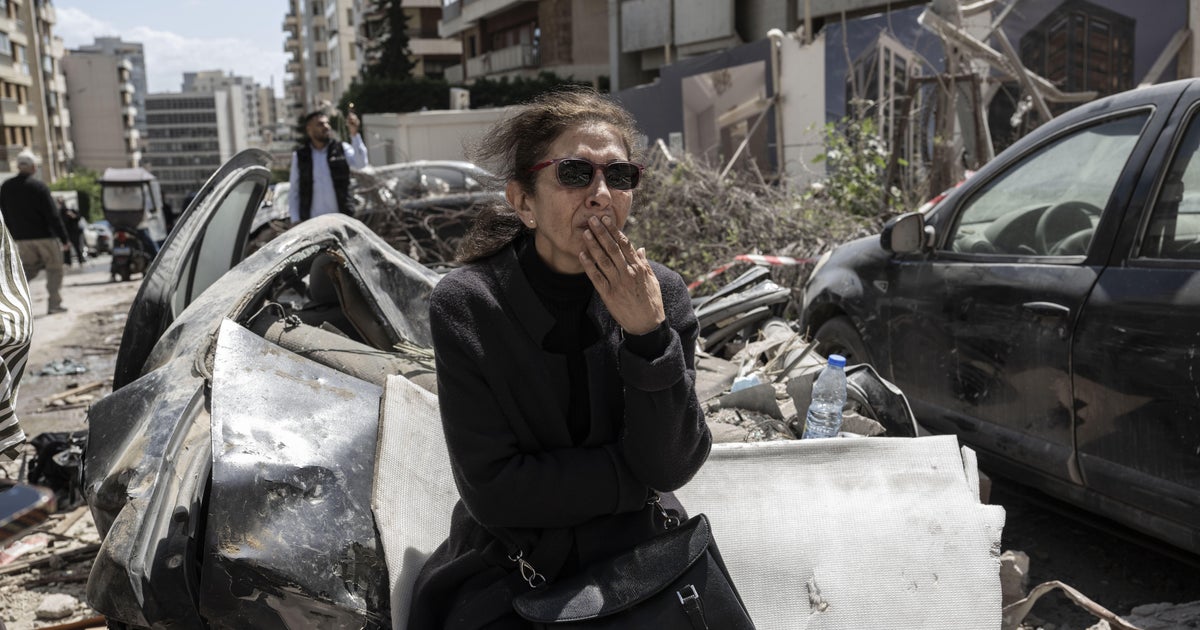
The American and Israeli version of events couldn’t be more different, with both governments firmly maintaining that Lebanon was never included in the ceasefire agreement and that continued Israeli military operations there are perfectly consistent with the deal. President Trump told PBS NewsHour that Israel continuing its attacks in Lebanon was “part of the deal—everyone knows that. That’s a separate skirmish,” a characterization that would likely come as news to the hundreds of Lebanese casualties and their families. Vice President JD Vance attempted to soften the contradiction somewhat, acknowledging that the U.S. never promised Lebanon would be included despite Iran’s claims otherwise, but characterizing the fundamental disagreement as merely a “reasonable misunderstanding” between the parties—though it’s hard to see how such a massive discrepancy over the basic scope of a ceasefire could be considered reasonable. Israel has been even more emphatic in its position, with officials making clear that the ceasefire agreement does not extend to its war with Hezbollah in Lebanon. The Israeli military demonstrated this conviction in dramatic fashion on Wednesday when it struck 100 purported Hezbollah targets across Lebanon in just ten minutes—a rapid-fire assault that Lebanon’s health ministry says killed at least 203 people, with significant civilian casualties according to Lebanon’s prime minister, though Israel’s defense minister claimed that “200 terrorists” were killed in the strikes. Prime Minister Benjamin Netanyahu went further, announcing that Israel would begin its own direct negotiations with Lebanon, saying he had instructed his cabinet to open talks “as soon as possible” focused on “disarming Hezbollah and establishing peaceful relations between Israel and Lebanon.” Netanyahu framed the situation as an opportunity created by Iran entering ceasefire negotiations “battered and weaker than ever,” claiming Iran had waived all preconditions, including any ceasefire in Lebanon, stating emphatically: “I insisted that the temporary ceasefire with Iran not include Hezbollah. And we continue to strike them forcefully.”
The Complex Israel-Hezbollah Relationship and Broader Context
To understand why Lebanon has become such a crucial sticking point, it’s essential to grasp the complex, decades-long conflict between Israel and Hezbollah, which has intensified dramatically since the October 7, 2023 Hamas terror attack that sparked the current Gaza war. Hezbollah was formed in 1982 as a Shiite Muslim political and military force with substantial support from Iran and Syria following an Israeli invasion of Lebanon. Since then, it has functioned as both a legitimate political party within the Lebanese government and as a powerful independent force outside of it, providing services to its Shiite followers while maintaining its own well-armed paramilitary organization. The United States and Israel have designated Hezbollah as a terrorist organization for almost two decades, with the European Union also considering its armed wing a terrorist group. After Israel launched its devastating war in Gaza in response to last year’s attack, Hezbollah began launching regular rocket strikes on northern Israel in what it characterized as support for Hamas and the Palestinian people. Israel retaliated with extensive strikes on Hezbollah strongholds in southern Lebanon and Beirut’s suburbs, creating a humanitarian catastrophe with Lebanese officials reporting at least one million people displaced by the Israeli assault. The conflict escalated dramatically in 2024 when Israel killed Hezbollah’s longtime leader Hassan Nasrallah with a strike in Beirut. For extended periods, Israeli residents in northern communities near the Lebanese border were also forced to abandon their homes due to Hezbollah rocket attacks, creating a domestic political imperative for Netanyahu’s government that makes simply walking away from the Lebanon front extremely difficult. Netanyahu and his cabinet members have repeatedly pledged that Israel will continue operations in Lebanon until it’s safe for all Israeli residents to return home, with the Prime Minister addressing displaced northerners: “Wonderful residents of the North, we are committed to returning security to you.”
The Strait of Hormuz: Another Complicating Factor
If disagreements over Lebanon weren’t enough to endanger the ceasefire, control over shipping traffic through the Strait of Hormuz represents another potentially explosive issue complicating any lasting U.S.-Iran peace agreement. This narrow waterway is one of the world’s most strategically important chokepoints, with approximately 20% of the global oil supply passing through it on tankers before the Iran war began—a figure that has likely decreased significantly during the conflict as Iran has maintained tight control over the strait. Iran’s deputy foreign minister made clear that Tehran isn’t simply going to relinquish this leverage, telling the BBC that Iran would provide security for safe passage only “after the United States actually withdraws this aggression.” He indicated that Iran would establish a new “protocol which is going to run from now on on safe passage in the Strait of Hormuz” in conjunction with Oman “and, of course, with [the] international community.” The strait is a geographical bottleneck bordered by Iran to the north and Oman to the south, through which all goods from the Persian Gulf must pass to enter the Arabian Sea and reach the lucrative Asian markets beyond. Khatibzadeh framed the issue in terms of mutual security, saying that while Iran has “shown to everybody that energy security is important for Iran, it’s important for this body of water in the Persian Gulf,” and promised to “abide by the international norms and international law,” any safety arrangements should be “two-sided” rather than imposed on Iran. This insistence on maintaining significant control over one of the world’s most vital shipping lanes—and conditioning any opening of the strait on broader terms—gives Iran substantial leverage but also creates another potential breaking point for the fragile ceasefire.
Uncertain Future: Can This Ceasefire Survive Its First Week?
The prospects for this ceasefire evolving into a lasting peace appear increasingly dim as fundamental disagreements over its most basic terms become impossible to ignore. Iran’s Khatibzadeh admitted his country has “many doubts” about whether a final peace agreement with the United States is truly possible, suggesting Tehran suspects Washington might simply be exhausting diplomatic channels while planning to revert to military force, or approaching negotiations with an attitude of “dictating and not compromising” rather than genuine give-and-take. These suspicions aren’t entirely unfounded given President Trump’s characteristically blunt warning that he expects Iran to comply with the terms he says were agreed upon ahead of planned negotiations this weekend, threatening that if it doesn’t, he will order large-scale attacks on the country. This raises the troubling question: comply with which terms exactly, given that the two sides can’t even agree on whether Lebanon is included? The fact that such a fundamental element of the agreement is subject to completely contradictory interpretations suggests either catastrophically poor communication during the negotiation process, or perhaps more cynically, that one or both sides deliberately left the terms ambiguous to claim domestic political victories while maintaining maximum flexibility to continue military operations. Whatever the explanation, the current situation leaves the ceasefire hanging by a thread, with Israeli strikes continuing in Lebanon even as Iran warns of severe consequences for violations it sees as clear and egregious. The coming days will reveal whether this agreement represents a genuine opportunity for de-escalation and eventual peace, or merely a brief pause before an even more devastating round of conflict—one where both sides will claim the other violated the ceasefire first, making any future diplomatic resolution even more difficult to achieve.