


Dolores Huerta Breaks Decades of Silence: A Civil Rights Icon Speaks Her Truth
A Painful Revelation After Years of Silence
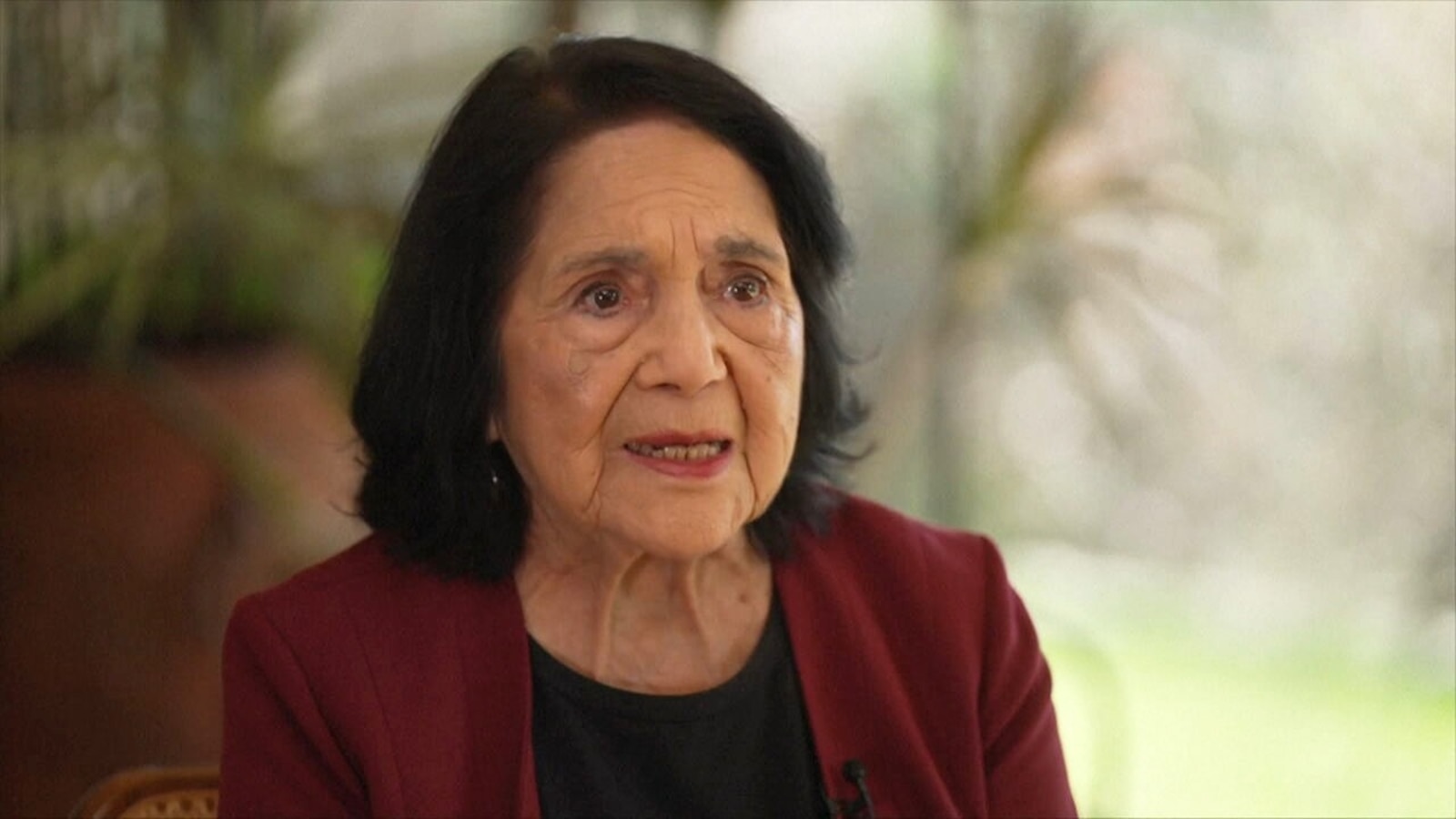
In a courageous and deeply personal interview with ABC News correspondent John Quiñones, 96-year-old civil rights legend Dolores Huerta has come forward with allegations of sexual assault against her former colleague and co-founder of the United Farm Workers, Cesar Chávez. This revelation comes in the wake of a comprehensive New York Times investigation that exposed disturbing accusations against the late labor leader, who passed away in 1993 at the age of 63. Huerta’s decision to speak publicly represents a seismic moment in the history of the American labor movement, as one of its most respected figures acknowledges the dark truth about a man widely celebrated as a hero. “And to think that somebody that we looked at as our hero and our leader — you know, it’s pretty horrible,” Huerta said, her words carrying the weight of decades of silence. The Times report revealed that Chávez allegedly used his position of power to sexually exploit women and minors who worked and volunteered within his movement, turning spaces meant for justice and liberation into scenes of personal violation and abuse.
The Burden of Silence and the Courage to Speak
For decades, Dolores Huerta carried a burden that few could imagine—the painful secret of being victimized by the very person with whom she built a movement dedicated to dignity and human rights. In her statement released on Wednesday, Huerta revealed that she was “manipulated and pressured into having sex” with Chávez during two separate encounters in the 1960s. She described one incident as being pressured into sexual relations and another as forced against her will. When Quiñones asked her whether she had been “suffering in silence, holding these secrets all these decades”—a poignant reference to her first name, which translates to “pain” or “aching” in English—Huerta’s response reflected both the personal toll and her inspiration to finally speak out. “It was very hard, it was very hard to keep this,” she acknowledged. “But, you know, I think I am building on the courage of these young women—that they had the courage to come out and say what happened to them. And God knows what they’ve suffered. It was time.” Her words highlight a common experience among survivors of sexual assault: the isolation of carrying such trauma alone, and the empowerment that comes from solidarity with others who have faced similar abuse.
The Dark Reality Behind a Celebrated Legacy
The allegations against Chávez paint a disturbing picture of systematic abuse hidden behind the public persona of a nonviolent civil rights champion. According to the Times investigation, multiple women came forward with accounts of sexual exploitation, including particularly harrowing allegations involving minors. One woman alleged she was just 12 years old when Chávez first touched her inappropriately and 15 when he raped her in California. Another woman reported being summoned for sexual encounters with Chávez dozens of times over a four-year period, beginning when she was only 13 years old while he was 45. These revelations starkly contradict the public image of Chávez as a moral leader committed to justice and nonviolence. Huerta herself pointed to this painful contradiction, stating that Chávez “had an evil side to him.” She emphasized the hypocrisy by noting, “Cesar spoke about and practiced the nonviolent movement. Well, what could be more violent than that?” Her question cuts to the heart of the matter—sexual assault is itself an act of profound violence, and when committed by someone preaching nonviolence and fighting for human dignity, the betrayal becomes even more devastating.
The Personal Cost: Secret Pregnancies and Difficult Choices
Perhaps the most heartbreaking aspect of Huerta’s revelation is that both encounters with Chávez resulted in pregnancies that she kept secret, ultimately arranging for the children to be raised by other families. This decision, made in a vastly different era regarding women’s reproductive rights, reflects the limited options available to women in the 1960s. “I thought that abortion was a sin,” Huerta told Quiñones, explaining her decision at the time. “I have since changed my mind on those issues because I now realize that women have to have a right to abortion. And by the way, abortion was also illegal at that time.” She disclosed that one child was raised by her brother and another by a family friend. This aspect of her story illuminates not only the immediate trauma of sexual assault but the lasting consequences that survivors often bear alone, making life-altering decisions while carrying the burden of secrecy. Huerta’s evolution on reproductive rights also demonstrates how personal experience can inform and transform one’s political positions, adding another dimension to her decades of advocacy for women’s rights and dignity.
Reconciling Legacy with Truth
When asked about how these revelations should affect Chávez’s legacy, Huerta offered a nuanced perspective that reflects the complexity many face when grappling with flawed heroes. She expressed hope that “his legacy would live on in the things that were accomplished,” acknowledging the genuine good that emerged from their collective work while not excusing the harm he caused. This balance is particularly challenging given the significance of what they built together. Huerta’s career as an activist began in 1955 when she joined the Community Service Organization, where she met Chávez. Together, they founded the National Farm Workers Association in 1962, which later became the United Farm Workers. Huerta played a pivotal role in the historic Delano grape strike of 1965 and led the national boycott of table grapes that followed, efforts that successfully pressured growers to improve wages and working conditions for some of America’s most vulnerable workers. Her contributions were so significant that in 2012, President Barack Obama awarded her the Presidential Medal of Freedom. The question of how to honor the achievements of a movement while acknowledging the abuse perpetrated by one of its leaders remains difficult, but Huerta’s willingness to speak truth demonstrates that historical honesty must be part of any genuine legacy.
Moving Forward: A Lifetime of Work Continues
Despite the pain of these revelations and the difficulty of coming forward at age 96, Dolores Huerta remains steadfast in her commitment to social justice. Her focus continues to be on current threats to labor rights and the treatment of immigrants in detention centers, demonstrating that the work she began decades ago is far from finished. “My intention is just to do the work, make lives better for women, make lives better for working people,” Huerta said. “We know that the job isn’t finished yet.” Her determination is remarkable, especially given her age and the emotional toll of revealing such painful personal history. “At my age, 96, as long as God gives me strength and the little energy that I have left, I want to just continue doing the work to make life better for women, for children, and of course, for farmworkers and workers in general,” she added. She also sounded a note of concern about the current political climate, stating, “I know we have a long fight ahead of us, even in our country right now, because so many of the gains that have been won over the years are being taken away from us.” Huerta’s story ultimately reminds us that speaking truth, no matter how difficult or how long it takes, is an act of courage that honors all survivors. By coming forward, she has not diminished the labor movement but strengthened it by insisting that it must be built on genuine respect and dignity for all people—particularly women and the most vulnerable. Her life’s work continues to be a testament to resilience, advocacy, and the ongoing struggle for justice in all its forms.