
When Tourism Becomes Too Much: A Japanese Town’s Struggle with Viral Fame
The Power of a Single Photograph
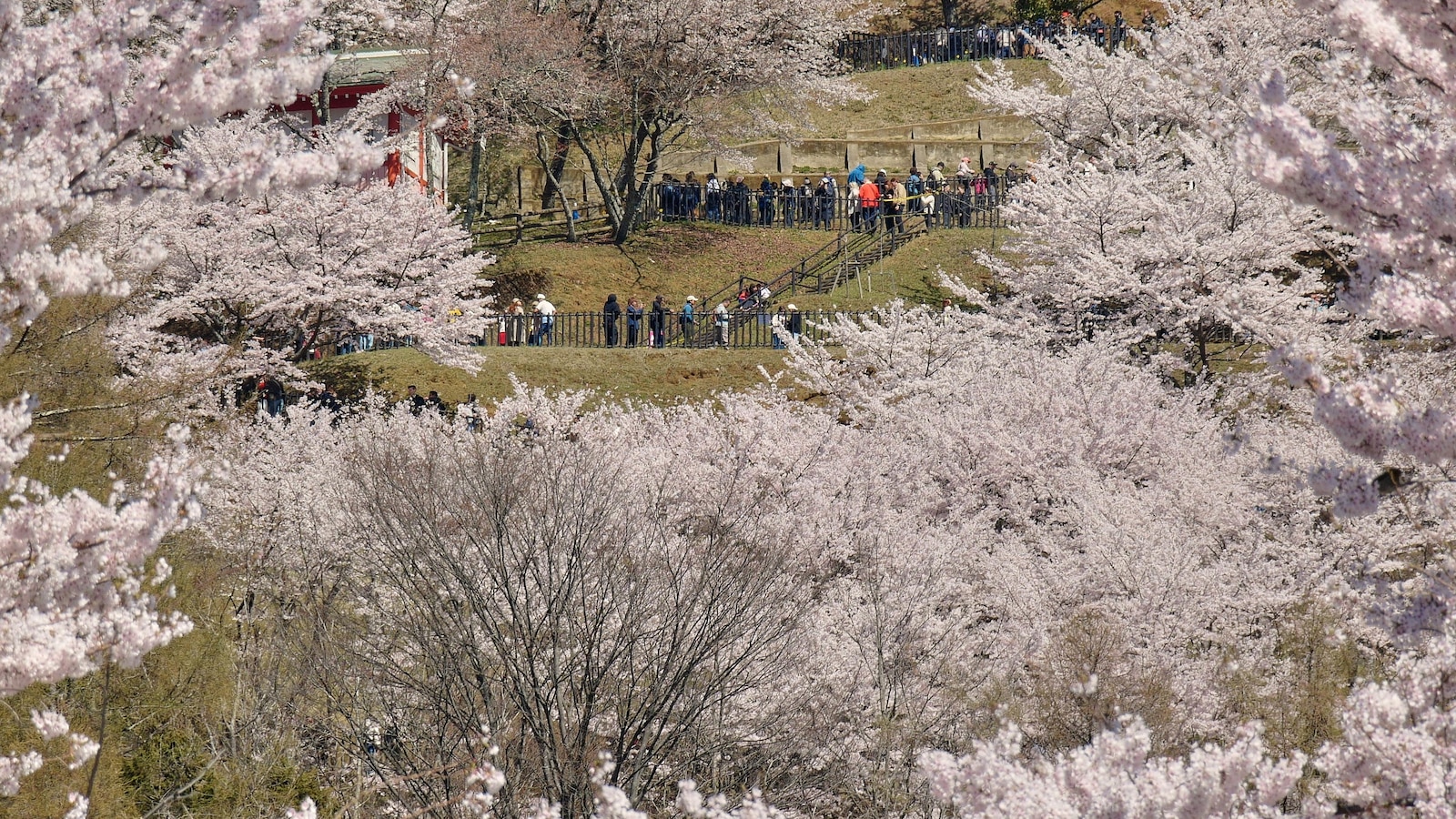
It all began innocently enough with a breathtaking photograph that captured the imagination of social media users worldwide. The image was picture-perfect: Japan’s majestic Mount Fuji, crowned with pristine snow, rising dramatically behind a striking red pagoda, all framed by the delicate pink cherry blossoms that symbolize the arrival of spring in Japan. This single viral image would transform the quiet town of Fujiyoshida from a peaceful residential community at the foot of Mount Fuji into an international tourist hotspot practically overnight. What seemed like a blessing quickly revealed itself as a complex challenge that local residents were entirely unprepared to handle. Thousands of tourists descended upon this small town, each hoping to recreate that perfect Instagram moment, overwhelming the infrastructure and daily life of a community that had never anticipated such attention. The consequences were immediate and troubling: streets became perpetually gridlocked with traffic, mountains of trash accumulated in public spaces, and tourists desperate for facilities began knocking on residents’ doors asking to use their bathrooms. Some visitors, finding no available facilities, resorted to relieving themselves in locals’ front yards. The situation deteriorated so rapidly that by February, town officials made the unprecedented decision to cancel the annual cherry blossom festival—an event that had been specifically created just a decade earlier to attract more visitors to the area.
Japan’s Tourism Paradox
The challenges facing Fujiyoshida illuminate a fundamental contradiction at the heart of Japan’s economic strategy. As the country grapples with prolonged economic stagnation and an aging, shrinking population, government officials have embraced international tourism as a vital source of revenue and economic revitalization. The national government has set ambitious targets, aiming to increase annual foreign visitors from the current 40 million to an impressive 60 million by 2030. However, this aggressive push for tourism growth has left many local communities scrambling to cope with consequences they never anticipated. Towns and neighborhoods that developed over centuries as residential areas suddenly find themselves transformed into tourist attractions without the necessary infrastructure, planning, or community preparation. Masatoshi Hada, who manages Fujiyoshida’s Economics and Environment Department, captured this dilemma perfectly when he explained to the Associated Press that the area is “primarily an ordinary residential neighborhood, where balancing tourism with the safety of people’s living environment has become difficult.” This tension between national economic priorities and local quality of life represents a challenge not just for Fujiyoshida but for communities throughout Japan. What residents have begun calling “tourism pollution” reflects a growing awareness that unchecked visitor numbers can damage the very qualities that made these places attractive in the first place. The problem has become so severe that even without the official cherry blossom festival, foreign tourists still packed the area during early April, with the narrow streets leading to Arakurayama Sengen Park overwhelmed by visitors queuing for hours just to capture those world-famous panoramic views.
The Broader Pattern of Overtourism
Fujiyoshida’s experience is far from unique in Japan. Similar problems have emerged in other beloved destinations including the ancient capital of Kyoto and the coastal town of Kamakura, both places where traditional Japanese culture and stunning natural beauty have long attracted visitors. In Kyoto, residents have voiced mounting frustration about tourists dragging enormous suitcases onto city buses, creating congestion that makes basic transportation difficult for locals trying to get to work, school, or handle daily errands. These patterns of overtourism are unfolding against a complex social backdrop that includes Japan’s rapidly changing demographics. The country has been forced to increase immigration and bring in more foreign workers to compensate for its declining and aging population, creating tensions in a society that has historically been relatively homogeneous. This combination of increased foreign workers and massive tourist influxes has unfortunately fueled xenophobic sentiments in some quarters, with Prime Minister Sanae Takaichi’s nationalistic government proposing stricter regulations governing foreigners in Japan. The situation presents a delicate balancing act for policymakers who must navigate between economic necessity, cultural preservation, and social harmony. The government acknowledges the concerns about overtourism and promises to address them, yet simultaneously pursues policies to dramatically increase visitor numbers, creating skepticism about whether meaningful solutions are truly being prioritized or whether local communities are expected to simply absorb the disruption in service of broader national economic goals.
Living in a Tourist Attraction
For the residents of Fujiyoshida, daily life has been fundamentally altered by their town’s unwanted fame. In recent years, the area has seen more than 10,000 foreign tourists per day during peak seasons—an astronomical number for a community that never developed with such foot traffic in mind. The town government has characterized this influx as a direct threat to “residents’ daily lives,” acknowledging in official statements that the situation has become unsustainable. Beginning April 1st, at the start of the cherry blossom season, authorities implemented new restrictions, including increased security personnel, limitations on tour buses and vehicles entering the scenic neighborhoods, and requirements that visitors reach the park on foot rather than by car. Security guard Hiroaki Nagayama finds himself on the front lines of managing this chaos, gesturing to crowds to keep them away from congested areas, asking tourists to properly dispose of cigarette butts, and attempting to help lost visitors navigate the area. “I’m struggling. I cannot communicate with them in Japanese,” Nagayama admits. “Some people buy food at stalls and leave litter behind. I think what’s happening here is a typical example of overtourism.” For elderly residents like 93-year-old Hitoshi Mori, whose home sits just blocks from the main attraction, the situation has severely curtailed his independence and quality of life. Sitting on a bench outside his house, Mori explains that while he recognizes having visitors is “good but annoying,” the reality is that “it’s too crowded outside so I can only get groceries once a week and stock up on food.” The simple act of buying fresh food—something he likely did regularly throughout his long life—has become an expedition requiring careful planning and endurance.
The Visitors’ Perspective and Community Divisions
Interestingly, despite the hours-long waits and the proliferation of signs instructing them to behave better, most tourists seem genuinely thrilled by their experience. Lisa Goerdert, visiting from Paris, found the situation “pretty well organized,” explaining that when visitors reach the prime viewing spots, “you have like five minutes to take as many pictures as you can, and it was amazing.” Vicky Tran, who traveled from Melbourne, Australia with family and friends, couldn’t even reach the pagoda viewpoint because of the crowds, yet still reported enjoying the view and the neighborhood atmosphere. These positive tourist experiences highlight a communications gap—many visitors seem unaware of the severe disruption their presence creates for residents, perceiving the situation as well-managed rather than crisis-level. The overtourism phenomenon has also created divisions within the community itself, opening rifts between neighbors who previously coexisted peacefully. Some residents prioritize maintaining the quiet residential character of their neighborhood and view the tourist invasion as an unwelcome intrusion that has diminished their quality of life. Others have seized the economic opportunity, converting their yards into paid parking lots, opening new shops, or setting up food stalls to serve the constant stream of visitors. This economic dimension adds complexity to the situation, as some community members now have financial stakes in continued high tourism levels, creating conflicts of interest when discussing potential restrictions or visitor limits.
Finding Balance Between Preservation and Progress
The transformation of Fujiyoshida illustrates both the potential benefits and significant costs of viral tourism. In one nearby shopping arcade that had fallen into decline with many closed mom-and-pop shops, business has rebounded dramatically after another viral social media post showed Mount Fuji looming magnificently over the street. Now throngs of tourists stand in the middle of the street capturing their own versions of that viral image, frequently blocking traffic and prompting frustrated honking from local drivers. Masami Nakamura, who runs a decades-old school uniform shop with her husband, captures the mixed feelings of many long-time residents: “This is a huge change for people like us who are used to a quiet suburban lifestyle. I only hope the tourists respect our rules and manners.” Similarly, Kyoko Funakubo, a 60-year-old hotel employee who also works part-time selling Fuji-themed souvenirs, acknowledges both the opportunities and dangers: “I once almost hit a tourist who jumped into the street without looking,” she recalls, but also notes, “This place used to be almost abandoned, with many shuttered shops. But now, with many stores reopened or new shops that have opened, I feel good seeing this area come alive again.” These perspectives reveal the heart of the challenge facing Fujiyoshida and similar communities worldwide: how to capture the economic benefits of tourism while preserving the character, safety, and livability that made these places special to begin with. The solution likely requires more than just security guards and vehicle restrictions—it demands thoughtful planning, infrastructure investment, visitor education, and perhaps most importantly, ensuring that local communities have meaningful voices in determining their own futures rather than having tourism levels dictated by national economic priorities or social media algorithms.