


Federal Judge Dismisses Charges in Breonna Taylor Case: A Mother’s Ongoing Fight for Justice
The Dismissal That Shocked a Nation
In a decision that sent shockwaves through communities still grappling with questions of police accountability, a federal judge dismissed all remaining charges against two former Louisville police officers connected to the tragic death of Breonna Taylor. On Friday, U.S. District Court Judge Charles R. Simpson III granted the Department of Justice’s request to drop misdemeanor charges against Joshua Jaynes and Kyle Meany, two officers accused of providing false information on the search warrant that ultimately led to the fatal raid on Taylor’s apartment on March 13, 2020. The dismissal came with prejudice, meaning these specific charges cannot be refiled against the defendants. This development represents a painful chapter in a case that has become emblematic of broader conversations about racial justice, police reform, and accountability in America. Taylor’s death during that nighttime raid sparked nationwide protests and became a rallying cry for the Black Lives Matter movement, with her name spoken alongside George Floyd’s as symbols of systemic injustice that many believe continues to plague law enforcement across the country.
The Tragedy That Changed Everything
Breonna Taylor was a 26-year-old emergency medical technician who was asleep in her Louisville apartment when plainclothes police officers executed a no-knock warrant in the early morning hours. The warrant was issued as part of a drug investigation targeting Taylor’s former boyfriend, who wasn’t present at her home that night. When officers broke down her door, Taylor’s current boyfriend, Kenneth Walker, believing intruders were breaking in, fired a single shot with his legally owned handgun, striking an officer in the leg. In response, three officers unleashed a barrage of 32 bullets into the apartment, with several striking and killing Taylor in her own home. The incident immediately raised serious questions about the warrant itself, the tactics used during the raid, and whether proper procedures were followed. Federal prosecutors later alleged that Jaynes and Meany had provided false information to obtain the search warrant in the first place—a claim that formed the basis of the charges that have now been dismissed. The case highlighted the dangers of no-knock warrants and sparked legislative changes in Louisville and other jurisdictions across the nation, with many places banning or severely restricting the practice.
A Mother’s Unending Pain and Fight for Accountability
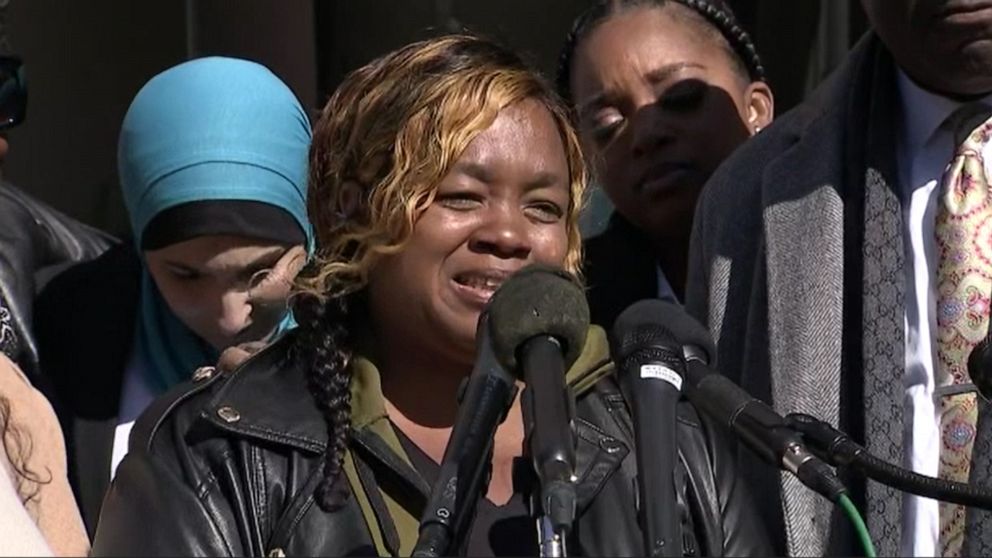
For Tamika Palmer, Breonna Taylor’s mother, the judge’s decision to dismiss the charges represents yet another devastating blow in her long quest for justice. Speaking with ABC News Live Prime anchor Linsey Davis before the ruling, Palmer expressed her anguish and frustration with a system she believes has failed her daughter. “She was killed because of their lies and negligence, and somebody should be held accountable for that,” Palmer said, her words carrying the weight of a mother’s grief that time has not diminished. Palmer’s pain is compounded by the finality of her loss contrasted with the freedom the officers now enjoy. “Breonna doesn’t get to come back. She doesn’t get to put it behind her,” she explained, emphasizing that while others may move forward with their lives, her reality remains frozen in that terrible moment. For Palmer, every single day is March 13—the day her daughter was taken from her. “There’s no putting it behind me,” she stated simply, a reminder that legal proceedings may end, but a mother’s grief does not. Her ongoing advocacy has kept Breonna’s memory alive and continued to push for meaningful reforms that might prevent similar tragedies, even as the legal system has repeatedly disappointed her hopes for accountability.
The Department of Justice’s Controversial Reversal
The dismissal of charges followed a motion filed by the Department of Justice just one week earlier, a move that surprised many observers who had been following the case. In their filing, the DOJ stated that after conducting a “further review” of the matter and “in the exercise of its discretion,” the government determined that dismissing the case was “in the interest of justice.” This reversal was particularly striking given that the DOJ itself had brought these charges in 2022, along with civil rights violations against the same officers. A DOJ spokesperson later characterized the charges as representing “inappropriate, weaponized federal overreach,” stating that “neither of these officers was present during the shooting, and a district court has already repeatedly dismissed the most serious charges as completely unsupportable.” The spokesperson added that “these cases represented the kind of inappropriate, weaponized federal overreach that this Department of Justice no longer tolerates.” This language and reasoning marked a significant shift in the department’s approach to such cases and raised concerns among civil rights advocates about the future of federal involvement in police accountability cases. The timing and nature of this reversal suggested a change in prosecutorial philosophy that prioritizes different considerations than those that led to the original charges being filed.
The Officers’ Response and Legal Journey
For Joshua Jaynes and Kyle Meany, the dismissal brought relief after years of legal uncertainty and public scrutiny. Michael Denbow, representing Meany, released a statement saying his client was “overjoyed and incredibly relieved to have the case dismissed” and “incredibly thankful for his family and everyone else that has stood by and supported him through this process.” Travis Lock, representing Jaynes, similarly stated that his client was “elated” by the DOJ’s decision to request dismissal of the charges. The legal journey for these officers had been winding and complex, with the charges evolving over time. A federal judge had twice struck down felony charges against the pair, reducing them to misdemeanors—most recently in 2025, just before the final dismissal. The officers were not present during the actual shooting but were accused of providing false information to obtain the warrant that set the tragic events in motion. Their case stood in contrast to that of Brett Hankison, another former Louisville officer who was actually convicted of a civil rights offense in connection with Taylor’s death and sentenced to two years and nine months in prison. The different outcomes for officers involved in various aspects of the same incident highlight the complexities of prosecuting police misconduct cases and the high burden of proof required to secure convictions.
The Broader Implications and Unresolved Questions
The dismissal of charges in the Breonna Taylor case raises profound questions about police accountability, federal prosecution of civil rights cases, and whether meaningful justice is achievable in cases involving law enforcement misconduct. While some may view the dismissal as a vindication for officers who were not directly involved in the shooting, others see it as another example of a system that protects police officers even when their actions contribute to tragic outcomes. The case has left many wondering what accountability looks like when a young woman dies in her own home during a police operation based on potentially faulty information. The fact that only one officer faced conviction—and that for a civil rights violation rather than charges directly related to Taylor’s death—leaves a gap between what happened and what consequences followed. For activists and reformers, the case underscores the need for continued efforts to change policies around no-knock warrants, improve warrant application procedures, and create stronger mechanisms for holding law enforcement accountable when things go wrong. For Tamika Palmer and others who loved Breonna Taylor, the legal system’s response has been inadequate to the loss they’ve suffered. As the legal proceedings conclude, Breonna Taylor’s name remains a powerful symbol in ongoing conversations about justice, equality, and the value of Black lives in America—conversations that will continue long after the courtroom doors have closed.