



North Korea’s Next Generation: Kim Jong Un’s Teenage Daughter Emerges as Potential Successor
Intelligence Reports Point to Historic Leadership Transition
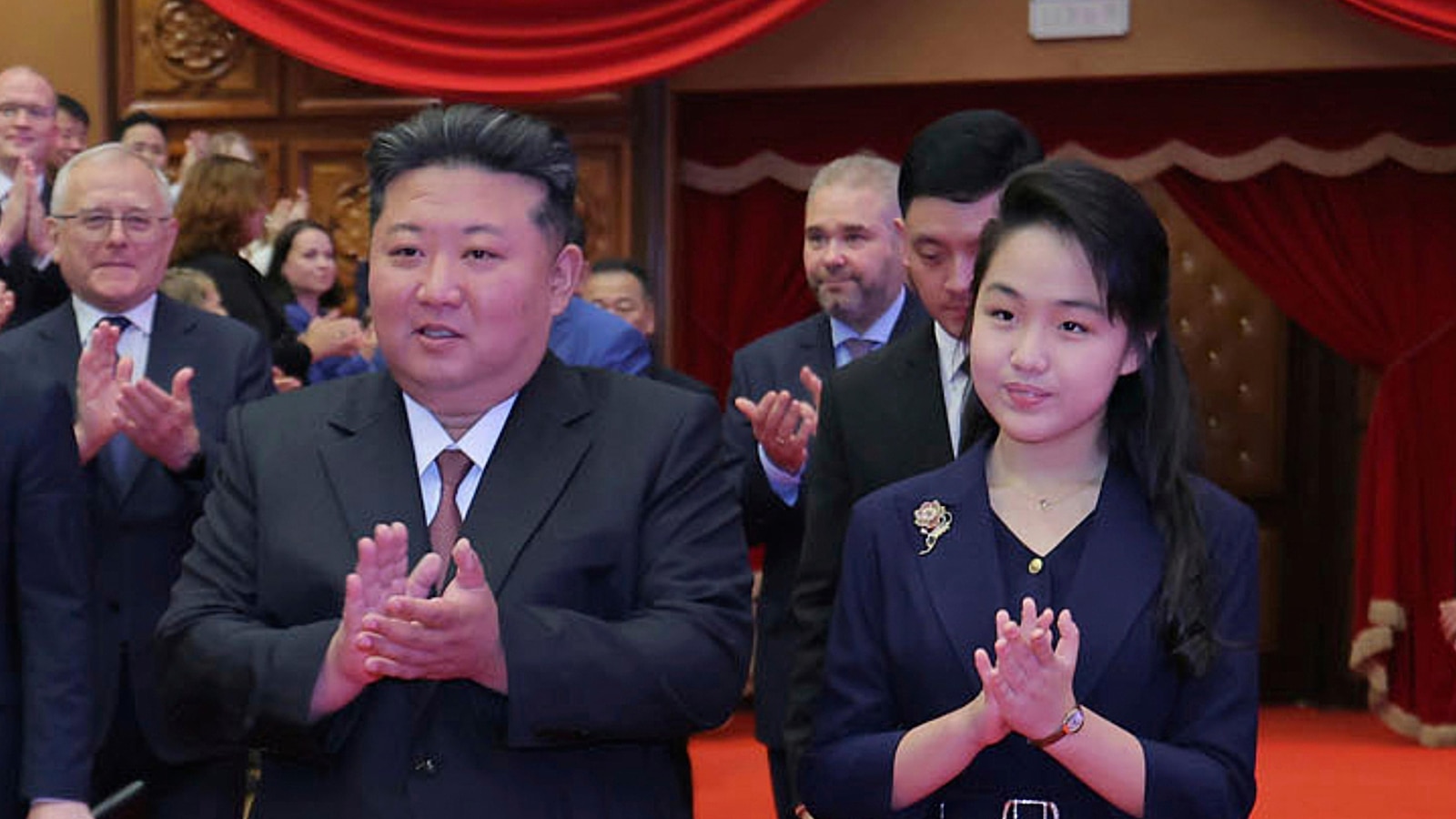
South Korea’s National Intelligence Service has dropped a significant bombshell that could reshape the future of one of the world’s most secretive nations. According to testimony delivered to lawmakers this week, Kim Jong Un’s teenage daughter appears to be positioned as North Korea’s next supreme leader, potentially marking an unprecedented shift in the hermit kingdom’s leadership structure. The assessment represents a dramatic evolution in how intelligence officials view the young woman believed to be named Kim Ju Ae, who is approximately 13 years old. This revelation comes at a particularly crucial moment, as North Korea prepares for its largest political gathering in years—the Workers’ Party Congress scheduled for late February. During this conference, Kim Jong Un is expected to outline his vision for the next five years and potentially make historic announcements about succession planning that would extend the Kim family dynasty into a fourth generation, breaking with decades of male-only leadership tradition.
The intelligence briefing, delivered behind closed doors to South Korean lawmakers, marked a notable shift in language and assessment. Lawmaker Lee Seong Kweun, who attended the confidential meeting, emphasized that NIS officials are now describing Kim Ju Ae as being in the “successor-designate stage” rather than merely undergoing “successor training” as they had characterized her status just months earlier. This linguistic change, though seemingly subtle, carries enormous weight in the careful world of intelligence assessments and North Korea-watching. The spy agency pointed to several factors driving this updated evaluation: her increasingly prominent role at military events, her participation in the deeply symbolic family visit to the Kumsusan Palace of the Sun—a sacred mausoleum housing the preserved bodies of her grandfather and great-grandfather—and emerging indications that Kim Jong Un has begun consulting her on certain policy decisions. Officials are now watching closely to see whether she appears alongside her father before thousands of delegates at the upcoming party congress, which could provide definitive confirmation of her status.
A Young Woman’s Remarkable Rise to Prominence
Kim Ju Ae’s journey from complete obscurity to potential heir apparent has been remarkably swift and carefully choreographed. She first appeared in public view in November 2022 at a long-range missile test, immediately sparking international speculation about who this mysterious young woman might be. Since that debut, her appearances have become increasingly frequent and significant, carefully calibrated to build her public profile while maintaining North Korea’s typical veil of secrecy. She has accompanied her father to an expanding array of events including weapons tests, military parades, factory openings, and other state functions. Perhaps most significantly, she traveled with Kim Jong Un to Beijing last September for his first summit with Chinese President Xi Jinping in six years, which took place on the sidelines of a World War II commemoration event. This international exposure suggested she was being groomed for far more than a ceremonial role.
The turning point in how analysts view her potential came during the New Year’s Day visit to Kumsusan Palace of the Sun, where she joined both parents in paying respects at the mausoleum. This wasn’t just another public appearance—it was a deeply symbolic gesture in a country where imagery, ritual, and tradition carry profound political meaning. The palace serves as the spiritual and political heart of the Kim family’s claim to power, housing the embalmed remains of Kim Il Sung and Kim Jong Il, North Korea’s first two leaders. For Kim Ju Ae to be granted access to this sacred space and to be seen there publicly represented what many experts considered the clearest signal yet that she’s being positioned as the designated successor to her 42-year-old father. Despite her growing visibility in state propaganda, North Korean media has never published her actual name, referring to her only through titles like “respected” or “most beloved” child, maintaining the mystique that surrounds the Kim family while simultaneously elevating her status.
Breaking Tradition in the World’s Most Traditional Regime
The possibility of Kim Ju Ae becoming North Korea’s next supreme leader represents a potentially revolutionary break from deeply entrenched traditions. Since its establishment in 1948, North Korea has been ruled exclusively by male members of the Kim dynasty, beginning with founder Kim Il Sung, followed by his son Kim Jong Il, and then the current leader Kim Jong Un. The country’s political culture is profoundly conservative and patriarchal, with women traditionally excluded from the highest echelons of power despite North Korea’s official rhetoric about gender equality. Initially, South Korean intelligence officials expressed considerable skepticism that a female could be chosen to lead, given these cultural constraints and the male-dominated nature of North Korean leadership structures. However, the steady drumbeat of her public appearances and the carefully crafted messaging surrounding them has forced a reassessment of these assumptions.
The belief that the young woman is named Kim Ju Ae stems from an unlikely source: former NBA star Dennis Rodman, who developed an unusual friendship with Kim Jong Un. Rodman recalled holding Kim’s baby daughter during a bizarre diplomatic trip to Pyongyang in 2013, and South Korean intelligence officials believe she was born sometime that year, making her around 13 years old now. Interestingly, she’s not Kim Jong Un’s only child. South Korea’s spy agency informed lawmakers in 2023 that Kim and his wife, Ri Sol Ju, likely have three children total: an older son, Kim Ju Ae, and a younger third child whose gender remains unknown. The fact that Kim chose to elevate his daughter rather than his eldest son—who would be the traditional choice—adds another layer of intrigue to this succession drama and suggests Kim Jong Un may be thinking strategically about who is best suited to continue his vision for North Korea’s future.
Strategic Preparation Based on Personal Experience
Some analysts believe Kim Jong Un’s approach to preparing his daughter for leadership may be informed by his own rushed and chaotic path to power. Kim was only 26 years old when he was officially designated as heir during a 2010 party conference, just two years after his father Kim Jong Il suffered a debilitating stroke that left him partially incapacitated. Following Kim Jong Il’s death in December 2011, the young Kim Jong Un was abruptly thrust onto the throne with relatively little preparation or public grooming. He had to quickly consolidate power, purge potential rivals, and establish his authority despite his youth and inexperience. The transition was rocky, marked by executions of senior officials and intense uncertainty about whether he could maintain control. This personal history may explain why Kim Jong Un has chosen to introduce his daughter to the public eye at such a young age and in such a gradual, systematic manner—he’s giving her the preparation time he never had.
Kim Ju Ae’s first known visit to Kumsusan Palace last month was also her father’s first visit to the sacred site in three years, according to publicly available information. The decision to return to this symbolically charged location specifically to bring his daughter speaks volumes about his intentions. Cheong Seong-Chang, a senior analyst at South Korea’s Sejong Institute, interprets this gesture as Kim Jong Un symbolically presenting his daughter as his chosen heir before the preserved remains of his grandfather and father, seeking their posthumous blessing as he prepares for the major ruling party congress. It’s a move steeped in the quasi-religious political culture that surrounds the Kim family, where lineage and legitimacy are paramount concerns. By including his daughter in such rituals, Kim is systematically building her credentials and establishing her place within the sacred family narrative that legitimizes the entire North Korean political system.
What to Watch at the Upcoming Party Congress
The Workers’ Party Congress scheduled for late February could prove to be a defining moment in this succession story. These gatherings, last held in 2016 and 2021, serve as North Korea’s most important political events where major policy directions are set and leadership structures are adjusted. Cheong Seong-Chang speculates that the congress could provide the stage for Kim Jong Un to formalize succession plans, possibly by appointing his daughter to a significant party position such as first secretary, the party’s second-ranking post. However, he notes that such a momentous decision might not be immediately disclosed to the outside world, keeping with North Korea’s pattern of revealing information on its own timeline and terms. The regime is known for making significant changes internally while only gradually allowing that information to become public through carefully controlled channels.
Other analysts urge caution about expecting dramatic announcements or formal titles for someone so young. Party rules technically require members to be at least 18 years old, though such regulations could certainly be changed or waived for someone of Kim Ju Ae’s unique status. Koh Yu-hwan, former president of South Korea’s Institute of National Unification, suggests that if Kim does use the party congress to cement his daughter as successor, the signs would likely be subtle rather than explicit. For instance, the party might issue self-congratulatory statements praising North Korea’s longevity compared to other Communist states and attribute this success to the “successful inheritance of the revolution” through the Kim family bloodline. According to Koh, such coded language would signal to those paying attention that Kim Ju Ae’s position as heir apparent has been formalized, even without a direct announcement. As the world watches this secretive nation, the emergence of Kim Ju Ae represents not just a potential leadership transition but a fascinating window into how North Korea balances tradition with pragmatic succession planning, and how the world’s most isolated dynasty plans to extend its rule into an uncertain future.