
Tragedy at LaGuardia: Community Mourns Pilot Lost in Devastating Airport Collision
A Family’s Heartbreaking Loss
The family of Antoine Forest has come forward to confirm that he was one of the two pilots who tragically lost their lives in a devastating collision at New York City’s LaGuardia Airport. The incident, which occurred late Sunday night, has sent shockwaves through the aviation community and left families grieving the loss of skilled professionals who dedicated their lives to keeping passengers safe. Forest’s identification by his loved ones brings a deeply personal dimension to what was already a catastrophic event that has captured national attention. As investigators work to piece together exactly what happened on that fateful night, the families of both pilots are left to grapple with the sudden and tragic loss of their loved ones, while the broader community comes together to support those affected by this terrible accident.
The Collision: A Night of Chaos and Heroism
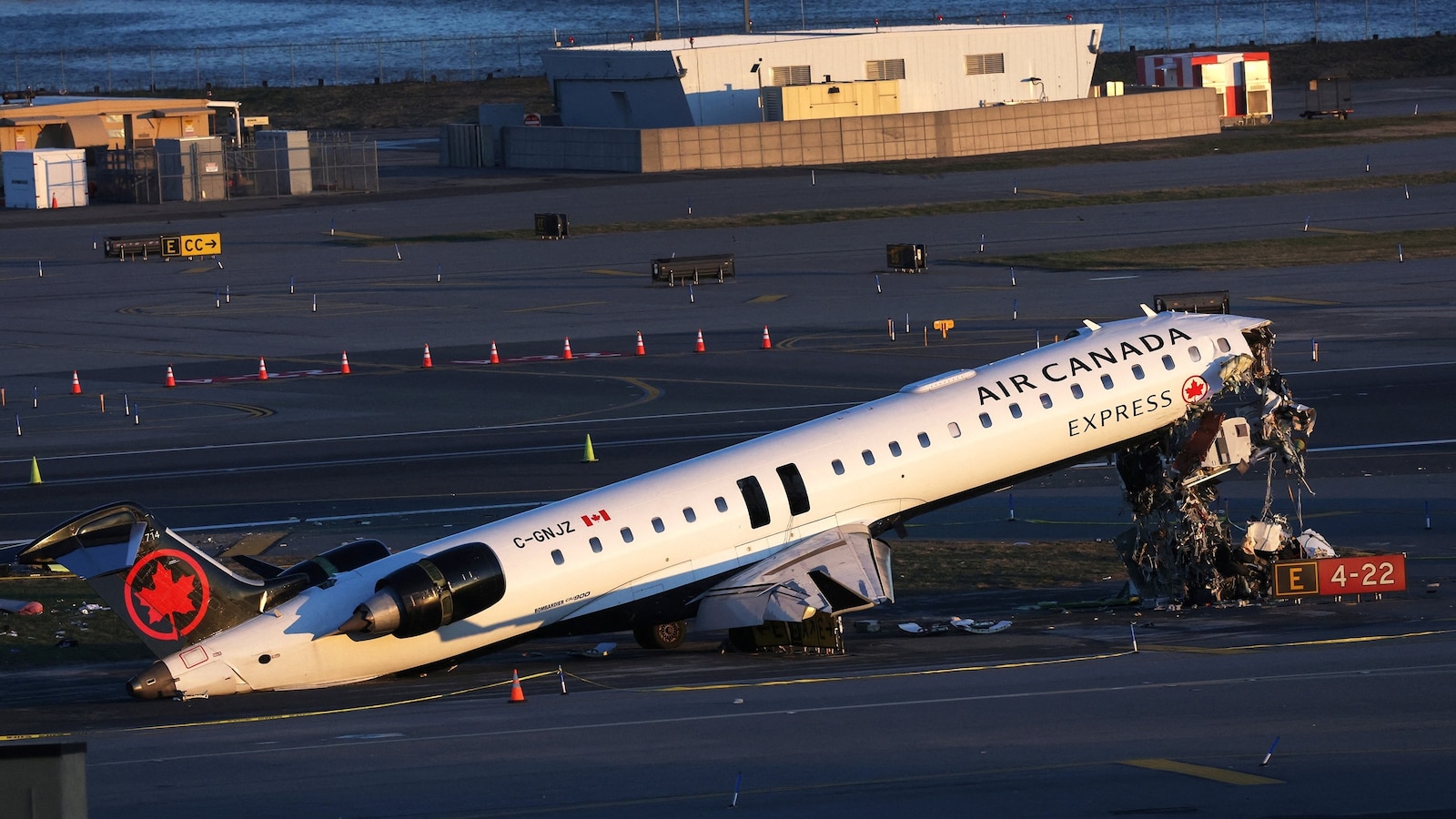
The tragedy unfolded shortly after 11:45 p.m. on Sunday when Air Canada Flight 8646, operated by Jazz Aviation, touched down at LaGuardia after what had been a routine flight from Montreal. The aircraft was carrying 72 passengers and four crew members, all of whom expected to end their journey safely on the tarmac. However, within moments of landing, the aircraft collided with a Port Authority rescue-and-firefighting vehicle that was responding to an unrelated incident involving another aircraft. According to preliminary data from FlightRadar24, the plane was traveling at a speed between 93 and 105 miles per hour at the moment of impact, a detail that underscores the tremendous force of the collision. The impact was so severe that it claimed the lives of both pilots and injured dozens of others, transforming what should have been a routine landing into a scene of devastation. Port Authority Executive Director Kathryn Garcia confirmed these details as emergency responders rushed to the scene, and the airport immediately shut down operations to allow rescue crews to work and investigators to secure the area. The collision resulted in at least 43 people being transported to area hospitals, including passengers from the plane and personnel from the fire truck, highlighting the widespread impact of this single tragic moment.
Survivors’ Harrowing Accounts
Passengers aboard Flight 8646 have begun sharing their terrifying experiences from that night, providing crucial eyewitness accounts of the moments leading up to and immediately following the collision. Joe, a passenger who was traveling with his fiancée and has chosen not to reveal his last name publicly, described the landing as appearing normal at first, though he noticed emergency vehicles on the tarmac as the plane approached. In the seconds before impact, passengers felt what Joe described as “something, maybe like an emergency brake that was pulled, or some kind of hard stop,” though nothing earlier in the flight had seemed unusual or concerning. The sudden nature of the impact left passengers stunned and disoriented, but training and quick thinking helped prevent an even greater tragedy. Because Joe was seated in the emergency exit row, he heard someone shout for the emergency exits to be opened, and he immediately sprang into action. Describing his actions in detail, Joe explained how he pulled the lever down, attached the door, and moved it to the side of the plane, creating an escape route for his fellow passengers. Several passengers, including Joe and his fiancée, made their way through the emergency exit onto the wing of the aircraft, where FDNY firefighters and Port Authority Police were already positioned to guide them to safety. The wing was fortunately low enough to the ground that passengers could slide down relatively easily, avoiding the need for emergency slides in that section of the aircraft. Speaking to ABC News Live on Monday evening, more than twelve hours after the ordeal, Joe revealed that both he and his fiancée were “pretty shaken up, still kind of in shock,” struggling to process what they had experienced and witnessed.
Heartbreak and Gratitude
Beyond their own trauma, survivors like Joe have expressed deep sorrow for the lives lost and appreciation for the actions of the flight crew. Joe’s voice was heavy with emotion as he spoke about his feelings in the aftermath of the crash, saying he and his fiancée were “just heartbroken for, obviously, the pilots, and all those that are injured.” His words reflect the complex emotions many survivors experience after such events—relief at their own survival mixed with profound sadness for those who weren’t as fortunate. Joe went further, offering what many consider the highest praise for the pilots who lost their lives, stating firmly that he believes they “saved many lives on that flight,” and that his “heart’s just broken for them.” This sentiment has been echoed by other passengers and observers who note that the pilots’ actions in those critical final moments, whether attempting to brake or maneuver the aircraft, likely prevented an even more catastrophic outcome. The acknowledgment of the pilots’ professionalism and dedication, even in the face of an impossible situation, has become a central theme in how passengers are processing their experience. For the families of Antoine Forest and the other pilot, these words from survivors offer some small comfort—knowing that their loved ones remained professional and focused until the very end, potentially saving dozens of lives even as they lost their own.
The Investigation and Airport Operations
In the immediate aftermath of the collision, LaGuardia Airport was completely shut down, a necessary but significant disruption that lasted more than twelve hours as emergency responders worked to treat the injured, secure the scene, and allow preliminary investigations to begin. The airport slowly resumed flight operations at 2 p.m. on Monday, though with significant restrictions still in place. The runway where the collision occurred—Runway 4—will remain closed until at least 7 a.m. on Friday, according to the Federal Aviation Administration, a timeline that reflects the extensive investigation and cleanup required. The National Transportation Safety Board, the federal agency responsible for investigating civil aviation accidents in the United States, has taken the lead in determining what went wrong. Photographs from the scene show NTSB investigators carefully examining the wreckage, documenting every detail that might provide clues about the sequence of events. Personnel from the NTSB have been seen walking the runway, inspecting the damaged aircraft and fire truck, and collecting data that will be analyzed in the coming weeks and months. The investigation will likely examine numerous factors, including communication between air traffic control and both the aircraft and the emergency vehicle, visibility conditions, airport procedures for coordinating ground traffic during emergency responses, and any potential mechanical issues with either the aircraft or the fire truck. These investigations are typically exhaustive and can take months or even years to complete, but they are essential for understanding what happened and preventing similar tragedies in the future.
Moving Forward: Questions and Community Support
As the investigation continues and the aviation community grapples with this tragedy, many questions remain unanswered. How did a rescue vehicle end up in the path of a landing aircraft? Were there communication breakdowns between different teams at the airport? Could better systems or procedures have prevented this collision? These questions will be at the heart of the NTSB’s investigation, and the answers will likely lead to recommendations that could change how airports across the country manage ground operations during emergencies. Meanwhile, the families of Antoine Forest and the other pilot who lost their lives are receiving support from their communities, the airline, and fellow aviation professionals who understand the risks that pilots accept every time they take the controls. The 43 people who were injured in the collision are recovering in hospitals across New York City, with varying degrees of injury, while passengers who escaped physical harm are dealing with the psychological impact of their brush with disaster. Air Canada and Jazz Aviation have expressed their condolences and are working to support affected passengers and the families of the crew members. The broader aviation community has rallied around those affected, with pilots, flight attendants, and ground crew members from around the world expressing their solidarity and grief. This tragedy serves as a sobering reminder of the complex orchestration required to keep modern air travel safe, the dedication of the professionals who work in aviation, and the importance of constant vigilance and improvement in safety procedures. As LaGuardia slowly returns to normal operations and the investigation proceeds, the memory of Antoine Forest and his fellow pilot will serve as a reminder of the ultimate sacrifice that these professionals made while doing the job they loved.