


Lindsey Vonn Defies the Odds: Skiing at the Olympics with a Torn ACL
A Champion’s Determination on Display
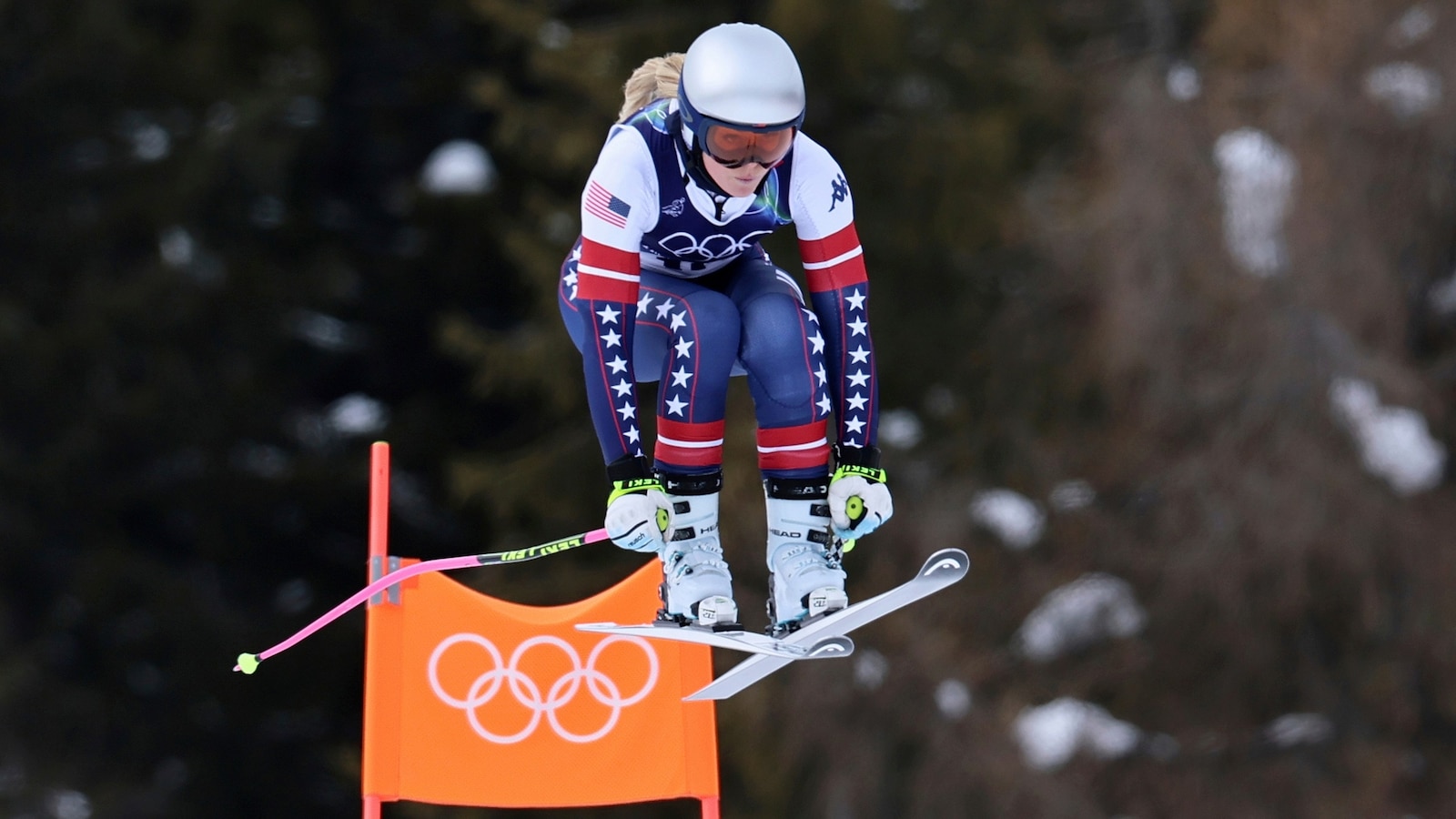
At 41 years old, Lindsey Vonn continues to prove why she’s considered one of the greatest skiers in Olympic history. During a recent official women’s downhill training session at the 2026 Winter Olympics in Cortina d’Ampezzo, Italy, the decorated American athlete took to the slopes despite facing what would be a career-ending setback for most competitors. Her Friday training run placed her in ninth position, a respectable showing under any circumstances, but what makes this performance truly extraordinary is what happened just one week prior: Vonn tore the anterior cruciate ligament (ACL) in her left knee, an injury that would typically sideline athletes for months, if not end their competitive season entirely. While her cautious approach to the training run was evident, the mere fact that she’s competing at all has left sports medicine experts marveling at her exceptional physical conditioning and mental fortitude. As Dr. Alexis Colvin, a sports medicine surgeon at Mount Sinai Hospital who has extensive experience working with elite athletes at the U.S. Olympic Training Center in Colorado Springs, put it bluntly: “She’s built differently than the rest of us.”
Understanding the ACL and Why This Injury Is So Serious
To appreciate the magnitude of what Vonn is attempting, it’s important to understand what the ACL actually does and why its loss is so debilitating for most people. The anterior cruciate ligament is a crucial piece of connective tissue that runs through the center of the knee, linking the thigh bone (femur) to the shin bone (tibia). Dr. Colvin describes it perfectly as “a seatbelt in the knee” – it’s the primary structure responsible for preventing the shin bone from sliding too far forward relative to the thigh bone and provides rotational stability during movement. While the ACL doesn’t play an essential role in every type of movement (you can walk, for instance, without one), it becomes critically important during activities that involve sudden changes of direction, jumping, landing, or the kind of high-speed maneuvering required in downhill skiing. ACL tears are alarmingly common, representing more than half of all knee injuries and affecting over 200,000 people in the United States annually, according to research published in the Clinics in Sports Medicine journal. For the average person, skiing with a torn ACL would be not just inadvisable but likely impossible without risking further damage to the knee joint.
The Gender Gap in ACL Injuries
What makes Vonn’s situation even more challenging is that she faces physiological factors that put her at increased risk for ACL injuries in the first place. According to clinical guidelines from the American Academy of Orthopaedic Surgeons, girls and women are significantly more vulnerable to ACL tears during sports participation due to a combination of anatomical, hormonal, and biomechanical differences. The alignment of women’s knees, influenced by wider hips and different angles where the thigh bone meets the shin bone, creates different stress patterns on the ligament. Hormonal fluctuations throughout the menstrual cycle can also affect ligament laxity, potentially increasing injury risk at certain times. Perhaps most significantly, women tend to move differently than men during high-risk activities – the way female athletes typically land from jumps, cut during direction changes, or pivot can place greater strain on the ACL. Dr. Riley J. Williams, chief of sports medicine at the Hospital for Special Surgery and professor of orthopedic surgery at Weill Cornell Medical College, notes that the statistics are striking: “Women injure their ACL 2.2 times more than men.” This gender disparity makes Vonn’s ability to compete with a torn ACL even more remarkable, as she’s not only overcoming an injury that would sideline most athletes but doing so while facing biomechanical challenges specific to female physiology.
The Secret to Vonn’s Superhuman Performance
So how is Lindsey Vonn accomplishing what seems impossible? According to sports medicine experts, it comes down to a rare combination of exceptional physical conditioning, neuromuscular control, and sport-specific adaptations that researchers have termed “ACL coping.” Some elite athletes possess the ability to continue high-level activities after an ACL tear by essentially having their muscles compensate for what the damaged ligament can no longer do. In Vonn’s case, years of Olympic-level training have developed the muscles surrounding her knee – including her core, hips, quadriceps, hamstrings, and gluteal muscles – to operate at the absolute pinnacle of human performance. These muscles work together to provide stability and control that can partially offset the loss of her ACL. Dr. Williams explained that this extraordinary conditioning improves joint control and reduces unwanted knee motion, even when the ACL isn’t functioning. “Her tolerance for speed and demand is greater than a normal person,” he noted, highlighting how Vonn’s body has been trained to handle forces and movements that would overwhelm someone without her elite conditioning. Additionally, after thousands of downhill runs throughout her career, Vonn’s neuromuscular system has developed incredibly refined control specific to skiing movements, allowing her brain and muscles to work together with precision that helps compensate for the compromised ligament. It’s this unique combination of factors that allows her to do what most people couldn’t dream of attempting.
The Risks Remain Despite the Brace
While Vonn acknowledged in a recent news conference that she has “the help of a knee brace,” medical experts caution that even the most advanced bracing technology has significant limitations when it comes to protecting an ACL-deficient knee during the extreme demands of Olympic downhill skiing. Dr. Williams explained that while knee braces can provide valuable support for side-to-side movements, they have a critical weakness: “The brace is very helpful for side to side, but what it does not do is protect you from rotation. As she’s going from one direction to the other, doing those fast turns down the hill, there’s a rotational component that even the tightest braces are not going to protect you from.” This rotational force is particularly concerning in downhill skiing, where athletes regularly exceed speeds of 80 miles per hour while carving aggressive turns that generate enormous twisting forces on the knee. Without a functioning ACL to resist these rotational movements, there’s an increased risk of further damage to other knee structures, including the meniscus (cartilage cushions), other ligaments, and the articular cartilage that covers the bone surfaces. Every turn Vonn makes carries the potential for catastrophic additional injury that could end not just her Olympic dreams but potentially cause permanent damage requiring extensive surgical intervention. Yet she continues, demonstrating the kind of courage and determination that has defined her legendary career.
Looking Ahead: Surgery and the Race Against Time
For most people facing an ACL tear, the path forward involves physical therapy followed by surgical reconstruction, particularly if they hope to return to demanding athletic activities. Dr. Colvin was clear on this point: “If your goal is to restore the ACL, the only way you can actually do that is with surgery.” Large-scale medical studies consistently show that active adults who want to return to sports involving cutting, pivoting, or jumping movements typically opt for surgical reconstruction to restore long-term knee stability and reduce the risk of further joint damage. However, Vonn faces a unique calculation. With the women’s downhill race scheduled for Sunday, she’s chosen to delay any surgical intervention to pursue one more shot at Olympic glory. It’s a decision that perfectly encapsulates the mindset that has made her one of the most successful ski racers in history, with three Olympic medals and 82 World Cup victories to her name. Dr. Williams summed up the situation with a rhetorical question that speaks volumes: “Who would you pick to try to ski Olympic downhill without an ACL? It would be Lindsey Vonn.” As she prepares for Sunday’s race, the sporting world watches in awe at an athlete who continues to redefine what’s possible, competing at the highest level despite an injury that would keep virtually anyone else off the mountain. Whether she medals or not, Vonn has already achieved something extraordinary simply by taking to the starting gate, proving once again that champions are indeed built differently.