
The Fall of El Mencho: Mexico Returns Drug Lord’s Body After Deadly Retaliatory Violence
Historic Capture Ends Reign of Mexico’s Most Wanted Kingpin
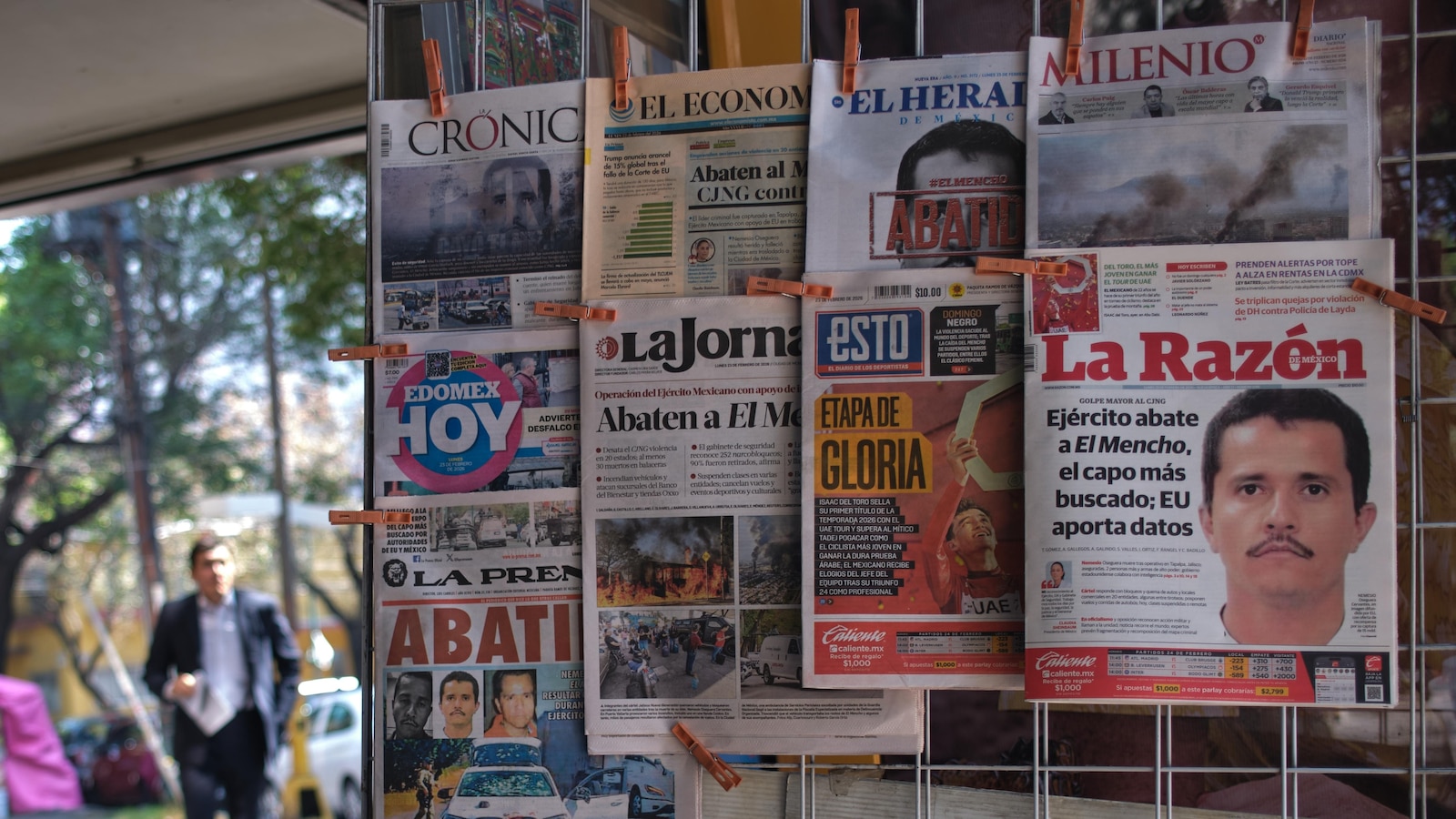
In a significant development that marks the end of an era in Mexico’s ongoing battle against organized crime, authorities have officially returned the body of Nemesio Oseguera Cervantes, infamously known as “El Mencho,” to his family following his death at the hands of the Mexican army. The Mexican Attorney General’s Office confirmed the handover on Saturday through a brief statement on social media platform X, noting that all necessary legal procedures had been completed before releasing the remains. To ensure proper identification and verify familial relationships, genetic testing was conducted to confirm blood ties between the deceased drug lord and the family member who requested custody of the body. This seemingly routine bureaucratic process represents the closing chapter of a manhunt that spanned over a decade and involved cooperation between Mexican and United States law enforcement agencies. El Mencho had been Mexico’s most wanted criminal and one of the world’s most notorious drug traffickers, with the United States government offering an unprecedented $15 million reward for information leading to his capture. His death represents the most significant victory for Mexican authorities in their efforts to dismantle the powerful drug cartels that have plagued the nation for decades.
Wave of Violence Sweeps Across Twenty States
The killing of El Mencho, however, did not bring immediate peace to Mexico. Instead, his death triggered an explosive wave of retaliatory violence that swept across approximately twenty states throughout the country, demonstrating the extensive reach and influence the Jalisco New Generation Cartel had established during his leadership. In the aftermath of the military operation that claimed El Mencho’s life, more than seventy people lost their lives in what security analysts describe as coordinated attacks by cartel members seeking vengeance for their fallen leader. The violence manifested in various forms across different regions, including attacks on military installations, ambushes of police officers, roadblocks set ablaze to paralyze transportation routes, and targeted killings of suspected informants or rival gang members. The widespread nature of these retaliatory strikes illustrated not only the organizational capabilities of the cartel but also the deep loyalty El Mencho commanded among his operatives. Communities throughout Mexico found themselves caught in the crossfire as cartel members clashed with security forces and rival organizations attempted to capitalize on the power vacuum created by the drug lord’s death. The intensity and geographic spread of the violence served as a stark reminder of how deeply organized crime has embedded itself into the fabric of Mexican society and the challenges authorities face in maintaining order even after eliminating top-tier criminal leadership.
Tourism Industry Faces Uncertainty Ahead of World Cup
The timing of El Mencho’s death and the subsequent violent upheaval has created particular concern regarding Mexico’s tourism sector, especially with the FIFA World Cup scheduled to take place later this year. Mexico is set to co-host the prestigious international sporting event alongside the United States and Canada, with multiple matches planned in Mexican cities that are expected to attract hundreds of thousands of international visitors. The recent spike in violence has sparked fears among tourism officials, business owners, and government authorities that potential visitors might reconsider their travel plans if security conditions continue to deteriorate. The tourism industry represents a vital component of Mexico’s economy, generating billions of dollars in revenue annually and providing employment for millions of Mexican citizens across hospitality, transportation, and service sectors. International media coverage of the cartel violence, combined with travel advisories issued by foreign governments, could significantly impact visitor numbers during what should be one of the country’s most lucrative tourism periods. Mexican officials are now faced with the delicate challenge of reassuring the international community that adequate security measures are in place to protect tourists while simultaneously managing the ongoing security crisis triggered by the power struggle within the Jalisco New Generation Cartel. The government has already begun deploying additional security forces to tourist destinations and World Cup host cities, but whether these measures will be sufficient to maintain both actual safety and the perception of security remains an open question that will likely be answered in the coming months.
Expert Analysis: The Violence Isn’t Over Yet
Security experts and analysts specializing in Mexican organized crime warn that the handover of El Mencho’s body to his family, while symbolically significant, is unlikely to mark the end of violence associated with his death. David Mora, a senior analyst and Mexico expert at the International Crisis Group, a global think tank focused on conflict prevention and resolution, offered insights into what might come next for the region. “I don’t think handing over the body to the family is going to recreate the havoc,” Mora stated, suggesting that the initial wave of retaliatory violence has likely run its course. However, he cautioned that this doesn’t mean peace is on the horizon. “The violence that is going to come next is going to play out differently,” he explained, pointing to the inevitable reorganization that the Jalisco New Generation Cartel must undergo following the loss of its supreme leader. The death of a cartel boss of El Mencho’s stature creates a leadership vacuum that multiple lieutenants and regional commanders will likely compete to fill, potentially triggering internal power struggles within the organization itself. Beyond internal conflicts, Mora highlighted the probability of turf wars between smaller criminal groups that may see this moment of transition as an opportunity to challenge the cartel’s territorial control or to forge new alliances. The fragmentation of large cartels into smaller, competing factions has been a recurring pattern in Mexico’s drug war, often leading to prolonged periods of violence as these groups fight for control of drug trafficking routes, extortion territories, and other criminal enterprises that generate billions of dollars in illicit profits.
The Rise and Reign of the Jalisco New Generation Cartel
The Jalisco New Generation Cartel, which El Mencho built into one of Mexico’s most formidable criminal organizations, has a relatively recent but explosive history in the landscape of Mexican organized crime. The cartel began operating around 2009, emerging during a period of significant upheaval in Mexico’s criminal underworld as the government’s military strategy against drug trafficking organizations led to the fragmentation of older, established cartels. What distinguished the Jalisco New Generation Cartel from many of its competitors was its aggressive expansion strategy, military-style tactics, and willingness to directly confront both rival organizations and government forces. Under El Mencho’s leadership, the cartel rapidly expanded from its base in Jalisco state to establish operations throughout Mexico and in numerous foreign countries, including the United States, Europe, Asia, and Australia. The organization became involved in virtually every aspect of the drug trade, from methamphetamine production and cocaine trafficking to heroin distribution and synthetic opioid manufacturing. Beyond narcotics, the cartel diversified its criminal portfolio to include fuel theft, extortion, kidnapping, human trafficking, and illegal mining operations. The cartel’s reputation for extreme violence and sophisticated operations made it one of the most feared criminal organizations in the Western Hemisphere. In February 2025, the Trump administration took the unprecedented step of designating the Jalisco New Generation Cartel as a foreign terrorist organization, a classification that carries significant legal and diplomatic implications and enables U.S. authorities to employ additional tools in combating the group’s activities and financial networks.
A Trophy for Diplomatic Relations
The death of El Mencho represents far more than a law enforcement victory for the Mexican government; it serves as a critical diplomatic achievement in the country’s complicated relationship with the United States, particularly under the current Trump administration. Mexican authorities have positioned the successful operation against El Mencho as tangible evidence of their commitment to confronting the powerful drug cartels that have been a central concern in bilateral discussions between the two nations. The timing of this operation is particularly significant given the heightened pressure Mexico has faced from U.S. officials demanding more aggressive action against cartels, especially in light of the recent foreign terrorist organization designation. For President Trump’s administration, which has made border security and the fight against drug trafficking central pillars of its policy agenda, the elimination of one of the world’s most wanted drug lords provides validation for its tough stance on Mexico and the cartel threat. The $15 million reward that the U.S. State Department had offered for information leading to El Mencho’s arrest underscored the priority American authorities placed on his capture and the threat they believed he posed to U.S. national security interests. Mexican officials are likely hoping that this demonstration of effective action against a top-tier cartel leader will ease some of the diplomatic pressure from Washington and potentially lead to increased cooperation and support in future counter-narcotics efforts. However, as security experts have noted, the ultimate measure of success will not be the death of one man, regardless of his stature, but whether Mexican authorities can prevent the violence and criminal activity from simply reorganizing under new leadership and continuing the cycles of bloodshed that have claimed hundreds of thousands of lives over the past two decades of Mexico’s ongoing drug war.