
Deadly Crash in Mexico Raises Questions About U.S.-Mexico Security Cooperation
Demanding Answers After a Tragic Accident
The death of two U.S. Embassy officials and two Mexican state investigators in a fiery car crash in northern Mexico has sparked a significant diplomatic incident between the United States and Mexico. Mexican President Claudia Sheinbaum announced Monday that she would be demanding a full explanation of what American and Mexican officials were doing in the remote mountains of Chihuahua state when their vehicle plunged into a ravine over the weekend. The accident occurred as the group was returning from an operation to destroy clandestine drug laboratories in a rugged, rural area known for cartel activity. What makes this tragedy particularly sensitive is Sheinbaum’s assertion that any collaborative security operations between Mexican state governments and U.S. officials without explicit federal authorization would constitute a violation of Mexican law. The incident has exposed confusion and apparent contradictions in the accounts provided by Sheinbaum’s administration, local Chihuahua officials, and the U.S. Embassy, with each offering sparse and sometimes conflicting details about who the Americans were, what they were doing there, and whether proper protocols were followed. This tragedy comes at an especially delicate moment in U.S.-Mexico relations, as Mexico faces mounting pressure from President Trump’s aggressive stance on combating drug cartels, while President Sheinbaum simultaneously works to assert Mexico’s sovereignty and independence in security matters.
The Fatal Operation and Its Aftermath
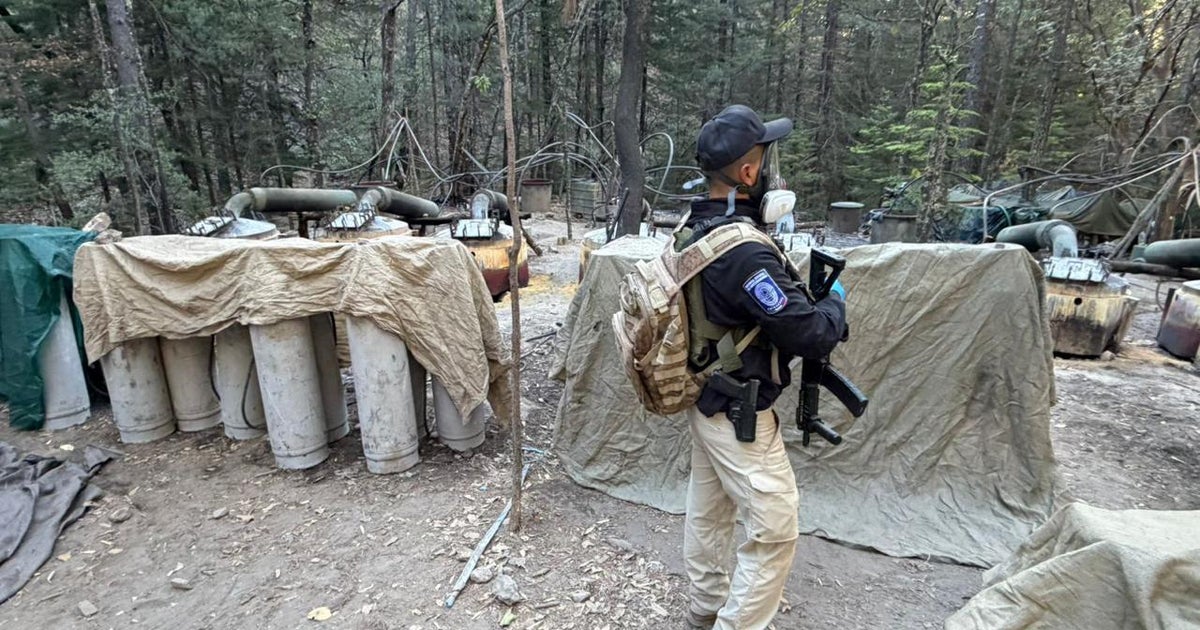
According to Chihuahua Attorney General César Jáuregui, the four officials died in the early morning hours while traveling through treacherous mountain terrain that connects Chihuahua state to neighboring Sinaloa, a region long dominated by powerful drug trafficking organizations. The vehicle, navigating the dangerous roads in the middle of the night, apparently skidded and tumbled into a deep ravine, where it exploded on impact. The Mexican victims were identified as Pedro Román Oseguera Cervantes, a first commander in the state investigation agency, and officer Manuel Genaro Méndez Montes. Jáuregui initially characterized the two American fatalities as U.S. Embassy “instructors” who were participating in routine “training work” with their Mexican counterparts. The operation they had just completed involved the destruction of what officials described as one of the largest methamphetamine production sites ever discovered in Mexico. Using drone surveillance, authorities located tons of drug manufacturing materials in the mountains between the communities of Morelos and Guachochi, though the people operating the labs had apparently been tipped off and fled before authorities arrived. The U.S. Embassy, while expressing condolences and honoring the dedication of those who died, declined to identify the American officials or specify which U.S. government agency employed them, saying only that they were “supporting Chihuahua state authorities’ efforts to combat cartel operations.”
A Web of Contradictions and Confusion
The aftermath of the crash has been marked by a confusing tangle of statements, clarifications, and apparent contradictions that have only deepened questions about what actually happened. President Sheinbaum told journalists that “it was not an operation that the security cabinet was aware of,” emphasizing that her federal government had not been informed and characterizing the operation as a decision made independently by Chihuahua’s state government. However, Attorney General Jáuregui indicated that the operation had followed months of investigation by state prosecutors working in coordination with Mexico’s federal military forces, suggesting at least some level of involvement from Sheinbaum’s own security apparatus. Hours after Sheinbaum’s comments, the Mexican Security Cabinet confirmed that the army and state prosecutor’s office had indeed carried out a joint operation over the weekend in Chihuahua, specifically in the Morelos area where the drug labs were dismantled. Adding to the confusion, the local official later backtracked on his initial account, clarifying to the press that “there were no U.S. agents in the operation to secure the narco-lab,” and claiming that the embassy officials had only joined the group after the operation was completed and were several hours away from where the actual law enforcement action took place. These contradictions have fueled speculation about the true extent of U.S. involvement in Mexican security operations and whether proper legal protocols were followed.
Sovereignty, Cooperation, and Legal Boundaries
President Sheinbaum made clear that her government would investigate the incident thoroughly to ensure that no Mexican laws were violated, emphasizing that state governments must obtain explicit authorization from the federal government before collaborating with U.S. or other foreign entities, “as established by the Constitution.” She insisted that “there are no joint operations on land or in the air” currently taking place in Mexico, stating that cooperation between her government and the United States is limited to intelligence sharing conducted within a “well-established” legal framework. The presence of U.S. officials on Mexican territory has long been a sensitive subject in the relationship between the two countries, touching on deep-seated concerns about sovereignty and the legacy of past interventions. While it’s well-known that U.S. officials regularly provide training to Mexican security forces, the exact nature and extent of American involvement in on-the-ground operations remains deliberately opaque and contested. This debate has intensified significantly since President Trump’s return to office and his administration’s increasingly aggressive military actions in other countries, including operations in Venezuela and Iran. Trump has repeatedly suggested that he might take direct military action against Mexican drug cartels, an idea that Sheinbaum has firmly rejected as “unnecessary,” while the Trump administration has already launched joint military operations in Ecuador, another country struggling with cartel violence.
A Pattern of Controversial U.S. Involvement
The fatal crash in Chihuahua is just the latest incident to raise uncomfortable questions about American security operations in Mexico. Last year, President Sheinbaum acknowledged that U.S. surveillance drones had conducted flights over Mexican territory at her government’s request, but only after a series of conflicting public statements on the issue that alarmed many observers who saw it as a potential erosion of Mexican sovereignty. More recently, controversy erupted in January over the detention in Mexico of Ryan Wedding, a former Canadian athlete who had become one of the United States’ most wanted fugitives. Mexican officials claimed that Wedding had simply surrendered at the U.S. Embassy in Mexico City, while American authorities described his capture as the result of a coordinated binational operation—yet another example of the two governments offering incompatible accounts of security cooperation. These incidents reflect the inherent tension in the relationship: the United States wants more aggressive action against cartels and greater involvement in Mexican security operations, while Mexican officials are acutely sensitive to any perception that they are allowing foreign interference in their internal affairs. The confusion and contradictions surrounding such incidents suggest that there may be security cooperation happening that doesn’t fit neatly within the official legal frameworks that both governments publicly acknowledge, creating a gray zone where accountability becomes murky.
High Stakes at a Critical Moment
This deadly accident and the diplomatic friction it has generated comes at an especially critical juncture for U.S.-Mexico relations. The same day that President Sheinbaum was demanding answers about the Chihuahua operation, Mexico City was preparing to host the second round of negotiations on the United States-Mexico-Canada free trade agreement (USMCA), with the U.S. delegation led by Trade Representative Jamieson Greer scheduled to meet with the Mexican president. Also on Monday, the Trump administration announced it was imposing visa restrictions on family members of Cartel de Sinaloa members, demonstrating the administration’s determination to maintain pressure on Mexican cartels through whatever means available. Mexico has ramped up its public efforts against drug manufacturing operations in recent months, particularly after President Trump threatened possible military intervention to combat cartels. In February, Mexican naval personnel discovered and neutralized over 5,000 pounds of methamphetamine at a hidden laboratory in Durango state. In January, authorities announced that more than 1,500 pounds of meth had been seized from clandestine laboratories across Durango, Sinaloa, and Michoacán. Whether these operations represent genuine Mexican determination to combat cartels or a strategic effort to demonstrate action sufficient to forestall American military intervention remains an open question. What is clear is that the relationship between these two neighboring nations is navigating treacherous terrain—much like the mountain roads where four officials lost their lives—as both countries try to balance security cooperation with respect for sovereignty, transparency with operational secrecy, and mutual interests with domestic political pressures.