
Mass Flight Disruptions Across Middle East Leave Thousands Stranded
Major Airport Closures Ground Regional Travel
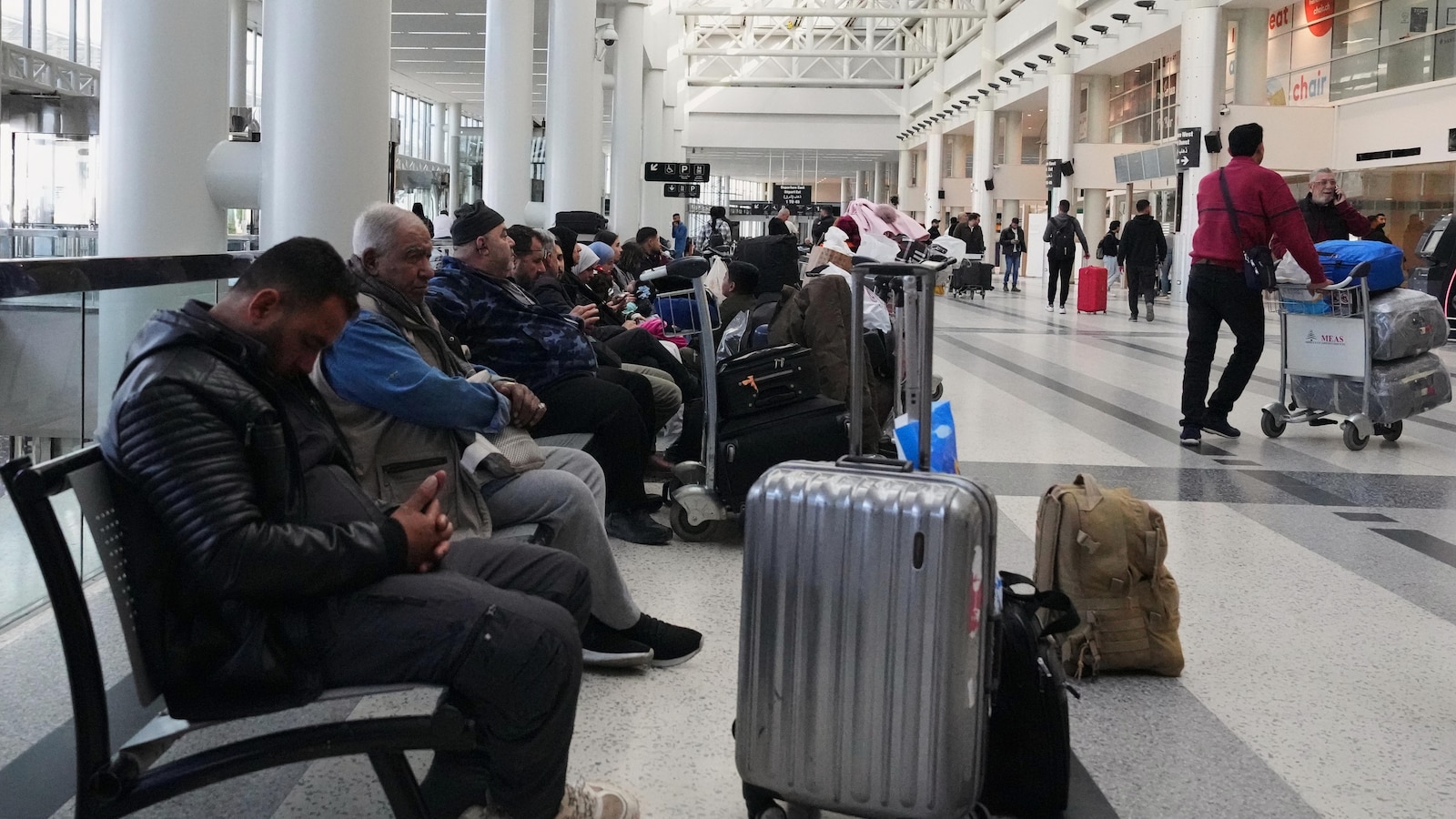
The recent military strikes on Iran by the United States and Israel have created unprecedented chaos for air travel throughout the Middle East, leaving tens of thousands of passengers stranded at airports around the world. What began on Saturday with coordinated military action quickly escalated into one of the most significant disruptions to international aviation in recent memory. As the conflict entered its second day on Sunday, major transportation hubs remained shuttered, with no clear timeline for when normal operations might resume. The ripple effects extended far beyond the immediate region, affecting travelers on multiple continents who rely on Middle Eastern airports as crucial connection points between Europe, Africa, Asia, and the West.
The scale of the disruption became apparent as seven countries simultaneously closed their airspace, including Israel, Qatar, Syria, Iran, Iraq, Kuwait, and Bahrain. The United Arab Emirates announced a “temporary and partial closure” that effectively grounded all flight activity over its territory. These closures forced the shutdown of some of the world’s busiest airports, including Dubai International Airport, Abu Dhabi’s Zayed International Airport, and Doha’s Hamad International Airport. The three major carriers operating from these hubs—Emirates, Qatar Airways, and Etihad—normally handle approximately 90,000 passengers daily, with even higher numbers when counting those traveling to regional destinations. By Saturday alone, more than 1,800 flights had been canceled, leaving hundreds of thousands of travelers scrambling for alternatives or simply waiting helplessly for updates.
Deadly Incidents at Major Aviation Facilities
Beyond the logistical nightmare of canceled flights, the conflict turned deadly at several airport locations. Dubai International Airport, one of the busiest aviation facilities globally, reported that four people sustained injuries during the strikes. The situation proved even more tragic at Abu Dhabi’s Zayed International Airport, where officials confirmed one fatality and seven additional injuries resulting from a drone strike. Kuwait International Airport also reported being struck during the attacks. The UAE government strongly condemned what it characterized as a “blatant attack involving Iranian ballistic missiles,” though Iran had not publicly claimed responsibility for the strikes by the time these reports emerged. What made the situation particularly concerning was that the retaliatory strikes attributed to Iran by Gulf nations appeared to extend well beyond the American military bases that Iranian officials had previously indicated would be their targets, suggesting a potentially broader conflict than initially anticipated.
The Human Cost: Travelers Left in Limbo
For ordinary travelers caught in the crossfire of geopolitical conflict, the experience has been frustrating and bewildering. Jonathan Escott’s story illustrates the confusion many passengers faced. He and his fiancée arrived at Newcastle Airport in England on Saturday morning, excited for their journey to Dubai on Emirates Airlines, only to discover their direct flight had been canceled with no information about when they might be able to travel. After spending time at the airport seeking answers that never came, they made the hour-long journey back to stay with family, their travel plans indefinitely postponed. “No one knows,” Escott explained with palpable frustration. “No one really knows what’s going on with the conflict, really. Not Emirates, Emirates don’t have a clue. No one has a clue.” His experience reflects that of countless others worldwide who found themselves suddenly stranded without clear guidance or timelines for resolution.
The disruption affected flights already in progress as dramatically as those yet to depart. Flight tracking data from FlightAware showed that at least 145 aircraft en route to destinations like Tel Aviv and Dubai were forced to divert to alternative airports in cities including Athens, Istanbul, and Rome. Some flights made the difficult decision to turn back entirely, returning passengers to their points of origin after hours in the air. In one particularly striking example, a flight that departed Philadelphia made it all the way to Spanish airspace—spending nearly 15 hours airborne—before circumstances forced it to turn around and return to Philadelphia. Passengers on that flight experienced the exhausting journey of crossing the Atlantic twice without ever reaching their intended destination, a testament to how suddenly and completely the situation evolved.
Industry Impact and Operational Challenges
Aviation industry experts warn that the complications extend far beyond simple cancellations and will likely affect ticket prices and flight operations for days or weeks to come. Henry Harteveldt, an airline industry analyst and president of Atmosphere Research Group, offered a blunt assessment: “For travelers, there’s no way to sugarcoat this. You should prepare for delays or cancellations for the next few days as these attacks evolve and hopefully end.” Airlines operating routes that normally cross Middle Eastern airspace must now chart alternative paths, typically routing south over Saudi Arabia, which adds significant flight time and fuel consumption. These additional operational costs will likely be passed on to consumers through higher ticket prices if the conflict continues. The increased traffic over Saudi Arabia also creates pressure on that country’s air traffic control system, potentially requiring officials to slow traffic flows to maintain safety standards. Meanwhile, countries with closed airspace are losing out on the overflight fees that airlines normally pay for permission to cross their territory.
However, Mike McCormick, a former Federal Aviation Administration air traffic control overseer now teaching at Embry-Riddle Aeronautical University, suggests there may be some hope for partial reopening of airspace in the coming days. He explains that once American and Israeli military officials share information with civilian aviation authorities about where military operations are occurring and assess Iran’s remaining missile capabilities, affected countries may be able to selectively reopen portions of their airspace while keeping high-risk areas restricted. “So I think what we’ll see in the next 24 to 36 hours is how the use of airspace evolves as the kinetic activity gets more well defined and as the capability of Iran to actually shoot missiles and create additional risk is diminished due to the attacks,” McCormick noted. Still, uncertainty remains about the overall duration of these disruptions, with historical precedent offering little comfort—a similar attack on Iran in June 2025 resulted in flight disruptions lasting 12 days.
Global Response and Path Forward
Airlines worldwide responded swiftly to the developing crisis, with carriers from multiple continents suspending service to affected regions. India’s civil aviation agency designated much of the Middle East—including airspace over Jordan, Saudi Arabia, and Lebanon—as a high-security risk zone at all altitudes, prompting Air India to cancel all flights to Middle Eastern destinations. Turkish Airlines suspended flights to Lebanon, Syria, Iraq, Iran, and Jordan until Monday, and to Qatar, Kuwait, Bahrain, the UAE, and Oman for similar periods, while warning that additional cancellations might be necessary. U.S. carriers Delta Air Lines and United Airlines halted Tel Aviv service through the weekend at minimum, while Dutch carrier KLM extended its existing suspension of Tel Aviv flights. European airlines including Lufthansa, Air France, Transavia, and Pegasus canceled all Lebanon flights, and American Airlines suspended its Philadelphia-to-Doha route. Virgin Atlantic announced it would avoid Iraqi airspace, already steering clear of Iran, meaning flights to India, the Maldives, and Riyadh would take longer than usual. British Airways suspended flights to Tel Aviv and Bahrain until the following week, while canceling Saturday flights to Amman, Jordan.
Airlines have been urging passengers to check flight status online before heading to airports and have issued travel waivers allowing affected customers to rebook without the typical change fees or fare differences. Nevertheless, Harteveldt’s advice to travelers reflects the serious nature of the situation: “Travelers should anticipate that there will be a lot of disruptions. To be honest, if you haven’t left home, chances are you won’t be leaving home if you’re supposed to travel to or through these destinations for at least several days, if not longer. And if you are returning home, you will have to be very creative about how you get home.” As the conflict continues and the full extent of the damage and geopolitical consequences becomes clearer, the aviation industry faces one of its most challenging operational periods in recent years, with the potential for widespread effects on global travel patterns, airline finances, and passenger confidence in Middle Eastern routes that have become vital connectors in the worldwide aviation network.