


Mississippi’s New Abortion Pill Law: What It Means for Women and Healthcare Providers
A Sweeping New Criminal Penalty for Abortion Medication
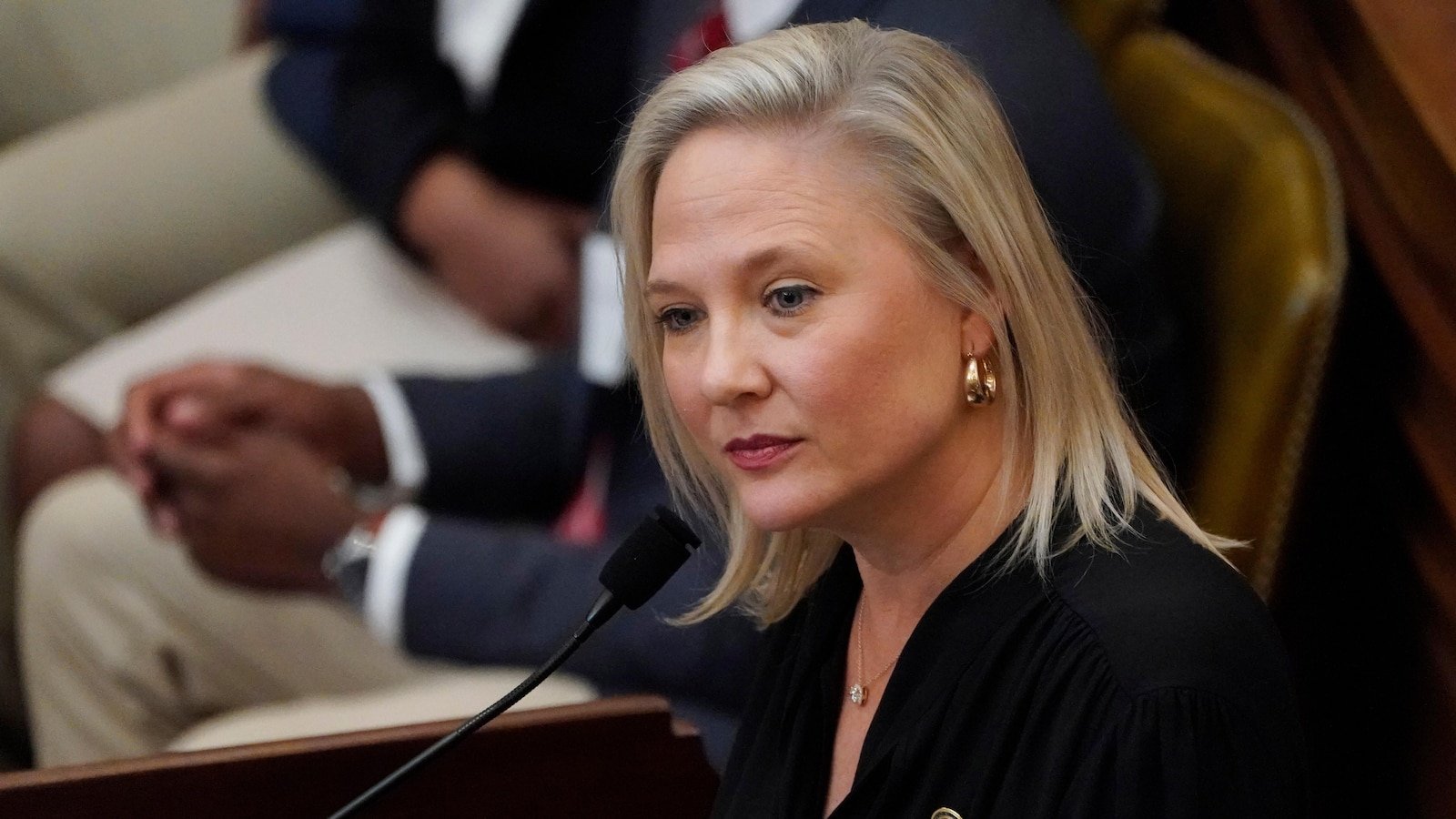
Mississippi lawmakers have passed controversial legislation that could send people to prison for up to 10 years if they distribute or intend to distribute abortion-inducing medication within the state. The bill, which now heads to Republican Governor Tate Reeves for his signature, represents one of the most aggressive state-level attempts to control access to abortion pills following the Supreme Court’s 2022 Dobbs decision that eliminated federal abortion protections. The legislation passed with strong Republican support—76-38 in the House and 37-15 in the Senate—but has sparked serious concerns among legal experts, healthcare advocates, and Democratic lawmakers who warn it will trap desperate women in the criminal justice system while creating a chilling effect on legitimate medical care. Representative Celeste Hurst, the Republican from Sandhill who introduced the amendment adding abortion medication restrictions to a broader drug trafficking bill, stated her goal was straightforward: keep abortion pills like mifepristone and misoprostol from entering Mississippi and prevent out-of-state doctors from circumventing the state’s existing abortion ban. However, the practical implications of this law extend far beyond its stated intent, potentially affecting everyone from women seeking reproductive autonomy to physicians treating pregnancy complications.
The Reality: Who Will Actually Face Prosecution?
While supporters of the bill claim it targets out-of-state abortion providers who mail pills to Mississippi residents, legal experts say this scenario is highly unlikely to result in actual prosecutions. Mary Ziegler, a prominent abortion law expert and professor at the University of California at Davis School of Law, explains that shield laws in states where abortion remains legal specifically protect abortion providers, patients, and helpers from out-of-state investigations, lawsuits, and prosecutions. This means Mississippi prosecutors would face enormous legal obstacles trying to bring charges against doctors or pharmaceutical companies operating in pro-choice states. Instead, the people most vulnerable under this new law are Mississippians themselves—particularly women who obtain abortion pills for their own use and anyone who might help them. “I think lawmakers are imagining this will be primarily used against doctors or drug manufacturers in blue states,” Ziegler noted, “but it will be much harder for prosecutors to actually get those people into court than it will be for them to get someone whose partner has these drugs.” This creates a troubling reality where the law’s practical enforcement will fall most heavily on Mississippi residents, especially women and their immediate support networks, rather than the out-of-state providers it ostensibly targets.
Dangerous Vagueness and Unintended Medical Consequences
What makes this legislation particularly problematic, according to legal and medical experts, is its vague language that creates gray areas in enforcement. The bill states that possession of abortion-inducing drugs would only be criminal if there’s an “intent to distribute,” but Ziegler expects that Mississippians using the drugs for their own purposes could still face prosecution based on how authorities interpret this intent standard. Even more concerning is the bill’s impact on legitimate medical care. Medications like mifepristone and misoprostol aren’t used exclusively for abortions—they’re essential tools for managing miscarriages and stopping potentially fatal postpartum hemorrhaging. The legislation includes an exemption stating that Mississippi healthcare providers would only be prosecuted if they prescribed these medications with the intent to cause an abortion, not when used for other medical purposes. However, Ziegler warns this exemption will likely create a “chilling effect” on healthcare, as doctors may become too fearful to prescribe these medications even in clearly appropriate clinical situations. The problem, she explains, is that “the differentiator is intent, which is really, really hard to prove.” A physician treating a woman experiencing a miscarriage might hesitate before prescribing medications that could theoretically be questioned by prosecutors, potentially putting patients’ health and lives at risk.
The Politics Behind the Crackdown
This aggressive legislative push stems from frustration within the anti-abortion movement over an unexpected development: despite the Supreme Court’s 2022 Dobbs decision—which originated from a Mississippi case and was initially celebrated as a major victory for abortion opponents—the actual number of abortions performed in the United States has paradoxically increased in recent years. This counterintuitive trend is largely attributed to the expanded availability of mail-order abortion medication, which has made the procedure more accessible even in states with strict bans. Women in restrictive states can now receive pills discreetly through the mail from providers in states where abortion remains legal, effectively bypassing local prohibitions. For lawmakers who fought for years to ban abortion in Mississippi, this reality represents a hollow victory. As Ziegler put it: “That’s kind of a hollow thing for the state if that happens and then the number of abortions doesn’t go down. It’s like, what did you really accomplish?” Senator Daniel Sparks, a Republican from Belmont who helped negotiate the final legislation, defended the measure as necessary to enforce Mississippi’s abortion ban consistently: “The state of Mississippi has been pretty clear of where they are about their pro-life position. If people are circumventing that through the mail or through other mechanisms, then I think we’re trying to be consistent with what the law is.” However, critics argue this approach prioritizes ideological consistency over practical reality and women’s wellbeing.
A Class Divide in Enforcement
One of the most pointed criticisms of the new law comes from Senator Bradford Blackmon, a Democrat from Canton, who called the legislation “outrageous,” “ridiculous,” and “unnecessary.” Blackmon’s central concern focuses on the unequal impact this law will have across economic lines. By attaching criminal penalties of one to ten years in prison for abortion medication offenses—treating these drugs similarly to scheduled controlled substances in drug trafficking statutes—the law creates severe consequences that will fall disproportionately on Mississippi’s poorest residents. “The wealthy Mississippians are still going to be able to go where they want to get abortions,” Blackmon observed, highlighting a fundamental inequality in how abortion restrictions function in practice. Women with financial resources can travel to states where abortion remains legal, pay for the procedure in a clinical setting, and return home without facing legal jeopardy. They can afford lawyers if questioned and have the social capital to navigate the system. Poor women in Mississippi, by contrast, may resort to ordering pills online because they cannot afford to travel out of state, cannot take time off work, or lack childcare for existing children. These are precisely the women most likely to face prosecution under the new law, potentially spending years in prison for seeking to control their own reproductive decisions.
The Human Cost of Criminalization
Representative Zakiya Summers, a Democrat from Jackson who voted against the bill, succinctly captured its fundamental problem: “I think we’re going to end up trapping a lot of people into the criminal justice system simply because they want to have autonomy over their own bodies.” This observation gets to the heart of what this legislation represents—not just an abortion restriction, but a criminalization of reproductive decision-making that will funnel women into Mississippi’s already overburdened prison system. The law creates a scenario where women facing unplanned pregnancies, often in difficult circumstances, could become felons with decade-long prison sentences. It means that someone who helps a friend, sister, or daughter obtain abortion pills could face prosecution. It means doctors might withhold life-saving medications from women experiencing pregnancy complications out of fear they could be accused of intending to cause an abortion. The broader implications extend beyond individual cases to affect the overall healthcare landscape in Mississippi, a state that already struggles with maternal mortality rates, healthcare access, and physician shortages. As this bill awaits Governor Reeves’s signature, Mississippi stands at a crossroads between enforcing ideological positions on abortion and confronting the real-world consequences of criminalizing reproductive healthcare—consequences that will be measured not just in legal precedents, but in women’s health, freedom, and lives.