



Unprecedented Heat Wave Sweeps Across America: What You Need to Know
Record-Breaking Temperatures Grip Two-Thirds of the Nation
If you’ve been feeling like this week’s weather is unusually warm, you’re absolutely right. A massive heat wave is spreading across the United States, bringing scorching temperatures that could shatter more than 100 daily temperature records from Thursday through the weekend. This isn’t just a minor warm spell—we’re talking about temperatures soaring 30 to 40 degrees above what’s normal for this time of year in many southwestern and central states. Weather experts, including CBS News meteorologist Nikki Nolan, are tracking this unprecedented event closely, and the numbers are genuinely alarming. Thursday alone could see more than 50 record highs broken across the western two-thirds of the country, affecting millions of Americans from coast to coast. This extreme weather event represents a continuation and intensification of unusual heat that began earlier in the week, already bringing temperatures to the region that have never been seen before at this time of year.
Major Cities Brace for Triple-Digit Heat
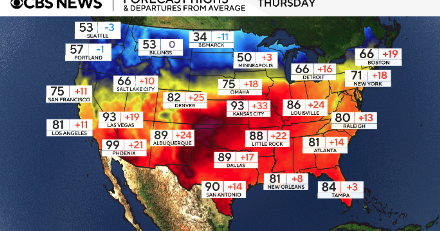
Some of America’s largest metropolitan areas are preparing for potentially record-shattering temperatures that will make stepping outside feel more like midsummer than late March. Phoenix, Arizona, is expected to bear the brunt of this heat wave, with forecasters predicting temperatures could hit 100 degrees Fahrenheit on Thursday. If that happens, it would break a 40-year-old record and mark the city’s second consecutive day of record-breaking heat after Wednesday also saw temperatures reach the century mark. For Phoenix residents, this means an extended stretch of triple-digit days that shows no signs of letting up anytime soon. But Phoenix isn’t alone in facing this extreme weather. Dallas could see the mercury climb to 89 degrees, breaking a record that stood since 2018. Meanwhile, in Amarillo, Texas, temperatures might soar all the way to 99 degrees—that would top the 2020 record for this date by a whopping 11 degrees. Other major cities like Indianapolis, Kansas City, Las Vegas, Louisville, and Nashville are all in the crosshairs of this heat dome, with the National Oceanic and Atmospheric Administration’s National Digital Forecast Database tracking potential records in each location.
The Heat Spreads from Coast to Coast
The geographic scope of this heat wave is truly remarkable. In Albuquerque, New Mexico, residents could experience an 88-degree day, a temperature not seen on this date since 1971—more than half a century ago. El Paso, Memphis, Oklahoma City, St. Louis, Tulsa, and Wichita are all forecast to potentially break their own daily records, with possible high temperatures exceeding 90 degrees. That’s extraordinary for late March, when many Americans would typically still be wearing jackets and dealing with the last remnants of winter. Wednesday already gave us a preview of what’s to come, with more than a dozen states setting new temperature records. Many cities hit 90 degrees or higher, and Denver experienced its hottest March day ever recorded—a particularly notable achievement given Colorado’s typically cooler spring climate. The fact that these records aren’t just being nudged slightly higher but are being obliterated by significant margins tells us this is no ordinary warm spell. This is a significant weather event that will be studied by meteorologists for years to come.
Understanding the Moving Heat Dome
What began as an unusual warm spell in the western United States last week has transformed into a slow-moving juggernaut of heat, gradually pushing eastward across the country. Weather experts describe this phenomenon as a heat dome—essentially a large area of high pressure that traps hot air beneath it, preventing cooler air from moving in and allowing temperatures to build day after day. By Friday, forecasters predict this heat wave will reach the southeastern coast, meaning states along the Atlantic seaboard that might have initially escaped the worst of the heat will soon be dealing with their own record-breaking temperatures. The journey of this heat wave across the country isn’t just about uncomfortable warmth, though—it’s also creating conditions that could fuel severe weather. As the massive heat dome moves across the Midwest, it may interact with cooler air masses, creating the perfect conditions for potentially dangerous storms. This combination of extreme heat and severe weather potential makes this week particularly challenging for emergency management officials and weather services across multiple states.
Why This Heat Wave Matters
You might be thinking, “Sure, it’s hot, but doesn’t weather break records all the time?” The answer is yes—but not like this. When we’re talking about 30 to 40 degrees above average temperatures, we’re discussing a level of deviation from normal that’s genuinely concerning. These aren’t just numbers on a thermometer; they represent real impacts on people’s lives, infrastructure, and the environment. Extreme heat is actually one of the deadliest weather phenomena, often more dangerous than hurricanes, tornadoes, or floods, yet it receives less attention because its effects are less immediately visible. Elderly people, young children, outdoor workers, and those without access to air conditioning are particularly vulnerable during heat waves like this one. Additionally, such extreme temperatures put enormous strain on electrical grids as everyone cranks up their air conditioners simultaneously, potentially leading to brownouts or blackouts. Agriculture is affected too—crops and livestock struggle in extreme heat, and if this warm pattern continues, it could have implications for growing seasons and food production.
Looking Ahead: What Comes Next
As we move through the end of the week and into the weekend, the big question on everyone’s mind is: when will this heat wave finally break? Unfortunately for those hoping for immediate relief, forecasts suggest the unusually warm temperatures will persist through Sunday at least, potentially setting dozens more records each day. The National Weather Service and local meteorologists will continue monitoring the situation closely, issuing heat advisories and warnings where appropriate. For residents in affected areas, this means taking precautions seriously—staying hydrated, limiting outdoor activities during the hottest parts of the day, checking on vulnerable neighbors and relatives, and never leaving children or pets in parked vehicles. From a bigger picture perspective, this March heat wave serves as yet another reminder of the changing patterns we’re seeing in weather across the United States and globally. While no single weather event can be attributed solely to climate change, the increasing frequency and intensity of extreme heat events fit the patterns that climate scientists have been predicting for decades. Whether this particular heat wave is a sign of what’s to come or simply an unusual weather anomaly, it’s certainly making March 2026 one for the record books—literally. As communities across the nation cope with these unprecedented temperatures, the experience serves as a powerful reminder of our vulnerability to extreme weather and the importance of being prepared for whatever Mother Nature sends our way.