
A Nation’s Hidden Tragedy: Mass Grave Discovery Casts Shadow Over Mexico’s World Cup Preparations
An Unthinkable Discovery in the Capital’s Outskirts
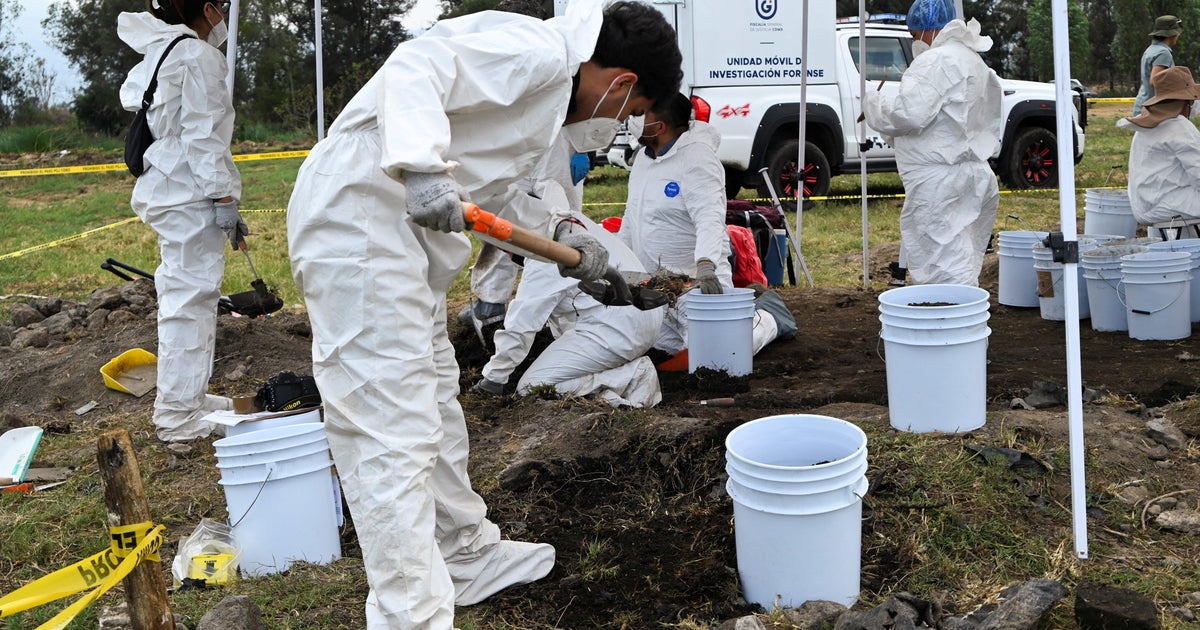
In a discovery that has shocked Mexico and the international community, more than 1,000 bone fragments have been unearthed near Lake Chalco on the outskirts of Mexico City, just weeks before the city is set to welcome the world for the FIFA World Cup. What began as a routine investigation by city authorities has transformed into a grim excavation revealing the devastating human cost of Mexico’s ongoing drug violence. While prosecutors initially reported finding approximately 300 bone fragments believed to belong to three individuals, volunteer search groups—composed primarily of families desperately seeking their missing loved ones—paint a far more horrific picture. These tireless volunteers, who have become experts in the grim task of searching for human remains, claim the actual number exceeds 1,000 fragments scattered across the lakefront site in eastern Mexico City. Perhaps most troubling is their assertion that many of these remains were found in areas already supposedly examined and cleared by government officials, raising serious questions about the thoroughness and commitment of official investigative efforts.
Families Demand the World Bear Witness
The collective of families searching for disappeared loved ones has refused to let this tragedy fade into the background, particularly as their country prepares to showcase itself on the world stage. In a powerful statement, these grieving families described the findings as evidence of a “devastating reality” and “a forensic crisis of incalculable dimensions” that has gripped their nation. Their words carry both anguish and accusation as they charge that “while the authorities want this to go unnoticed, the families want the whole world to know the tragedy that occurs in the country’s capital.” This isn’t just about finding remains; it’s about forcing acknowledgment of a crisis that has torn apart hundreds of thousands of families across Mexico. These volunteer groups, born from desperation and sustained by determination, have become an essential part of the search for truth in a country where official channels have repeatedly failed the families of the missing. Their presence at Lake Chalco represents not just a search operation but a demand for justice, accountability, and recognition that behind every bone fragment lies a human story—someone’s son or daughter, mother or father, whose disappearance has left an unfillable void in their family’s life.
The Staggering Scale of Mexico’s Missing Persons Crisis
To understand the significance of this latest discovery, one must grasp the almost incomprehensible scale of violence that has consumed Mexico since 2006, when the government first deployed federal troops to combat the country’s powerful drug cartels. The statistics are numbing in their magnitude: more than 480,000 people have been killed, and another 130,000 have simply vanished without a trace. These aren’t just numbers on a page—they represent mothers who never came home from work, young people who disappeared on their way to school, fathers who went out one day and were never seen again. The crisis has become so severe that a United Nations committee of experts has formally classified Mexico’s missing persons situation as a “crime against humanity.” This designation carries profound legal and moral weight, placing Mexico’s tragedy alongside some of the darkest chapters in human history. The UN committee didn’t mince words in assigning blame, stating that efforts to recover human remains and investigate disappearances have been systematically hampered by “acquiescence and omission on the part of public servants.” Committee chair Juan Albán-Alencastro emphasized that crimes against humanity don’t require nationwide orchestration from the highest government levels to qualify as such; what matters is the scale, the pattern of attacks, and the deliberate targeting of civilians—all boxes that Mexico’s crisis checks with horrifying clarity.
Political Tensions and the World Cup Spotlight
The timing of this discovery couldn’t be more sensitive for Mexico’s government, which finds itself caught between the international spotlight of hosting a World Cup and the harsh domestic reality of its ongoing security failures. Mexican President Claudia Sheinbaum has pushed back against international criticism, particularly the UN report characterizing the situation as crimes against humanity, arguing that it fails to acknowledge new policies her administration has implemented to support families of the disappeared. However, her defense rings hollow to the families who continue searching trash dumps, rural properties, and lakesides for any trace of their loved ones. As both Mexico City and Guadalajara prepare to host World Cup games in June, activists in both cities have organized protests to denounce what they see as the government’s failure to properly investigate disappearances and hold perpetrators accountable. The contrast is stark and uncomfortable: while Mexico prepares to welcome millions of international visitors and showcase its culture and hospitality, thousands of families remain trapped in limbo, not knowing whether their loved ones are alive or dead. The activists have made clear demands—they met with city officials and insisted that searches at sites like Lake Chalco continue without interruption until every inch has been thoroughly examined. For them, the World Cup isn’t a celebration but rather an opportunity to force the world to pay attention to their plight.
Guadalajara’s Dark Shadow: The Jalisco New Generation Cartel
The city of Guadalajara, which will co-host World Cup matches with Mexico City, carries its own burden of disappearances and violence. Located in Jalisco state, the region has recorded more than 15,900 cases of missing persons, a staggering toll that experts directly attribute to the activities of the Jalisco New Generation Cartel. This criminal organization has become notorious not just for drug trafficking but for its brutally efficient methods of recruitment and elimination of those who don’t comply with their demands. Reports indicate the cartel has used deceptively ordinary tactics—posting fake job advertisements to lure vulnerable people seeking legitimate employment—only to force them into criminal activity. Those who resist face torture and death, their bodies often dumped in clandestine graves that dot the Jalisco countryside. The discovery of human remains has become grimly routine in the region. Just this month, skeletal remains of at least eleven people were uncovered in hidden graves in Ixtlahuacan, a suburb of Guadalajara. Last October, dozens of bags containing human remains were found near the city. In February, Mexican military forces killed Nemesio “El Mencho” Oseguera, the feared leader of the Jalisco New Generation Cartel and one of the United States’ most-wanted drug lords. Rather than bringing peace, his death triggered an outbreak of retaliatory violence, yet another reminder of how deeply entrenched cartel power has become in Mexican society. Despite these ongoing security concerns, FIFA has maintained its confidence in Guadalajara as a host city, a decision that has infuriated activists who see it as prioritizing international spectacle over domestic tragedy.
The Intersection of Sport and Human Tragedy
As Mexico, the United States, and Canada prepare to co-host the World Cup, the juxtaposition of celebration and mourning creates an uncomfortable moral tension. In Mexico City, a poignant scene captured this contradiction perfectly: at the so-called “Roundabout of the Disappeared,” activists organized a pickup soccer game surrounded by posters of missing persons, using the sport itself as a vehicle to raise awareness of the crisis. The symbolism is powerful—the same sport that will soon bring joy to millions is being used to demand attention for those who can no longer cheer, play, or even be found. For the families still searching, the World Cup represents both an opportunity and a frustration. It’s a moment when international media attention focuses on their country, providing a platform to share their stories with a global audience that might otherwise remain unaware of Mexico’s hidden tragedy. Yet it’s also a reminder of misplaced priorities—the resources, attention, and infrastructure devoted to hosting an international sporting event while the basic work of investigating disappearances and recovering remains remains desperately underfunded and understaffed. The discovery at Lake Chalco, coming just weeks before opening ceremonies, forces an unavoidable question: Can a nation truly celebrate while thousands of its citizens remain missing, their families trapped in an endless nightmare of not knowing? The families searching those lakeside sites have already answered—they believe the world must witness their tragedy, must understand that behind the festive facade of a World Cup host nation lies a darker reality that demands attention, action, and ultimately, justice for the disappeared.