


The Search for Nancy Guthrie: A Family’s Desperate Hope for Answers
A Mother’s Disappearance Shakes a Nation
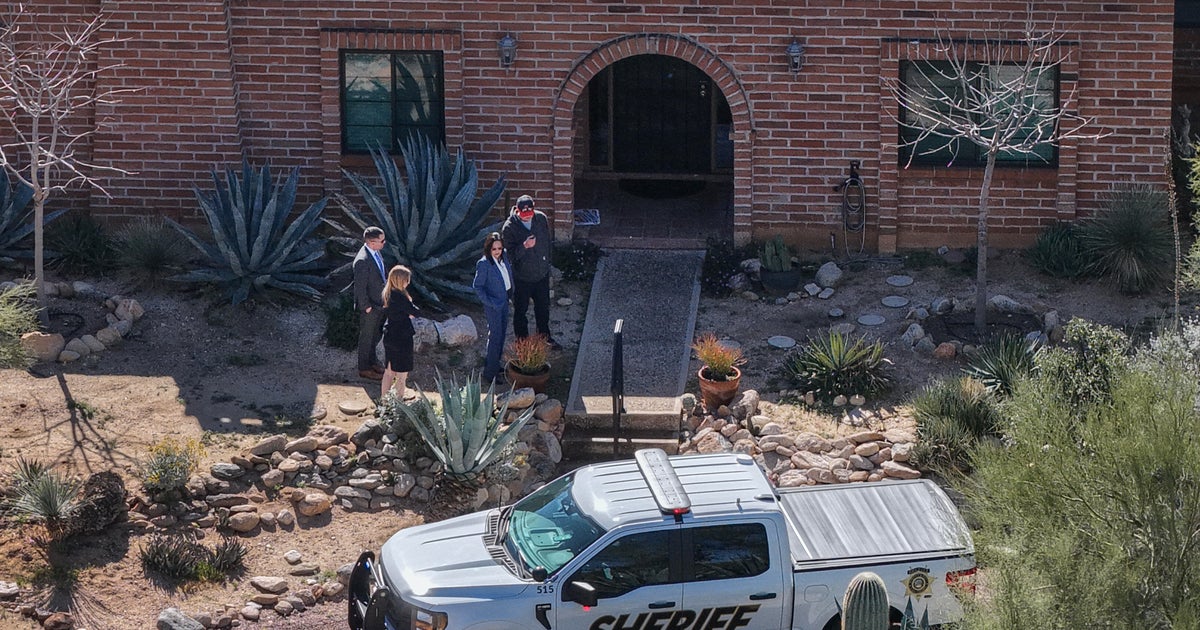
The quiet Tucson, Arizona neighborhood where Nancy Guthrie lived has become the center of a heartbreaking mystery that has captured national attention. The 84-year-old mother of NBC’s “Today” show co-host Savannah Guthrie vanished from her home in what investigators believe was an abduction in the early morning hours. Nearly a month after her February 1st disappearance, law enforcement officials are preparing to release the crime scene back to the family, a development that brings both closure to one aspect of the investigation and underscores the painful reality that answers remain elusive. The release of the home comes as investigators continue working around the clock, sifting through evidence and following up on an overwhelming number of leads from concerned citizens across the country who have been moved by this elderly woman’s mysterious disappearance and her daughter’s emotional public pleas for help.
An Unprecedented Response from the Public
The scale of public engagement in Nancy Guthrie’s case has been extraordinary, reflecting both the high-profile nature of her daughter’s career and the universal sympathy people feel when an elderly parent goes missing. According to law enforcement sources who spoke with CBS News, more than 1,500 tips have flooded into the FBI’s dedicated tip line since the family announced a stunning reward of up to $1 million for information that could lead to Nancy’s safe return. This massive reward, combined with an additional $100,000 offered by the FBI, represents one of the largest reward packages in recent memory for a missing person case. Each tip, regardless of how small or insignificant it might seem, is being carefully evaluated by investigators who understand that sometimes the smallest detail can break a case wide open. The overwhelming response demonstrates how deeply this case has resonated with Americans, many of whom see their own mothers, grandmothers, or beloved elderly relatives in Nancy Guthrie’s story and feel compelled to help in any way possible.
A Daughter’s Emotional Plea
Savannah Guthrie’s public appearance this week, sharing her family’s anguish through an emotional social media video, revealed the raw pain of a daughter grappling with the unthinkable. In the video posted on Tuesday, the normally composed television personality allowed viewers to see her vulnerability as she renewed her desperate appeal for anyone with information to step forward. Her words struck a delicate balance between hope and acceptance, as she acknowledged that while she continues to pray for what she called a “miracle,” she must also confront the possibility that her mother “may be lost.” This honest acknowledgment of her worst fears made her plea all the more powerful and relatable. “If this is what is to be, then we will accept it, but we need to know where she is,” Guthrie said, her voice carrying the weight of nearly four weeks of uncertainty and anguish. “We need her to come home.” These simple but profound words encapsulate the torment experienced by families of missing persons everywhere—the unbearable not knowing, the inability to properly grieve or celebrate, the life suspended in limbo while waiting for answers that may never come.
The Challenge of DNA Evidence
Behind the scenes, investigators are wrestling with significant challenges in the forensic evidence collected from Nancy Guthrie’s home. Sources close to the investigation have revealed that DNA recovered from the residence may not yield a usable profile of the suspect, with one source characterizing it as “low-level” DNA. This designation carries important implications for the investigation’s direction and timeline. Bob Krygier, a retired lieutenant from the Pima County Sheriff’s Department, offered insight into what this means practically, explaining that the “low-level” characterization indicates the sample is “very difficult to work with.” However, there is still reason for hope in this aspect of the investigation. Modern forensic science has made remarkable strides in recent years, and sources indicate that even low-level DNA samples can potentially be enhanced through advanced scientific techniques in specialized laboratories. The catch is that these processes take considerably more time than standard DNA analysis, meaning investigators and the Guthrie family face an extended wait for results that could prove crucial to identifying who was in Nancy’s home that fateful night.
A Strategic Decision in the Investigation
In an interesting development that highlights the complexities of modern criminal investigations, the Pima County Sheriff’s Department made the decision to send the DNA evidence to a private laboratory in Florida rather than utilizing the FBI’s renowned laboratory facilities. This choice, while perhaps surprising to some observers, reflects the growing trend of law enforcement agencies leveraging specialized private forensic labs that may have particular expertise or faster turnaround times for certain types of analysis. Sheriff Chris Nanos has publicly expressed his hope that the DNA evidence, despite its challenges, will ultimately lead investigators to a name—a suspect who can be questioned about what happened to Nancy Guthrie. This optimism, even in the face of forensic obstacles, is crucial for maintaining momentum in an investigation that has now stretched into its fourth week. The Sheriff’s confidence also serves to reassure the Guthrie family and the concerned public that every possible avenue is being pursued, no resource spared, in the effort to bring Nancy home and deliver justice.
The Long Road Ahead
As the investigation approaches the one-month mark, the Guthrie family faces the difficult reality that missing person cases become statistically more challenging to resolve with each passing day. Yet they continue to hold onto hope while preparing themselves for whatever truth ultimately emerges. The return of Nancy’s home to the family represents a bittersweet milestone—it means investigators have completed their work at the residence, collecting all possible evidence, but it also means the family must eventually confront the deeply personal task of entering a home that was the scene of their loved one’s disappearance. For Savannah Guthrie, who has built a career helping Americans start their mornings with news and information, finding herself on the other side of a major news story has been a profound role reversal. The outpouring of support from colleagues, viewers, and strangers across the country has demonstrated the deep connections that can form between public figures and the audiences who welcome them into their homes each day. As the investigation continues, with forensic analysts working to extract every possible piece of information from the evidence, investigators following up on hundreds of tips, and the Guthrie family maintaining their vigil of hope and preparation for whatever comes next, this case remains a reminder of both the fragility of our safety and the strength of community response when one of our most vulnerable members goes missing. The nation continues to watch, hope, and wait alongside the Guthrie family for the answers that will finally bring Nancy home.