



NASA’s Bold New Vision: Reshaping the Journey Back to the Moon
A Fresh Start for America’s Lunar Ambitions
In a candid acknowledgment that sometimes ambition must bend to reality, NASA’s new Administrator Jared Isaacman unveiled a comprehensive reimagining of the Artemis moon program this Friday. Speaking with refreshing honesty, Isaacman admitted what many space industry observers had quietly suspected: the agency’s original plan to land astronauts on the lunar surface by 2028 was simply asking too much, too soon. Instead of stubbornly pushing forward with an increasingly impractical timeline, NASA is taking what Isaacman calls a “back to basics” approach—one that echoes the methodical, step-by-step philosophy that successfully carried Apollo astronauts to the moon over half a century ago. The revised plan adds an entirely new mission in 2027, designed specifically to test critical technologies in the relative safety of Earth orbit before committing astronauts to the quarter-million-mile journey to our nearest celestial neighbor. This additional stepping stone, followed by not one but potentially two lunar landing attempts in 2028, represents a fundamental shift in NASA’s strategy: prioritizing safety and learning over arbitrary deadline achievements.
Learning to Walk Before Running: The New Artemis Roadmap
The heart of Isaacman’s restructured plan involves what he describes as an evolutionary approach to lunar exploration—testing each piece of the puzzle individually before attempting to complete the entire picture at once. The reconfigured Artemis III mission, now scheduled for 2027, will no longer attempt a moon landing. Instead, astronauts will remain in low-Earth orbit where they’ll rendezvous and dock with one or possibly both of the commercial lunar landers currently under development by SpaceX and Blue Origin. This mission concept deliberately mirrors the Apollo 9 flight of 1969, which tested the lunar module in Earth orbit just months before Apollo 11’s historic landing. During this orbital test flight, crews will gain hands-on experience with the lander systems that will eventually carry humans to the moon’s surface, working through the complex choreography of spacecraft rendezvous and docking that will be essential for lunar operations. Astronauts will also have the opportunity to test the new generation of spacesuits designed for moonwalking, even if they don’t actually perform spacewalks, gathering valuable data about how the suits perform in the microgravity environment. This preparatory mission will identify problems and refine procedures in an environment where help is hours away rather than days, dramatically reducing the risks inherent in the subsequent lunar landing attempts.
Picking Up the Pace: From Caution to Cadence
Perhaps the most ambitious aspect of Isaacman’s vision isn’t just the addition of test flights, but rather the dramatic acceleration in launch frequency he’s proposing for 2028 and beyond. After completing the orbital test mission in 2027, NASA plans to launch not one but two separate lunar landing missions—Artemis IV and V—before the end of 2028, then maintain a pace of one moonshot annually thereafter. This represents a fundamental shift from the current rhythm of one Artemis flight every eighteen months to a much more aggressive schedule. Isaacman argues that this increased tempo isn’t reckless but rather inherently safer, explaining that regular flight operations keep teams sharp and prevent the dangerous erosion of institutional knowledge and technical skills. When engineers and astronauts work on missions continuously rather than sporadically, they maintain proficiency and can apply lessons learned from one flight directly to the next. The approach requires NASA to rebuild and revitalize its workforce, regaining what Isaacman calls “core competencies” that may have atrophied during the long gap between the Space Shuttle era and the current Artemis program. Both commercial lander providers are planning uncrewed demonstration landings as part of their existing agreements with NASA, and whichever landers prove ready for service will be used for the 2028 missions—one lander for both flights if only one company is ready, or one lander each if both companies successfully demonstrate their systems.
Safety First: Responding to Critical Concerns
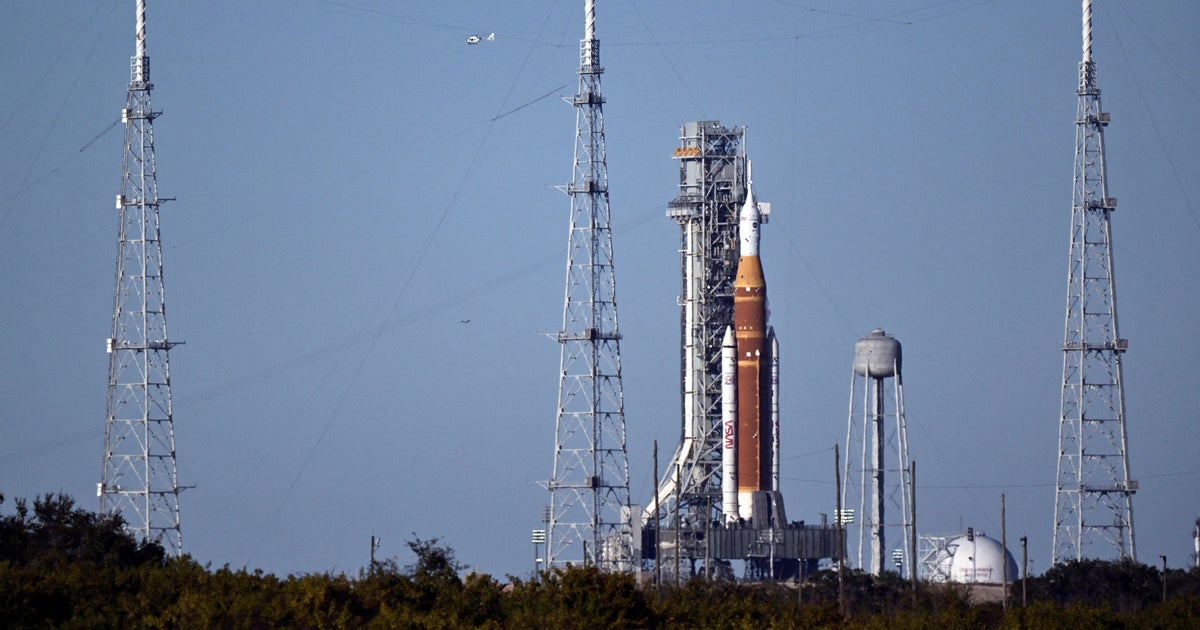
The timing of this major programmatic overhaul is no coincidence. Just two days before Isaacman’s announcement, NASA’s independent Aerospace Safety Advisory Panel released a sharply worded report that essentially demanded the kind of changes Isaacman outlined. The panel specifically identified the original Artemis III plan—jumping directly from a lunar flyby mission to a complex landing attempt—as carrying unacceptable risk due to the sheer number of “firsts” being attempted simultaneously. Too many untested systems, too many novel procedures, too many opportunities for something to go wrong with no backup plan and no previous experience to draw upon. The safety experts recommended that NASA fundamentally “restructure the Artemis Program to create a more balanced risk posture,” advice that Isaacman’s new plan directly addresses. Meanwhile, the Artemis II mission—a crewed flight around the moon without landing—remains grounded beyond its originally planned early February launch date. Engineers are wrestling with a persistent hydrogen leak and helium pressurization problems in the rocket’s upper stage, issues that have pushed the launch date to at least April 1st and possibly later. These technical troubles underscore exactly why the safety panel and Isaacman are right to pump the brakes on more ambitious missions until NASA demonstrates it can reliably operate the massive Space Launch System rocket and Orion spacecraft that form the backbone of Artemis.
Simplifying the Hardware: One Rocket Configuration to Rule Them All
In another significant departure from previous plans, Isaacman announced that NASA will abandon its strategy of developing multiple versions of the Space Launch System rocket with increasingly powerful upper stages. The original architecture called for evolving from the current “Block 1” configuration through a more powerful “Block 1B” equipped with an Exploration Upper Stage, and eventually to an even larger “Block 2” variant with advanced solid rocket boosters. Each configuration would have required different ground support equipment, different launch procedures, and different operational parameters—exactly the kind of complexity that slows down launch cadence and increases opportunities for errors. Instead, NASA will standardize on a single rocket design using what Isaacman’s team calls a “standardized” upper stage, minimizing variations between flights and allowing the agency to use the same launch infrastructure for every mission. NASA associate administrator Amit Kshatriya explained the philosophy bluntly: “It is needlessly complicated to alter the configuration of the SLS and Orion stack to undertake subsequent Artemis missions.” This decision means abandoning work on the more powerful Exploration Upper Stage currently under development, along with the taller mobile launch tower already under construction at Kennedy Space Center to accommodate the larger rocket variants. While this represents sunk costs and disappointed engineers who worked on those systems, it promises significant long-term benefits in reliability, launch frequency, and operational simplicity—the same principles that made the original Saturn V rocket successful through consistent, repeated use of essentially identical vehicles.
Beyond Government Funding: Building a Sustainable Lunar Economy
Isaacman concluded his interview by addressing perhaps the most fundamental question facing not just Artemis but all ambitious space exploration programs: how do we make this sustainable beyond short-term political commitments and fluctuating government budgets? His answer points toward an emerging commercial space economy that can eventually reduce dependence on taxpayer funding. “We’ve got to do something where we can get more value out of space and the lunar surface than we put into it,” Isaacman explained, articulating a vision where lunar activities generate economic returns rather than simply consuming resources. This philosophy explains why NASA is partnering with commercial companies like SpaceX and Blue Origin for lunar landers rather than developing government-owned vehicles as it did during Apollo. The hope is that these companies will eventually serve not just NASA astronauts but also private customers, research institutions, and international partners, creating a self-sustaining market for lunar access. Whether mining helium-3 for fusion reactors, manufacturing unique materials in the moon’s low gravity, establishing astronomical observatories on the far side, or supporting space tourism, the moon needs to become a destination for economic activity rather than just flag-planting expeditions. Isaacman’s restructured Artemis program, with its emphasis on commercial partnerships, reusable systems, and frequent flights, represents a step toward that vision—a recognition that the path to becoming a truly spacefaring civilization requires building economic foundations, not just achieving spectacular one-off demonstrations. The response from NASA’s major contractors, including Boeing’s commitment to “meet the increased demand,” suggests the industry understands and supports this new direction, even as it requires painful adjustments to long-standing plans and investments.