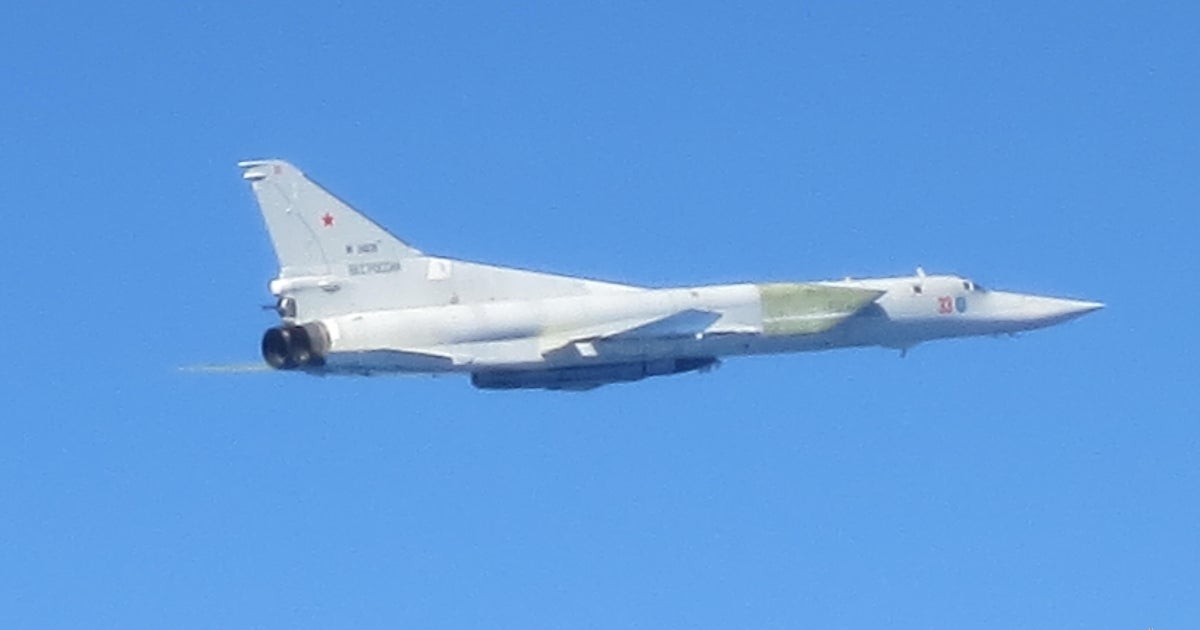

NATO Intercepts Russian Strategic Bombers Over Baltic Sea in Show of Force
A Routine Yet Tense Encounter Above Northern Europe
On a clear Monday over the Baltic Sea, a familiar scene unfolded that has become increasingly common since Russia’s invasion of Ukraine and the expansion of NATO’s eastern presence. Russian strategic bombers and fighter jets conducted a long-range flight over international waters, prompting a swift and coordinated response from NATO forces. French Rafale fighters stationed at Lithuania’s Šiauliai Air Base were among the first to scramble, joined by aircraft from Sweden, Finland, Poland, Denmark, and Romania. The mission highlighted the ongoing military tensions in the region and NATO’s vigilance along its eastern flank, even as global attention remains focused on conflicts in other parts of the world, particularly the Middle East. What might seem like a routine intercept to military observers represents a continuation of the cat-and-mouse game that has characterized relations between Russia and NATO for decades, but with heightened stakes given the current geopolitical climate.
The Russian formation was substantial and deliberate in its composition. Two supersonic Tu-22M3 strategic bombers—aircraft capable of carrying nuclear weapons—formed the core of the mission, escorted by approximately ten fighter jets alternating between SU-30 and SU-35 models. These escorts rotated throughout the flight, ensuring the bombers remained protected throughout their journey. The Russian Defense Ministry later confirmed that the flight was pre-scheduled and took place entirely over neutral international waters, lasting more than four hours. According to their statement, such flights are regular occurrences, with Russian long-range aviation conducting similar missions over the Arctic, North Atlantic, Pacific Ocean, and both the Baltic and Black Seas. The ministry emphasized that all flights comply strictly with international aviation rules, though they acknowledged that their bombers were accompanied by foreign fighters at certain points along their route—a diplomatic understatement for what was essentially a military escort operation.
NATO’s Rapid Response and Air Policing Mission
The NATO response demonstrated the alliance’s well-practiced coordination and readiness. French pilots and navigators—each Rafale fighter jet carries a two-man crew—were already suited up and on standby at the Šiauliai Air Base when the scramble order came. An Associated Press journalist who witnessed the response described seeing the crews race in vans from their headquarters building to the aircraft hangars, a scene of controlled urgency that military personnel train for repeatedly. Within minutes, the crews were in their cockpits, engines ignited, waiting for final clearance to take off. Once given the green light, the Rafale fighters, armed with air-to-air missiles, taxied from their hangars and roared into the sky to join the multinational formation that would shadow the Russian aircraft throughout their Baltic journey.
This rapid response is part of NATO’s Baltic Air Policing mission, an operation that has been in place since 2004 when Lithuania, Latvia, and Estonia joined the alliance. These three Baltic nations don’t have sufficient fighter aircraft of their own to patrol and protect their airspace, so NATO member countries rotate four-month deployments to provide this essential service. The mission has grown significantly in importance and frequency since Russia’s invasion of Ukraine in 2022. Even before the war, NATO was intercepting Russian aircraft approximately 300 times each year, mostly over waters around northern Europe. Many of these flights involve Russian aircraft traveling to and from Kaliningrad, a Russian enclave wedged between Poland and Lithuania on the Baltic coast—a strategic piece of territory that serves as Russia’s westernmost military outpost and home to its Baltic Fleet.
The Ongoing Pattern of Russian Military Flights
The Monday intercept was far from an isolated incident but rather part of an established pattern of Russian military behavior. The Russian Defense Ministry frequently announces flights by its strategic bombers over the Baltic Sea, and such missions occurred at least four times in the previous year and again in January, when NATO jets similarly rose to meet them. What concerns NATO commanders isn’t necessarily the flights themselves—they occur over international waters where Russia has every legal right to fly—but rather how they’re conducted. According to NATO’s Allied Air Command, Russian military aircraft routinely fail to activate their transponders, don’t communicate with civilian air traffic controllers, and often don’t file flight plans. These omissions create potential safety hazards for civilian aviation and make the aircraft difficult to identify from a distance, which is precisely why NATO sends up fighters to visually identify them and monitor their movements.
Between April 13-19 alone, according to Lithuania’s defense ministry, NATO jets were scrambled four times to intercept Russian aircraft that violated standard flight rules, including flying with transponders turned off and operating without filed flight plans. This pattern extends beyond the Baltic region. In April 2025, two Swedish fighter jets operating under NATO command intercepted a Russian reconnaissance plane approaching Polish airspace. That same month, Britain dispatched fighters to intercept a Russian IL-20 Coot reconnaissance plane, and two days later intercepted another unidentified aircraft leaving Kaliningrad airspace. These incidents reveal a continuous testing of NATO’s response times and a assertion of Russian military presence in regions where the alliance has expanded its footprint, particularly following Sweden and Finland’s recent accessions to NATO.
Dangerous Close Encounters and Escalation Risks
While Monday’s intercept proceeded without incident, the history of such encounters includes several alarmingly close calls that could have resulted in tragedy or international crisis. In 2017, an armed Russian fighter jet came within just five feet of a U.S. reconnaissance plane over the Baltic Sea—a distance so small that any sudden movement or miscalculation could have caused a collision. The following year, in 2018, a Russian fighter intercepted a U.S. Navy spy plane over international airspace above the Baltic Sea, with the two aircraft coming within 20 feet of each other. Though the European Command described that particular intercept as “safe,” the proximity raised concerns about the risks of miscommunication or accident when heavily armed military aircraft operate in such close quarters. These near-misses occur against a backdrop of heightened military readiness on both sides and the absence of many of the deconfliction mechanisms that existed during the Cold War to prevent accidental escalation.
The dangers extend beyond the skies to beneath the waves as well. Over recent years, several incidents of alleged Russian sabotage of underwater infrastructure in the Baltic Sea have raised alarm among NATO members. Undersea cables carrying internet data and power lines connecting member nations have been damaged under suspicious circumstances, with investigations pointing toward Russian involvement. These incidents, combined with the frequent air incursions and the overall pattern of Russian military behavior in the region, paint a picture of a multi-domain strategy designed to probe NATO defenses, demonstrate Russia’s continued military reach despite its ongoing war in Ukraine, and remind the alliance’s eastern members of Moscow’s proximity and power. The Baltic Sea has effectively become a theater of constant low-level confrontation where both sides demonstrate their capabilities while trying to avoid the kind of direct conflict that could spiral into wider war.
The Broader Geopolitical Context and Future Outlook
Monday’s intercept occurred during a period when global attention has largely shifted toward other crisis zones, particularly the Middle East, yet it serves as a stark reminder that the security situation in Eastern Europe remains precarious and demands constant vigilance. For the Baltic nations and Poland, the Russian military presence is not an abstraction but a daily reality that shapes defense planning and national psychology. The expansion of NATO to include Sweden and Finland—both of which contributed aircraft to Monday’s intercept mission—has dramatically changed the strategic balance in the region, giving the alliance control over virtually the entire Baltic coastline except for the Russian sections and making Kaliningrad even more of an isolated outpost from Moscow’s perspective. This new reality may actually increase rather than decrease the frequency of such Russian military flights as Moscow seeks to demonstrate that it won’t be intimidated by NATO’s expanded presence.
The professionalism displayed by both sides during Monday’s encounter—Russian crews flying their scheduled route while NATO pilots maintained safe distances while monitoring them—demonstrates that protocols exist and are generally followed even amid broader political hostility. However, the frequency of these encounters, the occasional violations of flight safety rules, and the history of dangerously close passes all contribute to a situation where the risk of accident or miscalculation remains real. As long as fundamental disagreements between Russia and NATO persist, the skies and waters of the Baltic region will continue to serve as a venue where military forces from both sides encounter each other regularly, each encounter carrying the potential to either reinforce mutual understanding of boundaries or to escalate into something more dangerous. For now, the routine has been established: Russia flies its missions, NATO scrambles its jets, both sides shadow each other professionally, and everyone returns to base safely—until the next time the call comes and crews race once again toward their waiting aircraft.