
The Final Chapter: Inside the Elaborate Funeral of Mexico’s Most Feared Cartel Leader
A Golden Casket and Military Shadows
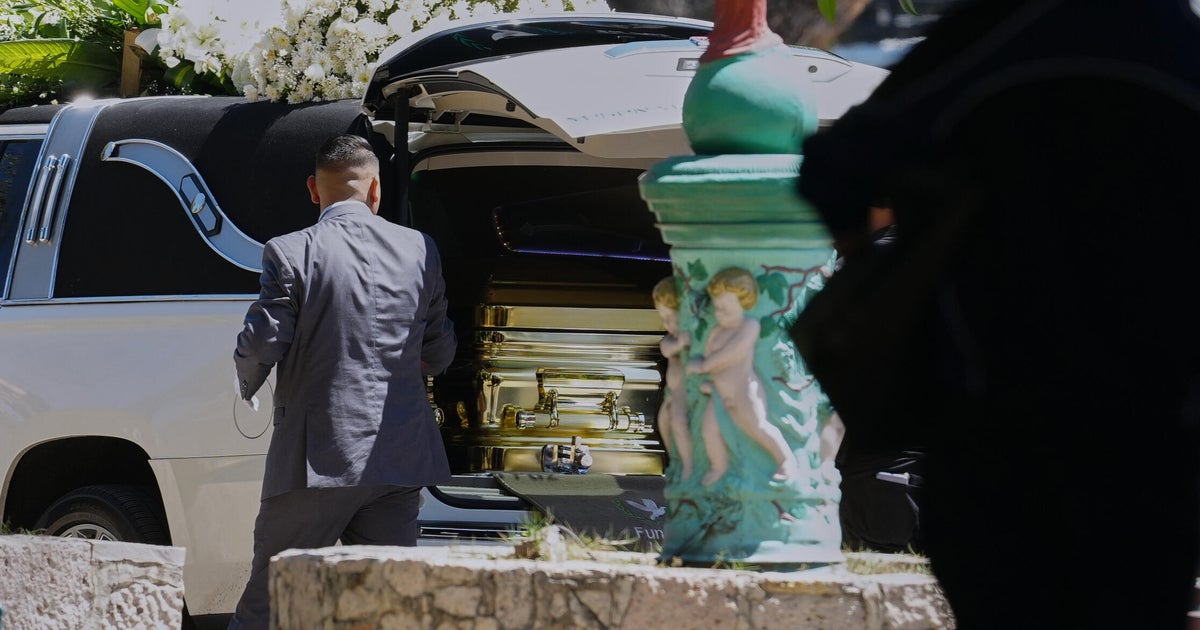
The streets of Zapopan, a quiet suburb on the outskirts of Guadalajara, witnessed an extraordinary scene this Monday as one of Mexico’s most notorious criminal figures was laid to rest. Nemesio Oseguera Cervantes, known throughout the underworld as “El Mencho,” the formidable leader of the Jalisco New Generation Cartel, was buried in a ceremony that mixed ostentatious display with heavy security presence. His remains were carried in a gleaming golden casket, surrounded by elaborate flower arrangements that spoke to both his feared reputation and the complex web of loyalty he commanded. The burial took place in a cemetery in Guadalajara, Mexico’s second-largest city, in the very state that gave its name to one of the country’s most powerful and violent criminal organizations. Federal officials confirmed the location, though they requested anonymity due to the sensitive nature of the case and ongoing security concerns. The Attorney General’s Office officially declined to reveal specific details about the burial location, citing “security reasons” – a decision that would prove prescient given the violent aftermath of El Mencho’s death.
A Procession Shrouded in Mystery and Music
The funeral procession itself was a spectacle that blended traditional Mexican mourning customs with the peculiar theatricality often associated with cartel culture. Dozens of mourners accompanied the procession, many carrying black umbrellas despite the sunny weather – perhaps a symbolic gesture, or simply a shield from the watchful eyes of authorities and curious onlookers. A banda, playing traditional Mexican regional music, provided a soundtrack to the somber occasion, their brass instruments echoing through the streets in a final tribute to the fallen kingpin. The scene had been building since Sunday, when heightened security measures appeared around a local funeral home. Large, elaborate flower wreaths began arriving without names attached – an anonymous flood of floral tributes that hinted at both the fear and respect El Mencho commanded. Some arrangements featured the image of a rooster crafted in flowers, a subtle reference to Oseguera Cervantes’ nickname “Lord of the Roosters.” The sheer volume of flowers was staggering; local journalists reported that five trucks were required to transport them all to the cemetery. Eight people dressed in black, believed to be family members, followed the white hearse in two vehicles as it made its final journey to the graveyard.
The Violent End of a $15 Million Target
Just over a week before this elaborate funeral, El Mencho’s reign came to a violent end in the mountainous region of Tapalpa, Jalisco. The Mexican army had been attempting to capture him when a fierce gunfight erupted, resulting in Oseguera Cervantes sustaining multiple bullet wounds. The death certificate obtained by The Associated Press revealed that he suffered fatal injuries to his chest, abdomen, and legs. Defense Secretary Ricardo Trevilla described the operation in detail, explaining how soldiers had tracked one of El Mencho’s romantic partners to his hideout, where they confronted the cartel leader and two of his bodyguards. All three men were severely wounded in the ensuing firefight and died while being transported to a hospital. Inside the home where he made his last stand, authorities discovered a crucifix, religious candles, and a handwritten psalm – intimate items that offered a glimpse into the personal life of a man who had a $15 million bounty from the United States government on his head. Following his death, El Mencho’s body was transported to Mexico City where an autopsy was performed before being released to his family on Saturday, setting the stage for Monday’s burial.
A Nation Convulsed by Retaliatory Violence
The killing of El Mencho unleashed a wave of violence that swept across Mexico, demonstrating the reach and ruthlessness of the organization he had built. Retaliation by the Jalisco New Generation Cartel erupted in approximately 20 states across the country, turning the drug lord’s death into a national crisis. More than 70 people lost their lives in the violence that followed the military operation – a grim tally that included both the initial confrontation and the subsequent revenge attacks. The scope and intensity of this violence underscored why Mexican authorities were so reluctant to publicly confirm details about El Mencho’s burial location. The government announced that security operations would continue targeting other high-ranking members of the cartel, suggesting that the battle against this criminal organization was far from over. The massive security presence at the funeral and the secrecy surrounding its details reflected a well-founded concern that the burial site itself could become a flashpoint for additional violence or a rallying point for cartel members and sympathizers.
The Mythology of Dead Drug Lords
In Mexico, the deaths and burials of major cartel figures have long been shrouded in mystery, mystique, and sometimes outright myth – a phenomenon that their supporters often cultivate to elevate these criminals to legendary status. Within hours of El Mencho’s death, narcocorridos – ballads glorifying drug traffickers – were already being written and circulated about his final moments. This tradition of memorializing cartel leaders through music and mystery is deeply embedded in certain regions of Mexico. In Culiacán, the capital of neighboring Sinaloa state and home to the rival Sinaloa Cartel, there exists a cemetery famous for its luxury crypts and elaborate mausoleums housing former drug kingpins. Ignacio Coronel, an old associate of El Mencho, rests there, as does Arturo Beltrán Leyva. The history of cartel leader deaths reads like something from magical realism literature. There was Nazario Moreno, the leader of the pseudo-religious Knights Templar cartel, who earned the distinction of being “killed twice” – authorities announced his death in 2010, only to kill him again “for real” in 2014. Some bodies simply vanish, like that of Heriberto Lazcano, leader of the fearsome Zetas cartel, whose corpse was stolen in 2012 and never recovered. Others die under bizarre circumstances, such as Amado Carrillo Fuentes, “Lord of the Skies,” who met his end during a botched plastic surgery procedure meant to alter his appearance.
Legacy of Violence and Continuing Conflict
The elaborate funeral of Nemesio Oseguera Cervantes marks the end of one chapter in Mexico’s ongoing struggle with organized crime, but it certainly does not signal the conclusion of the story. El Mencho built the Jalisco New Generation Cartel into one of the most powerful and violent criminal organizations in Mexico and beyond, with operations extending throughout Latin America and connections to markets in the United States, Europe, and Asia. His death creates a power vacuum that will likely spark internal conflicts within the organization as lieutenants vie for control, potentially leading to even more violence. The anonymous flower arrangements, the golden casket, the banda music, and the crowds of mourners paint a complex picture of a man who inspired both terror and loyalty. The Mexican government’s decision to note on his death certificate that his body should be buried rather than cremated follows standard practice in violent death cases, ensuring that additional forensic evidence can be gathered if needed in future investigations. As the trucks carrying mountains of flowers made their way to the cemetery and eight family members in black followed the white hearse, Mexico watched with a mixture of relief at the death of a dangerous criminal and anxiety about what violent succession struggles might follow. The heavy military presence at the funeral served as a reminder that while El Mencho may be gone, the criminal empire he built and the violence it generates remain very much alive.