

Markets on Edge as Trump’s Iran Deadline Looms
Financial Markets React to Escalating Middle East Tensions
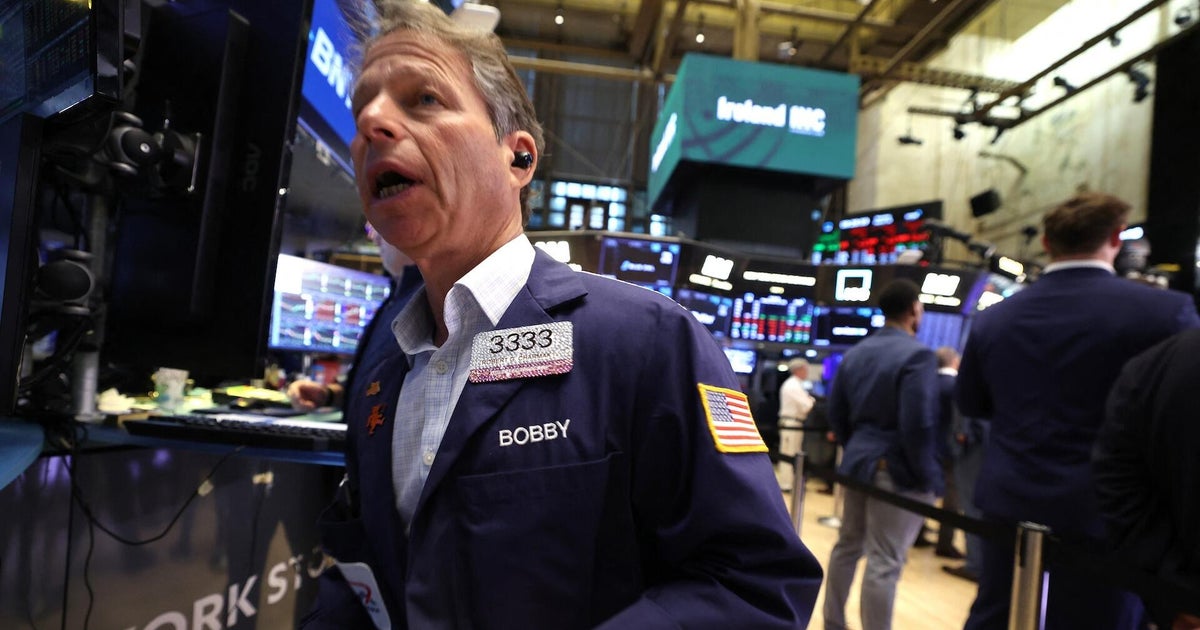
The financial world held its breath on Tuesday as global markets trembled under the weight of geopolitical uncertainty. Oil prices climbed while stock markets stumbled as investors anxiously watched the clock tick toward President Trump’s 8 p.m. EST ultimatum to Iran. The stakes couldn’t be higher—either Iran would reopen the critical Strait of Hormuz to commercial shipping, or the United States would launch extensive airstrikes targeting Iranian infrastructure, including essential facilities like power plants and bridges. The tension was palpable on Wall Street, where the S&P 500 dropped 46 points (a 0.7% decline) to settle at 6,566 in early trading. The iconic Dow Jones Industrial Average wasn’t spared either, tumbling 324 points (also down 0.7%) to reach 46,346. Technology stocks bore the brunt of investor anxiety, with the tech-heavy Nasdaq falling 1.1% as traders sought safer havens for their money. Meanwhile, energy markets told their own dramatic story: Brent crude, the benchmark used for international oil pricing, rose 1% to $110.81 per barrel, while West Texas Intermediate, the American benchmark, jumped even more sharply at 2.9% to reach $115.70 per barrel.
Americans Feel the Pain at the Pump
The surge in oil prices hasn’t remained an abstract concern for Wall Street traders—it’s hitting ordinary Americans right where it hurts: at the gas station. Motorists across the nation are experiencing sticker shock as fuel prices have soared to levels not seen since 2022. According to data from AAA, the average national price for a gallon of regular gasoline climbed to $4.14 on Tuesday, representing a dramatic increase from the $2.98 Americans were paying just before hostilities erupted in the Middle East. That’s more than a dollar increase per gallon—a change that significantly affects household budgets, particularly for families who depend on their vehicles for commuting, school runs, and daily errands. The ripple effects extend far beyond personal transportation costs. Higher fuel prices increase shipping and transportation expenses, which businesses typically pass along to consumers in the form of higher prices for groceries, retail goods, and services. This inflationary pressure comes at a time when many families were just beginning to feel relief from previous economic challenges, and economists are increasingly concerned about the potential for sustained inflation if the conflict continues to disrupt global energy supplies.
Trump’s Stark Warning and the Approaching Deadline
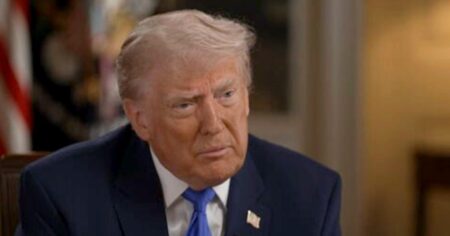
President Trump’s rhetoric on Tuesday morning was characteristically blunt and alarmingly dire. In a post on Truth Social, he declared that a “whole civilization will die tonight” unless Iran reached an agreement with the United States before his Tuesday night deadline. The president’s words carried a heavy, almost fatalistic tone when he added, “I don’t want that to happen, but it probably will.” This grim prediction sent shockwaves through diplomatic channels and financial markets alike, as the world contemplated the potential humanitarian and economic catastrophe that could unfold if negotiations failed. The stock market’s volatile behavior in recent weeks reflects the deep uncertainty that has gripped investors since the outbreak of hostilities in late February. The conflict has effectively strangled the global flow of critical energy resources—not just oil, but also liquified natural gas—with the Strait of Hormuz remaining essentially closed to oil tankers. This narrow waterway, barely 21 miles wide at its narrowest point, normally serves as one of the world’s most important oil chokepoints, with roughly one-fifth of global oil consumption passing through it. Its closure has had predictable effects: oil prices have skyrocketed more than 50% since the war began, prompting economists worldwide to issue warnings about rising inflation risks that could derail economic recovery and prosperity in nations across the globe.
Expert Analysis: Why Markets Aren’t Panicking (Yet)
Perhaps surprisingly to casual observers, the market reaction on Tuesday was relatively restrained considering the magnitude of the potential crisis. Nigel Green, CEO of the investment firm de Vere Group, observed this curious phenomenon with some concern. “Markets are behaving as if this is background noise,” Green noted in an email to clients and media. He explained that the situation presents what traders call a “binary outcome”—essentially, within a matter of hours, the world would witness either de-escalation through diplomatic agreement or direct military strikes on Iranian infrastructure. There would be no middle ground, no gradual development—just a clear fork in the road. Green emphasized the unprecedented nature of this situation: “This is a potentially huge market event like no other. It’s a known unknown with a clock.” That last phrase captures the strange quality of the crisis—everyone knows something significant will happen, but nobody knows exactly what, and the timing is fixed and public rather than uncertain. Meanwhile, analysts at Mizuho Bank pointed out that Trump’s latest ultimatum represents just the newest chapter in “an escalation cycle that has now been extended several times since his first ultimatum in late March.” This pattern of deadlines and extensions has created a boy-who-cried-wolf dynamic, potentially explaining why markets haven’t responded with full-blown panic despite the serious nature of the threats being made.
Strategic Calculations and Possible Off-Ramps
Despite the alarming rhetoric emanating from the White House, some analysts believe there’s reason for cautious optimism that catastrophic escalation might be avoided. Wall Street analyst Adam Crisafulli of Vital Knowledge suggested in a research note that investors are “banking on the Trump administration holding off on a ‘scorched earth campaign'” for several pragmatic reasons. First, the United States has already achieved many of its strategic objectives in the region, and second, Iran has made some small concessions in recent days that could provide face-saving justification for stepping back from the brink. Crisafulli argued that “notwithstanding his increasingly bellicose rhetoric, none of the escalatory options available to Trump (civilian infrastructure bombing campaign, militarily reopening Hormuz, and/or seizing the enriched uranium) are good ones.” Each option carries substantial risks—potential civilian casualties, unpredictable military complications, broader regional conflict, and severe economic consequences. These high potential costs might force President Trump to “pursue an offramp of some sort,” according to Crisafulli’s analysis. However, the Mizuho Bank analysts struck a more cautionary note, observing that “given the differing perspectives, hopes of a complete resolution to the conflict remain elusive while countries continue to work on bilateral solutions.” In other words, even if the immediate crisis passes, the underlying tensions and conflicts will likely persist, creating ongoing uncertainty for global markets and energy supplies.
The Bigger Picture: Economic Uncertainty in a Volatile World
The current crisis illuminates how deeply interconnected our global economy has become, and how quickly stability can give way to chaos when geopolitical tensions flare. The Strait of Hormuz situation demonstrates that a conflict in one region can immediately impact the daily lives of people thousands of miles away—American families filling their gas tanks, European manufacturers worried about heating costs, Asian economies dependent on imported energy. The 50% surge in oil prices since late February serves as a stark reminder that energy security remains foundational to economic prosperity. For policymakers, business leaders, and ordinary citizens, the situation raises difficult questions about energy independence, the wisdom of various foreign policy approaches, and how to build economic resilience in an unpredictable world. Whatever happens when Trump’s 8 p.m. deadline arrives, the weeks of tension have already inflicted economic damage through higher energy costs, market volatility, and the uncertainty that causes businesses to postpone investments and consumers to curtail spending. As the world watches and waits, the hope is that diplomacy will prevail over military action, that cooler heads will find solutions that prevent humanitarian catastrophe and economic disruption. But the very fact that we’ve reached this point—with public deadlines, explicit military threats, and critical shipping lanes closed—suggests that the path back to stability will be neither quick nor easy, regardless of what unfolds in the coming hours.